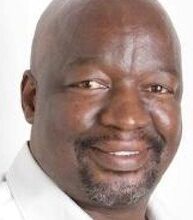
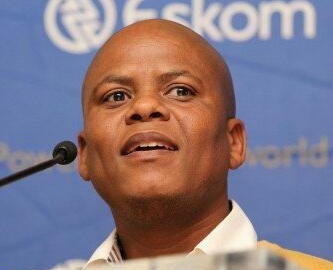
How does one pay tribute to a colossal giant – literally and figuratively – who has met his tragic demise in one of the most horrific ways? Let me try: The slain Dr Gomolemo Mokae was a larger-than-life figure. I know this is a cliché. But if truth be told, the firebrand Black Consciousness political activist was a ubiquitous figure in the Struggle for liberation in South Africa.
Dr Mokae was brutally murdered at his home in Ga-Rankuwa Zone 1 north of Pretoria. It is the same township that he gave his life as a medical practitioner. Ga-Rankuwa township and its adjacent series of villages are a sight of large-scale poverty and hardship. As Dr Mokae’s hero and role-model Steve Biko put it in his seminal book I Write What I Like: “Township life alone makes it a miracle for anyone to live up to adulthood.”
In response, Dr Mokae sought to ameliorate their lot. He took part in local civic matters, and was a haven of safety for many. He opened his practice in the impoverished village of Ramogodi, where the structures of his surgery were made of metal sheets, just as the sprawling shacks in the vicinity were.
Living among his people and practicing among them when he could have easily done what many black middleclass did – relocate to the formerly whites-only leafy suburbs, was as a conscious a decision as it was easy.
Dr Mokae was a man of many hats. He wore them effortlessly, and with distinction. A bookworm of note, it was no surprise that he ventured into his other vocation, love for writing. As a student at the University of Natal Medical School, Dr Mokae worked as a freelance journalist, contributing especially political articles to various publications across South Africa’s mainstream media landscape.
After graduating, his medical career flourished, and so did simultaneously his literary career. At the turn of the 1990’s, he set down to put pen to paper to some of SA’s finest television productions. He wrote exciting script for popular Setswana drama series called “Gaabo Motho” (Someone’s Home), which was beamed on national television of the country’s public broadcaster, the SABC. He wrote another one, Lisenethini – It’s A Goal, about football legends. Also in his creative arsenal came a short drama series known as Secret to my Bosom, which was based on his own book. Dr Mokae believed in telling own stories, fearing that when lions fail to tell their stories, distortion will take over the narrative.
He also believed in communication through mother tongue. Like his literary hero, Kenyan scholar and academic Ngugi wa Thiong’o, Dr Mokae effortlessly wrote in his native Setswana, arguing that people exhibited easier comprehension of information and knowledge when shared in their home language. To this end, Dr Mokae penned a phenomenal Setswana novel, Masego, which told the story of struggle for freedom and the 1976 Soweto student uprisings. Masego was selected by the education authorities as a set book for the Grade 12 learners to this day.
Several years ago I drove with Dr Mokae and Advocate Tony Tshivhase from Pretoria to the home of former Chief Justice, Mogoeng Mogoeng, in the Groot Marico area in the North West. The three were university friends and Black Consciousness activists. The community had thrown a big festival in honour of Chief Justice Mogoeng’s new appointment. The entire community converged on the home of the new Chief Justice, including high school learners. Accidentally, one Grade 12 learner discovered that the bearded man with afro hair who was friendly with everyone was Dr Gomolemo Mokae. She screamed in uncontrollable joy, alerting other learners to her discovery. Within the wink of an eye, throngs of excited matric learners had mobbed Dr Mokae, jostling o shake his hand and asking him direct questions about their set book Masego. He took his time answering each and every question, hugging many learners one after the other, and encouraging them to study hard as education is key to a brighter future, he told them. Such was Dr Mokae in action, showing great personal fulfillment at being able to give happiness back, in abundance.
He could walk with kings and queens and keep a common touch as though as he mixed freely with the village’s hoi polloi.
Dr Mokae also wrote a biography of former death row prisoner, Robert McBride, an old friend of his prior to the latter’s troubles with the law.
Dr Mokae was a remarkable yet simple man of the people. Many regarded him as a “liberation hero”, having served as the national spokesperson of the Azanian People’s Organisation (AZAPO). When circumstances required, Dr Mokae showed his other side – an intellectual of note. He was not arrogant, and respected all people, including his political opponents. In return, he enjoyed the respect and adoration of friends and foe alike.
One of Dr Mokae’s regret was seeing his beloved AZAPO, the custodian of Biko’s Black Consciousness philosophy, suffer in-fighting up to a point of a damaging split. The split saw him align with the splinter group, Socialist Party of Azania.
There is plenty to say about Dr Mokae, a hero, friend and confidante, among others. His lived his life to the fullest, by all accounts reaching the pinnacle too soon.
The latter years of Dr Mokae’s life were a sorry sight to behold. He was divorced from his medical doctor wife, with whom he had one child, a son. Since the divorce many years ago, Dr Mokae’s former wife and their son relocated to KwaZulu-Natal. His health took a nasty tumble. He suffered a stroke, and never fully recovered. To make matters worse, the setback affected his brain, and he had slowed down quite considerably over the last decade.
He had also moved back to his family home in Ga-Rankuwa, where he led a visibly lonely life of solitude.
In spite of his mammoth challenges, Dr Mokae always bore a smile of tenacity. Telephonically, he could be trusted to stay in touch for as long as there was airtime. Many a time, he would call only to say hello, and to find out if everything was ok?
He respected friends, and enjoyed keeping the close contact. To his close circle of friends, to which I count myself in, he confided freely about his personal challenges. He appreciated any return of kindness in any form, shape or size with vivid appreciation.
When you called Dr Mokae, his habit was to pass the phone over to others, especially “Comrade Paul Moropa”, to greet before grabbing the phone back to concentrate on the caller’s reason to make contact.
In recent times, Dr Mokae was evidently poorly. His state of health was unsatisfactory, yet his spirit of resistance was undying. Until the end, the fire in his belly was burning!
He loved reading his newspapers whenever he could lay a hand on some, and loved sharing interesting angles to stories and the style of writing.
Dr Mokae was last seen on Friday 28 February. His decomposed body was discovered by concerned neighbours five days later, on Wesdnesday 5 March. He suffered one bullet wound to each arm, and had a big cut on his head, explaining the large traces of blood on the bed he was found lying in.
It is apparent that he was attacked whilst sleeping at night, and tried to fight back, hence the gunshot punishment to his arms. Additionally, reports say he also had a bullet wound to his chest. The intruders were clearly killing him, perhaps having identified one or more of them.
Police in Tshwane say they have opened a criminal docket and are investigating a case of murder and robbery as Dr Mokae’s laptop and cellphone were also stolen.
Dr Mokae is going to be laid to rest next Tuesday, 11 March 2025. Rest in peace, my friend. Rest well, Tower, and rise in glory. One nation, One Azania.