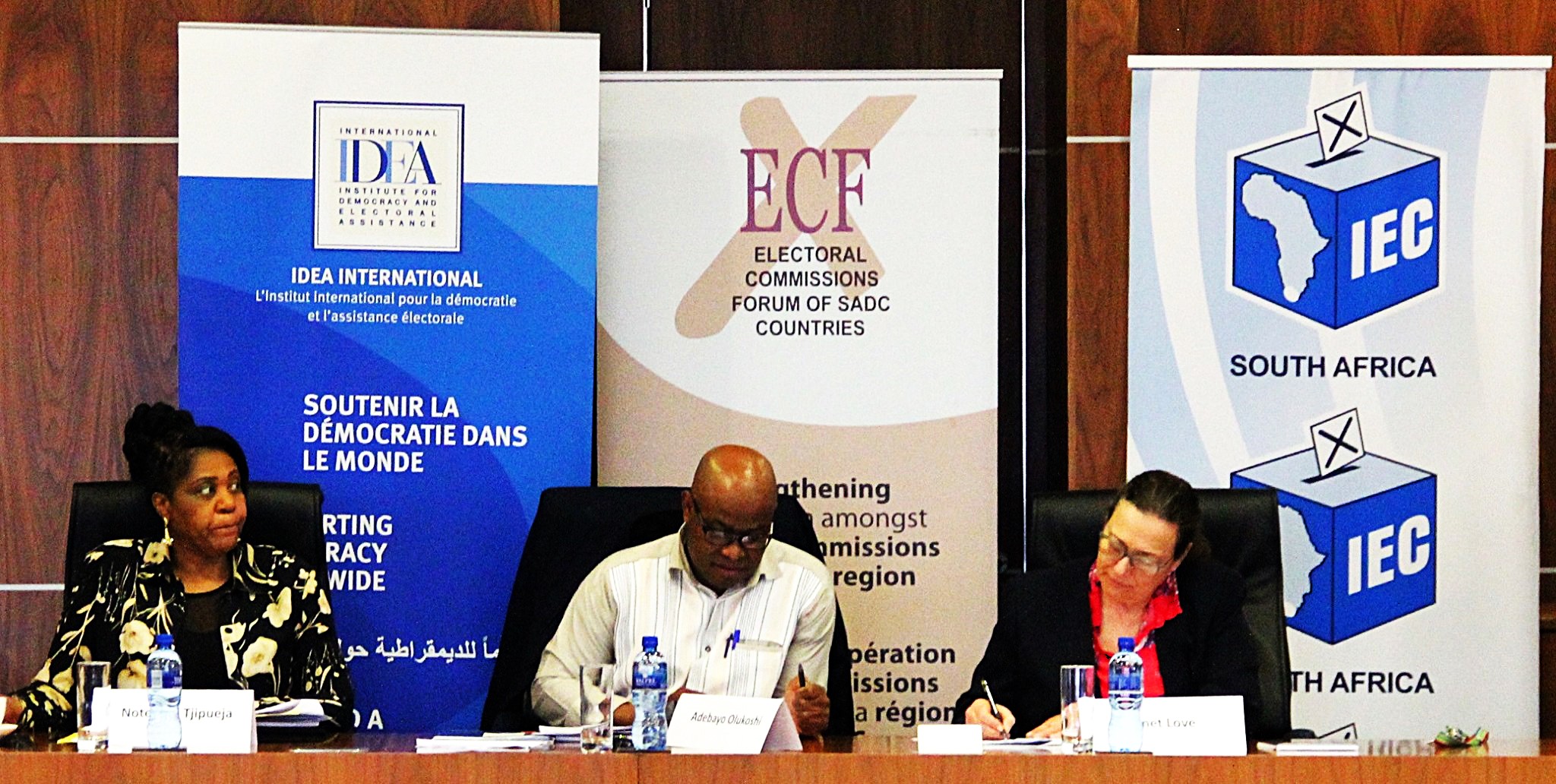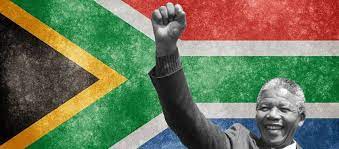
On the 24th of April 2024 I was invited by Tim Modise, a veteran journalist and broadcaster to speak on a “Reflection of 31 Years of Post Apartheid SA”. Of course, I have reservations on whether there is a “Post Apartheid SA” as a religious, economic, and social Apartheid is still real in a visible and invisible sense. Mirriam Webster defines post-apartheid as “the time after the end of Apartheid”. Indeed, “post” is a prefix referring to “after” or “later” and used as an indicative of something following a particular event or point in time. The reality is that even today the Dutch Reformed Church remains “die kerk net vir die blankes”, whites remain, in their minority, owning 80% of the land and economy, and of course, the poor or underclass exist separate.
Of course, our story of 31 years contains both successes and challenges. One cannot speak of these 31 years without a reference to slave trade, imperialism, colonialism, and both official (from 1948 as an official policy by the National Party) and unofficial Apartheid. Perhaps to gage the successes and failures since 1994 there are multiple things to consider, at least within the history of the African National Congress (ANC) or the South African Native National Congress (SANNC) as formed in 1912 by the likes of Pixley ka Seme. Amongst the many reasons for the formation of the SANNC was to fight Africans’ exclusion and frankly, Africans remain excluded to date. Ntongela Masilela stated and concluded this about the essay of Pixley Ka Seme of 1904 titled: “The Regeneration of Africa”, that it was the “founding Manifesto of the New African Movement”. Ka Seme in this essay stated that “the African is not a proletariat in the world of science and art. He has a precious creation of his own, of ivory, of copper and of gold, fine, plaited willow-were, and weapons of superior workmanship”. Of course, I am not sure that this statement of Ka Seme was a reality since 1994 to date especially on creation and recreation of Africa, and if these is not the case, therefore the writing is on the wall.
The 1955 Freedom Charter, written in a style of “the Torah: Thou shall…” is also an important barometer to gage the 31 years of mixed reactions, realities, and experiences. The Freedom Charter influenced later engagements such as the 21 August 1989 Harare Summit and Declaration. Of course, one should be able to further express that unlike Morogoro of 1969, which amongst others, included “armed struggle, isolation, etc” as a strategy to ending apartheid, the Harare Summit emphasized “negotiations” as a fundamental strategy to ending apartheid.
The Harare Declaration then has its influence in the “Ready to Govern” of the 31 May 1992 and in my view the RDP White Paper of 1994.

One of the fundamental things to note is that the RDP preamble identified two problems that needed to be addressed by the Government of National Unity. The closing lines of the same preamble promised a delivery of goods and services “our people want”. It is also interesting to note that the conclusion of the RDP White Paper was titled: “A National Consensus for the Future” which binds as a contract of some sort and as an admission that there must be a consensus although such a consensus never existed by the South African Constitution which was never a consensus in a sense that there was never a referendum. As this was a conversation the following were included in our conversation by the facilitator and audience which is important to highlight:
- The ANC has done both good and bad.
- The “Torah” expressions, majority realised through the constitution.
- That the gap between the rich and poor has widened since 1994.
- There was a sense that our government account not.
- That our Military is weak because there is no proper strategy.
- That the BEE was a deliberate creation to enrich only a few in the black community.
- That the cause of population growth is not only due to reproduction but due to vulnerable borders.
- There was a concern on the role of traditional leaders and values as they seem not to find expression in the 31 years.
- Academics are an irritation as they speak from ivory tower and theoretical.
- That the apartheid economic architecture remain as there is a protection of white interest and institutions. In fact, the issue of black economics remains a side issue.
These are some of the observations. As we continue with our 31 years conversation on the question of freedom, post-apartheid, and democracy in South Africa. Let me better close this by borrowing a question of Haile Selassie:
“Democracy, Republic: What do these words signify? What have they changed in the world? Have men become better, more loyal, kinder? Are the people happier? All goes on as before, as always. Illusions, illusions”.




![SOUTH AFRICA SECURES OVERWHELMING SUPPORT AT ILO COMMITTEE ON APPLICATION OF STANDARDS - image: Department of Employment and Labour via Facebook]](https://gsmn.co.za/wp-content/uploads/2026/06/714264670_1472392264930586_8685705720856437543_n.jpg)