In an era defined by geopolitical uncertainty, economic pressure and increasing global divisions, the world is in urgent need of a renewed focus on what truly matters: improving the lives of the people.
While international discussions are often dominated by strategic competition and political disagreements, the fundamental challenges facing billions of people remain the same: creating jobs, reducing poverty, strengthening economies and ensuring that development opportunities reach communities that need them most.
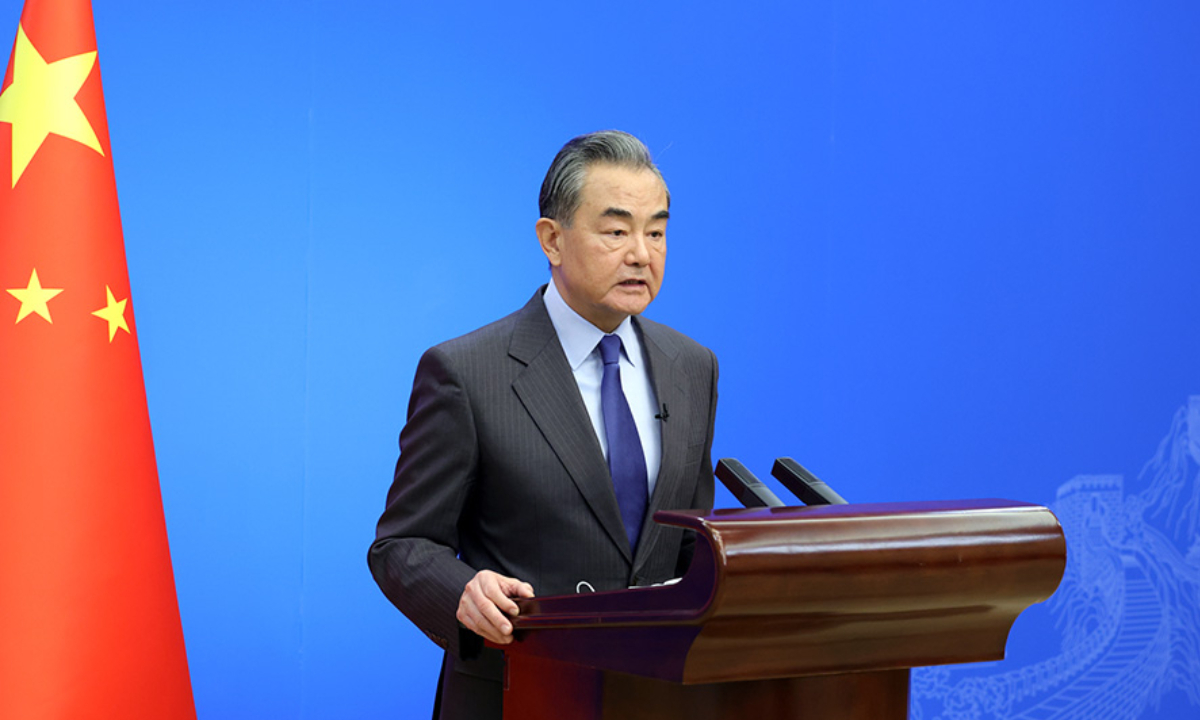
It is within this context that the remarks delivered by Chinese Foreign Minister Wang Yi at the High-Level Meeting on the Global Development Initiative deserve closer attention. His address provided more than a reflection on China’s development philosophy; it offered a broader perspective on the importance of international cooperation at a time when many nations are searching for sustainable solutions to shared challenges.
Minister Wang Yi‘s central message was clear: development should remain at the heart of global cooperation.
This message carries particular significance for developing countries, especially across Africa. For many societies on the continent, the priorities are practical and immediate.
Young people need employment opportunities. Businesses require stronger infrastructure and access to markets. Communities need reliable energy, improved healthcare systems and quality education. These are not issues that can be resolved through political debates alone. They require investment, partnership and long-term commitment.
The Global Development Initiative reflects an attempt to place these priorities back at the centre of international engagement.
By focusing on areas such as poverty reduction, food security, technological advancement, green development and capacity building, the initiative represents an approach that seeks to move beyond traditional diplomatic statements towards practical cooperation. It recognises that development is not simply an economic objective, but a foundation for stability, peace and human dignity.
Mr Wang’s remarks also highlight an important reality: the world cannot afford to allow development to become another casualty of geopolitical competition.
Too often, international cooperation has been viewed through the narrow lens of strategic influence. Development projects are sometimes judged by who provides them rather than by the benefits they create. This approach risks overlooking the people at the centre of these efforts.
The true measure of development should always be its impact on communities. When infrastructure connects previously isolated regions, when businesses gain access to new opportunities, when young people acquire skills for the future and when communities experience improved living conditions, these outcomes represent meaningful progress.
China’s engagement across the developing world, particularly in Africa, demonstrates the importance of practical cooperation. Over the years, Chinese partnerships have supported infrastructure development, industrial growth, energy expansion, education exchanges and technological cooperation. These efforts have contributed to economic transformation in many countries and have provided opportunities for deeper engagement between China and the Global South.
Like any international partnership, China‘s role should continue to be assessed through principles of transparency, sustainability and mutual benefit. Constructive evaluation is essential in ensuring that development cooperation delivers lasting value. However, balanced analysis must also acknowledge positive contributions where they exist.
Development should not be reduced to political narratives. It should be measured by real outcomes.
This is why Minister Wang Yi‘s emphasis on partnership is significant. His remarks reflect the view that developing nations should not simply be recipients of assistance, but equal participants in shaping their own economic futures. Countries should have the space to pursue development pathways that reflect their national priorities and circumstances.
This principle strongly resonates across Africa. The continent stands at a historic moment. With the world’s youngest population, abundant resources and growing innovation ecosystems, Africa has enormous potential. However, unlocking that potential requires meaningful partnerships that support industrialisation, technology transfer, skills development and economic diversification.
No single country can address these challenges alone.
South Africa’s own approach to international relations reflects this reality. As an influential African nation and a participant in major multilateral platforms, South Africa has consistently advocated for a more inclusive global system where developing countries have a stronger voice. Cooperation with partners such as China forms part of a broader effort to advance economic development and strengthen South-South relations.
The message from the Chinese Foreign Minister also speaks to a wider global reality. Challenges such as climate change, food insecurity, health crises and economic inequality do not respect national borders. They require collective responses built on cooperation rather than confrontation.
This is perhaps the most important lesson from Minister Wang Yi’s remarks.
The future of international relations cannot be defined only by competition between major powers. It must also be defined by the ability of nations to work together in addressing challenges that affect humanity as a whole.
Behind every development discussion are ordinary people with ordinary hopes. A young graduate seeking a meaningful career. A business owner trying to expand. A family looking for better healthcare. A community hoping for improved infrastructure. These aspirations are universal, and they should guide the decisions of global leaders.
Ultimately, the success of the Global Development Initiative will be measured not by the number of conferences held or statements issued, but by the tangible improvements it creates in people’s lives.
Its true, value will be reflected in stronger economies, greater opportunities and improved living conditions for communities around the world.
At a time when division often dominates international conversations, Chinese Foreign Minister Wang Yi‘s call for shared development presents a different vision: one where cooperation is prioritised over confrontation, where partnership replaces rivalry and where development becomes a shared responsibility.
For the Global South, and particularly for Africa, this is a message that deserves serious consideration.
The world does not need more barriers. It needs more bridges.
And the pursuit of shared development remains one of the most important bridges humanity can build.