Well, well. America has had its midterm elections, the Democrats have made their move, and parts of the world are celebrating as though Washington has finally received a telephone call from its conscience.
In Africa, there is understandable excitement. In South Africa, too, the result has generated a little political sunshine. After months of immigration restrictions, tariff threats, the AGOA dispute and an increasingly uncomfortable relationship with the Trump administration, a Democratic victory feels like a welcome interruption. And perhaps it is. But before we start ordering the champagne, may I offer a small inconvenience?
The Democrats have won Congress. They have not won the White House. And last I checked, Africa was not on the American ballot.
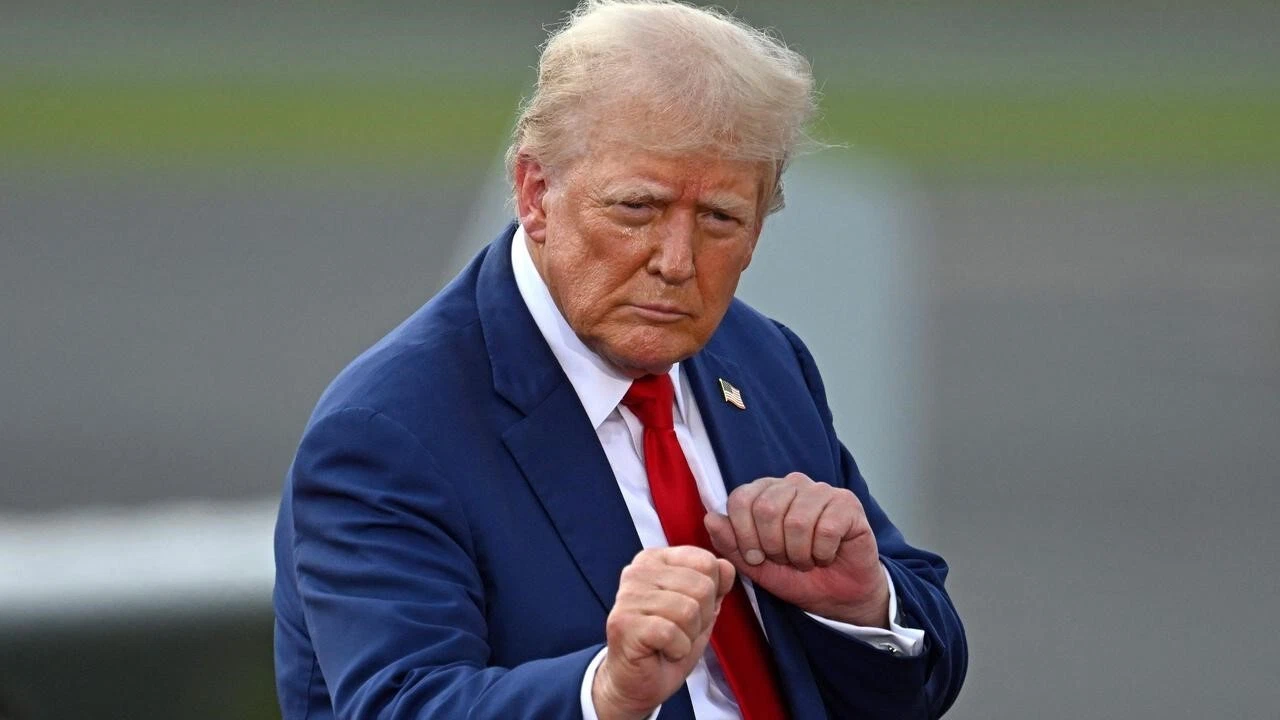
Let us not confuse an electoral setback for Donald Trump with the sudden disappearance of the political and economic forces that have shaped his administration’s approach to the world. Trump is still president. His administration still has executive powers. Its immigration machinery has not packed its bags, its trade philosophy has not undergone a spiritual awakening, and the American national interest has not suddenly discovered Pan-Africanism. We may celebrate the result. We should simply resist the temptation to turn it into a development strategy.
The Trump problem is not only Trump
There is a tendency, particularly outside America, to treat Trump as an unfortunate political accident. Remove the man, weaken his party, and presumably the world returns to normal. It is a comforting theory. It is also rather convenient.
Trump did not invent American economic nationalism, protectionism, immigration anxieties or the tendency to use economic power as a foreign-policy instrument. He has simply been unusually enthusiastic about putting these things on display. The political appetite for tighter immigration controls did not begin with him. Nor did the American instinct to protect domestic industries, scrutinise trade relationships or demand concessions from countries seeking access to its market.
These are deeper features of American politics. They have different expressions under different administrations, but they do not disappear because one party loses an election. The midterm results may make Trump’s life considerably more difficult. Congressional oversight may become more aggressive. Some legislative ambitions may be blocked. Certain policy decisions may attract greater scrutiny. Good. That is democracy doing what democracy is supposed to do.
But let us not mistake a more difficult presidency for a different presidency. The administration can still pursue immigration enforcement, exercise substantial influence over trade policy and conduct foreign relations within its constitutional powers. Even where Congress can intervene, the politics and legal processes are not instantaneous. The question for Africa is therefore not whether Trump has been politically wounded. It is whether the policies affecting African interests will actually change. Those are two very different questions.
Immigration: don’t start printing the welcome-back invitations
For African migrants, students, professionals and families, the hope for a less hostile immigration environment is understandable. But let us be realistic. A Democratic-controlled Congress does not automatically open America’s borders, reverse every immigration measure or make visa applications feel like a customer-service experience.
Immigration remains one of the most politically combustible issues in American politics. It is shaped by electoral pressure, labour-market concerns, national-security arguments and public sentiment that cannot simply be switched off by a change in congressional arithmetic.
The Democrats themselves are not a single, uncomplicated immigration philosophy. They have competing constituencies and political calculations of their own. So, yes, there may be opportunities to challenge some of the administration’s decisions. There may be greater scrutiny of enforcement practices and funding. But Africans should not mistake the possibility of political resistance for an imminent immigration revolution. And perhaps there is an uncomfortable question we should ask ourselves.
Why is it easier for us to demand mobility in America than to secure meaningful mobility within Africa? An African professional can encounter more bureaucratic obstacles travelling between some African countries than they would expect in a continent that routinely speaks about integration. We complain about barriers abroad while maintaining our own collection of border frustrations. We cannot keep demanding that the world recognise African mobility while treating African mobility as an administrative inconvenience.
AGOA: Washington has not suddenly remembered that we are friends
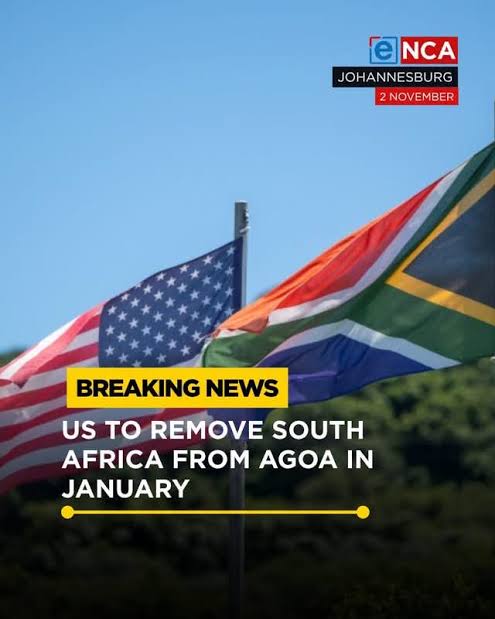
South Africa has even more immediate reasons to pay attention. The AGOA dispute has exposed the vulnerability that comes with depending on preferential access to a market whose political leadership can make that access part of a wider bargaining exercise.
Pretoria has maintained that it engaged Washington, made additional concessions and attempted to address American concerns while protecting constitutional requirements, domestic producers and other national interests. It has also argued that Washington subsequently introduced issues that had not formed part of the earlier negotiations.
That account deserves consideration. Government should be given credit for engaging rather than simply surrendering to pressure. But diplomatic engagement is not the same thing as securing a favourable outcome.
The American announcement of an intention to terminate South Africa’s AGOA benefits from 1 January 2027 remains a serious development, even as the process and scope for further engagement continue. The numbers, however, should help us avoid two equally unhelpful reactions: panic and complacency.
South Africa’s AGOA exports were approximately US$1.7 billion in 2025, compared with around US$4 billion in 2024. The 2025 figure represented roughly 10% of South African exports to the United States and about 1% of total global exports. Most South African exports to America entered under ordinary most-favoured-nation terms rather than AGOA preferences.
In other words, losing AGOA preferences does not mean losing the entire American market. But it can still hurt particular sectors, firms, workers and communities. And that is where the real economic conversation should begin. We need to know which industries are exposed, which firms can absorb higher costs, which workers face displacement and how quickly alternative markets can be accessed.
National averages are useful, but they can be wonderfully insensitive to the factory worker who has just discovered that an international trade disagreement has become a very personal unemployment problem.
The Democrats’ victory does not automatically restore AGOA. Nor should South Africa’s strategy depend on hoping that a friendlier Congress will persuade the White House to reconsider everything. We should continue negotiating. We should defend our interests. We should pursue alternative markets. But perhaps we should also stop behaving as though access to the American market is the only respectable certificate of economic existence.
Tariffs: the American mood may soften, but the American interest remains
The same caution applies to tariffs.
There may be greater congressional scrutiny of the administration’s trade policies. There may be legal and political challenges. Some decisions may become more difficult to implement. But American protectionism is not a personality disorder exclusive to Donald Trump.
The United States has its own industrial interests, domestic constituencies and political incentives. It wants jobs at home, competitive industries, strategic supply chains and favourable terms of trade. These priorities will survive the midterms, the next presidential election and probably several changes of political fashion. Africa should understand this without taking it personally.
International trade is not a charity programme. Countries negotiate according to interests, leverage and strategic priorities. We should not be offended that America behaves like a country pursuing its interests. We should be concerned when we are insufficiently prepared to pursue ours. That is the distinction.
Africa’s favourite hobby: waiting for Washington
Here is where I become slightly uncomfortable. We have developed a habit of treating American political developments as though they are quarterly economic forecasts for Africa.
A president says something, our currencies react. A tariff is announced; our trade ministries convene. An immigration policy changes, our diplomatic missions issue statements. An American election produces a different congressional majority, and suddenly we are discussing a new era. Meanwhile, our ports are still struggling, our rail infrastructure remains a constraint, our industries need investment, and intra-African trade continues to face practical barriers. But by all means, let us analyse the American electoral map.
There is nothing wrong with paying attention to Washington. The United States is an important trading partner, investor and geopolitical actor. South Africa has every reason to maintain a constructive relationship with it. The problem begins when attention becomes dependence, and dependence becomes a substitute for strategy.
The African Continental Free Trade Area is a significant opportunity. But it will not implement itself. Trade agreements do not move containers, repair railways, reduce border delays or manufacture products. Governments do. We need functioning logistics, competitive industries, reliable energy, accessible finance, productive agricultural systems and firms capable of meeting international standards.
We need to move beyond the habit of celebrating memoranda of understanding as though they were export orders. A trade mission is not a market. A diplomatic photograph is not an industrial policy. And an announced investment is not a factory employing people until it actually materialises. Diversification must be measured in commercial activity, not the number of countries appearing in a minister’s travel itinerary.
And we must be careful not to replace one dependency with another. Selling more to Asia while continuing to export raw materials and import finished products does not necessarily transform our economic position. Trade diversification without industrial development is merely the redistribution of dependence.
The real midterm lesson is for Africa
An Afrocentric reading of these elections should not begin and end with whether the Democrats are more sympathetic to African governments. It should begin with African interests.
What do we need to produce? What markets can we realistically access? Which industries can create decent employment? How do we retain more value from our natural resources? How do we make regional integration work for businesses and ordinary people rather than only for summit communiqués? And perhaps most importantly, how do we reduce the cost of being on the wrong side of a political decision made thousands of kilometres away? That is economic resilience.
It does not mean abandoning America. It does not mean pretending that African countries can simply walk away from global markets. It means building enough productive capacity and strategic flexibility that a change in Washington does not send us scrambling for an economic life jacket.
South Africa, in particular, should continue engaging the United States while accelerating its own trade and industrial strategy. Government deserves recognition when it negotiates firmly and prepares for difficult outcomes. But it must also be judged by whether its alternatives produce actual exports, investment and jobs. We can acknowledge diplomatic effort without confusing effort with results. That is not being ungrateful. It is being serious.
Trump has been bruised. Africa still has homework.
The Democrats’ victory is politically significant. It may constrain the Trump administration, create opportunities for oversight and alter the tone of American politics. Let us welcome that.
But immigration restrictions will not automatically disappear. AGOA will not be restored by electoral arithmetic alone. Tariffs will not necessarily retreat simply because congressional power has changed hands. The world may be entering a different phase of American politics, but Africa should not mistake a change in the political weather for a change in its economic climate. Our task is to engage Washington intelligently, protect our interests and build alternatives that are commercially credible.
We should stop treating every American election as an emotional referendum on our own prospects. Africa has its own voters, its own institutions, its own markets and, one hopes, enough economists to tell us where our vulnerabilities lie. The Americans have held their midterms. Congratulations to them.
Now, can we perhaps hold ourselves to account?
Because Trump may have two difficult years ahead of him, but Africa has considerably more than two years of unfinished economic work.
And econometrics should function as conscience, not camouflage.