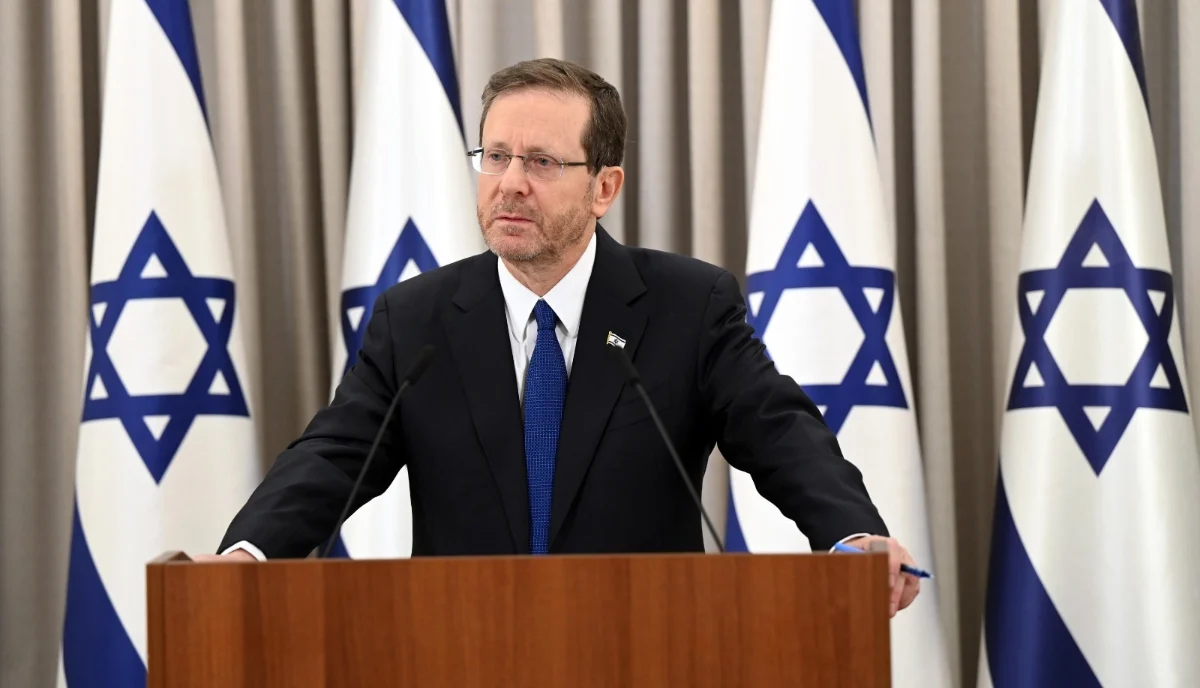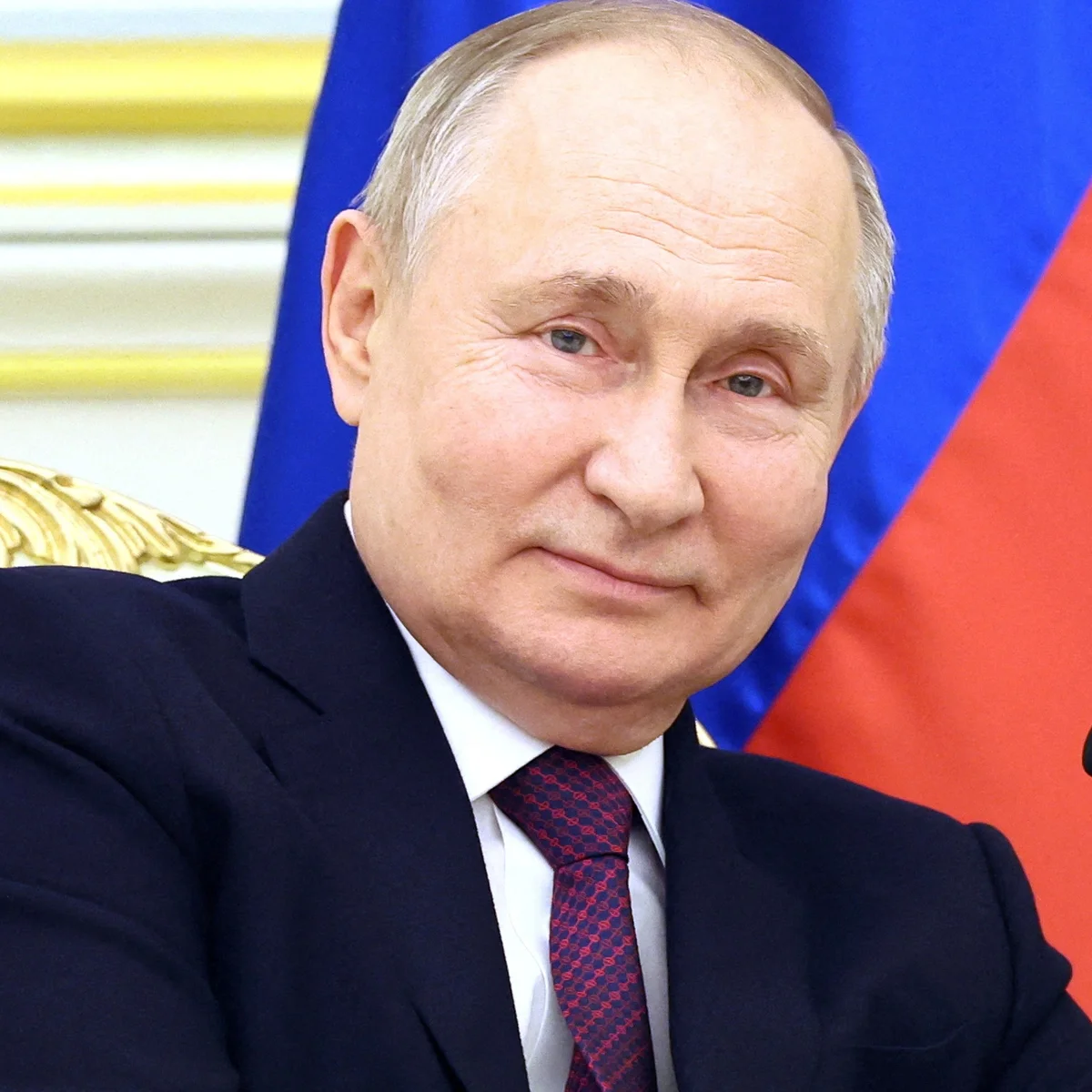
PRESIDENT VLADIMIR PUTIN UNSCATHED: Western attempts to isolate Moscow have failed, and sanctions have inadvertently strengthened the Ruble and Russian economy
Every sanction tells a story about power: We are strong. You are weak. We will hurt you until you obey.
History tells another story. A story about boomerangs. Thrown badly, a boomerang comes back and hits the thrower. Versailles was a boomerang. The sanctions against Russia are a boomerang. Europe is now learning what it means to be hit by its own weapon — in its gas bills, its factories, and its divided councils.
I. Versailles: The Invention of Invisible Money
In 1933, Germany was broke. Foreign reserves gone. Six million unemployed. Still weighed down by the debts of the First World War. Versailles said: you shall not re-arm. You shall not borrow. You shall not have an air force, tanks, or submarines. Hjalmar Schacht answered not by defying Versailles, but by outwitting it.
He created MEFO — Metallurgische Forschungsgesellschaft— a shell company owned by Krupp, Siemens and Rheinmetall. MEFO issued MEFO bills: six-month promissory notes that could be discounted at any bank and rediscounted at the Reichsbank.
In law, the Reichsbank was not lending to the government. In fact, it was lending without limit. By 1938, 12 billion Reichsmarks of MEFO bills were in circulation — 120 times more than the legal limit. They paid for rearmament off the books. Unemployment fell from six million to near zero by 1939. But the miracle had a ticking clock. The bills came due in five years. Germany could not pay them through taxation. Schacht warned Hitler to cut military spending. Hitler chose the other way to pay: plunder. First the assets of Jewish families. Then the central banks of Austria and Czechoslovakia. Then war itself, because war was the only way to keep the bills from coming due.
Lesson One: A sanction-evasion system that works in the short term creates a debt that must be paid later.
II. Moscow: The Invention of Forced Demand
In February 2022, the US, EU and UK imposed the most sweeping sanctions in modern history. SWIFT was cut. $300 to $320 billion in central bank reserves were frozen, €194 billion of it in Euroclear in Belgium. Oligarchs’ yachts and accounts were seized. The world was told: the Ruble will collapse, the banks will fail, the military-industrial complex will stall.
The Ruble did not collapse. For a time, it became the strongest currency in the world. Why? Because Russia did what Schacht did. It invented. On 31 March 2022, President Vladimir Putin signed Decree No. 172 — the gas-for-Rubles decree. His argument was brutally simple: “We supplied gas to Europe. They received it and paid us in euros, which they themselves then froze. We delivered part of the gas essentially for free.”
Buyers from “unfriendly countries” had to open two accounts at Gazprombank: one in euros or dollars, one in Rubles. The buyer paid euros into the first. Gazprombank sold those euros on the Moscow Exchange for Rubles, and transferred the Rubles to Gazprom. Only then was payment complete.
The buyer did not carry Rubles. But the system forced a purchase of Rubles on the Moscow Exchange every time a gas bill was paid.
And here is the law the sanction-makers forgot: a currency appreciates when there is a demand for it.
Three forces hit the Ruble at once: forced demand for Rubles to pay for gas; forced supply cut, as capital controls banned Russians from selling Rubles and exporters were forced to convert 80% of foreign earnings; and forced scarcity, as imports collapsed.
The Ruble went from 135 to the dollar in March 2022 to 52 by June 2022. It was not a free-market miracle. It was a constructed miracle. But constructed does not mean fake. It worked.
Once it worked for gas, it worked for everything. Oil to India and China in Rubles, Yuan and Rupees. Arms settled without Dollars. By late 2025, 99.1% of Russia-China trade was settled in Rubles and Yuan, up from less than 2% before the war.
The freeze, meant to punish Russia, taught every other country a lesson: reserves in New York, London or Brussels are not neutral. They can be frozen. Central banks responded by buying gold — 863 metric tons in 2025 alone — and by building parallel pipes: SPFS, CIPS, BRICS payment prototypes.
That is the boomerang. When you weaponize inter-dependence, others build independence.
III. The Boomerang Hits Home: Europe Divided
But the sharpest edge did not hit Moscow. It hit Europe.
Sanctions did not unite Europe. At one point, they divided it — politically, economically, and morally.
Brussels first said paying through Gazprombank would breach sanctions. Then it said it might not. Then it said it would. In the confusion, the bloc split: Poland and Bulgaria refused — Gazprom cut them off on 27 April 2022. Germany, Austria, Hungary, Slovakia, Italy and others complied in practice — they paid euros into Gazprombank, allowed the conversion, and called it “paying in euros” to satisfy Brussels while satisfying Moscow to keep the gas flowing.
That is the first division: principle versus survival.
The second division was between East and West, landlocked and coastal.
Before the war, Russia supplied 40-45% of EU gas. By 2024, that was down to 19%. But the cost of replacing it was not shared equally.
Germany, which imported more than half its gas from Russia, imposed a gas levy of 2.419 cents per kWh from October 2022 to April 2024 to save Uniper. For an average family of four, that was an extra €480 a year on top of a bill of €3,568. Chancellor Scholz announced a €65 billion shield, but the shield did not remove the wound. It only covered it.
In the UK, the Ofgem price cap jumped 80% to £3,549 a year from October 2022, up from £1,971. The government introduced the Energy Price Guarantee, but the guarantee was paid for by the taxpayer — which is to say, by the same consumer, in another form. In Britain, as in Germany, the cost of sanctions was passed on to the consumer.
Then there were the countries for whom the boomerang was existential.
Hungary, Slovakia and the Czech Republic — the Visegrad countries — receive Russian oil and gas through the southern leg of the Soviet-built Druzhba pipeline, through Ukraine. They are landlocked. They have no LNG terminals. They cannot simply buy a cargo from Qatar and dock it in Budapest.
Hungary received 4.8 million tonnes of Russian crude in 2023, over 60% of its needs. Slovakia received 4.6 million tonnes, over 70%. The Czech Republic received 4.2 million tonnes, around 65%.
When Brussels demanded a total phase-out, they did not hear a policy. They heard a threat to factories, heating, winter.
In October 2026, at the Visegrad summit in Bratislava, Slovakia and Hungary called for “greater flexibility.” Deputy Prime Minister Denisa Saková said Bratislava had been the entry point for Russian oil and gas, but now risked becoming “the end of the line.” Hungary and Slovakia have taken the phase-out regulation to the European Court of Justice, calling it “economically suicidal.”
Their wholesale electricity futures are more than 60% above pre-crisis levels, according to Ember. Even Energy Commissioner Dan Jørgensen had to admit the “serious” situation: “We used to be dependent on Russia. We’re moving out of that. Now, that is good. But the current situation shows that we are now dependent on the global market.”
Europe replaced dependence on Russia with dependence on a volatile global market, and the bill is paid by the pensioner in Prague, the factory worker in Košice, the mother in Budapest, the family in Berlin, the household in Manchester.
IV. Ingenuity — And Its Price
Let us be fair. Sanctions did hurt Russia, albeit slowly.
Military spending reached $190 billion in 2025, 7.5% of GDP. Factories went to three shifts. Russia produced an estimated 3 million artillery shells, over 1.5 million drones, and more than 2,400 missiles in 2025. That ingenuity cannot be denied.
But ingenuity is not immunity.
The liquid part of Russia’s sovereign wealth fund saw a downward spiral from 6.5% of GDP at the start of the war to 3.8% in April 2026. Oil and gas revenues fell year-on-year in early 2026.
Russia can make more shells and military products, but could, if unchecked, be at the expense of other areas of production.
A war economy is by definition not a strong economy. It is a concentrated economy.
Just as MEFO bills came due in 1938, Russia’s bills — fiscal, demographic, technological — could probably come due, in the form of stagnation, a shrinking wealth fund, and a defence budget that can only be sustained by compromising something elsewhere.
However, it is important to consider what the “New Russia” in Donbas bring to Mother-Russia, although in the short term there would have to be capital investment to rebuild some of the devastated areas.
The freeze and forfeitures of funds and assets experienced by the Oligarchs, inadvertently, forced them to invest locally. This, in turn, became a boon for Russia.
Notably, Western sanctions did not produce regime change. They did not produce a strategic defeat of Russia, as NATO, the EU and the US had hoped. Instead, they produced adaptation, and adaptation produced a new world: a world where the Dollar is less trusted, where parallel systems exist, where Europe is divided over who pays for its own principles.
V. The Lesson
We learn five things:
1. Sanctions are a siege, not a weapon.
A siege starves slowly, while forcing the besieged to find new food. If the siege is leaky — if China, India, Turkey, UAE and Central Asia keep supplying — it will not work on the timeline Western politicians promise.
2. Sanctions create a constituency for evasion.
In Russia, evasion has become a business. By contrast in Germany, MEFO created industrialists who needed war to get paid.
3. Freezing assets teaches everyone else not to trust the freezer. Perhaps this is the greatest lesson for the entire international community.
4. A war economy looks strong until you look at what it is not producing.
Shells are not prosperity.
*5. The ultimate limit is not money. It is people and technology.*
And the deepest lesson: Sanctions without a political off-ramp do not produce peace. They produce invention — and invention, without justice, produces the next war.
Versailles tried to control Germany by limiting it. It unleashed Schacht. Sanctions tried to control Russia by isolating it. They unleashed Decree 172, SPFS, de-dollarisation, and a divided Europe.
The world deserves better than a choice between sanctions that do not work quickly and wars that do not end. It deserves a paradigm where economic power is not used to punish, but to build a security architecture that does not require a country to choose between humiliation and ingenuity.
Until then, the boomerang will keep coming back. And it will keep hitting not the target, but the thrower — and the ordinary people who were never asked if they wanted to throw it in the first place.
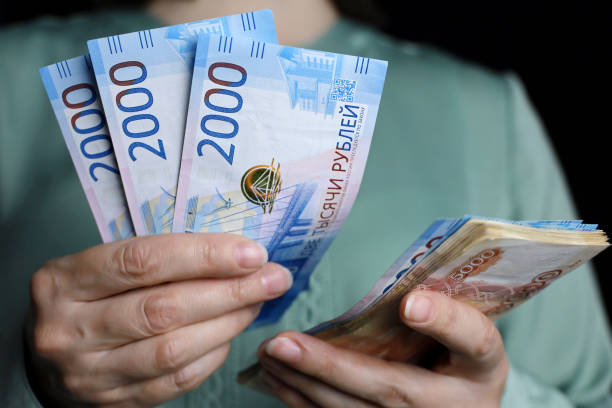
CURRENCY RESILIENCE: EU and Western nations have been forced to exchange the Dollar and Euro for Rubles as a prerequisite for buying Russian oil, gas and another commodity