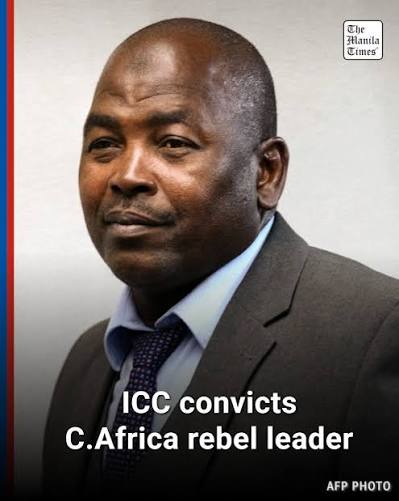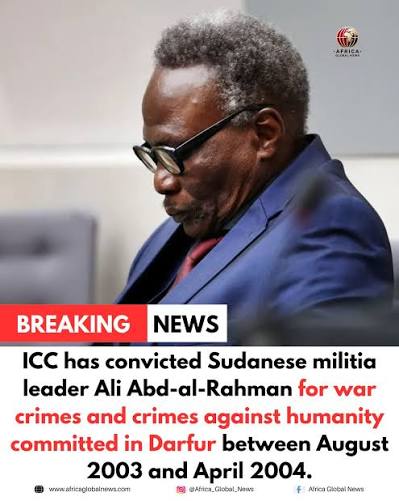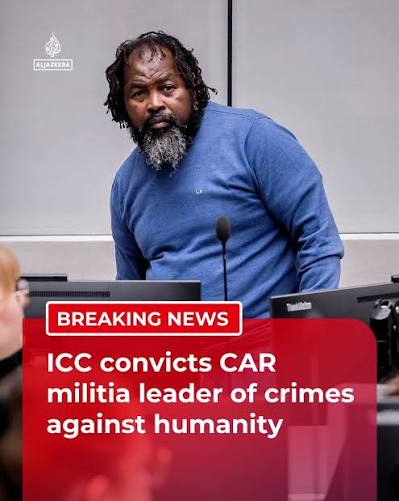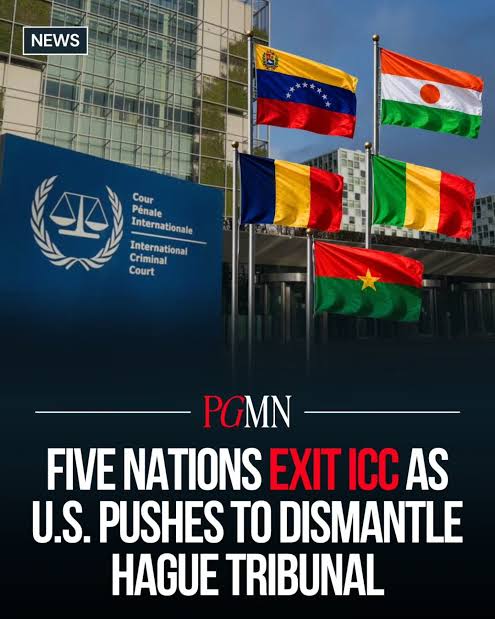
Imagine if there was a court in Europe with universal jurisdiction which engages in blatant racial profiling and has only ever convicted black suspects in its almost 25 years of existence. Imagine if 80-90 percent of the people that the court has ever indicted were black. Imagine if that court has detained black suspects for up to ten years before releasing them because there was ultimately no case to answer. This is not an imaginary court. In fact, it is a court in The Hague in The Netherlands, supposedly the centre of international justice. The racist court in question is the International Criminal Court (ICC) and it matches every definition of racism, including that of the Cambridge Dictionary: “policies, behaviours, rules, etc. that result in a continued unfair advantage to some people and unfair or harmful treatment of others based on race.”
It is worth citing British commentator Brendan O’Neill’s take on the hypocrisy surrounding the ICC: “[T]here is an International Criminal Court which only ever tries black people, African black people to be precise, and it is treated as perfectly normal. In fact the court is lauded by many radical activists as a good and decent institution, despite the fact that no non-black person has ever been brought before it to answer for his crimes.”
The pursuit of justice in the face of wrongdoing – especially crimes against humanity and war crimes – is of course understandably at the heart of human values. Established in 2002, on the basis of the 1998 Rome Statute of the International Criminal Court, the ICC was embraced by many for that exact reason. The Court was set up as a treaty-based body to exercise jurisdiction over four crimes, war crimes, crimes against humanity, genocide, and the crime of aggression on the basis of complementarity: The Court would only ever intervene should an ICC member state be unable or unwilling to prosecute individuals for those crimes within its jurisdiction.
The Court was embraced with great enthusiasm by African countries, who were also the first to support the adoption of the Rome Statute. On 2 February 1999, Senegal became the first country to ratify the Rome Statute. African nations and civil society were not only early supporters of international criminal justice; they played a vital role in shaping the Statute. The February 1998 Dakar Declaration for the Establishment of the International Criminal Court, for example, was adopted by the Assembly of Heads of State and Government of the Organisation of African Unity (now the African Union) in June 1998. 47 African countries were present at the Rome conference. A legal scholar noted at the time that “The African region played a great and active role in the realisation of this Court.”
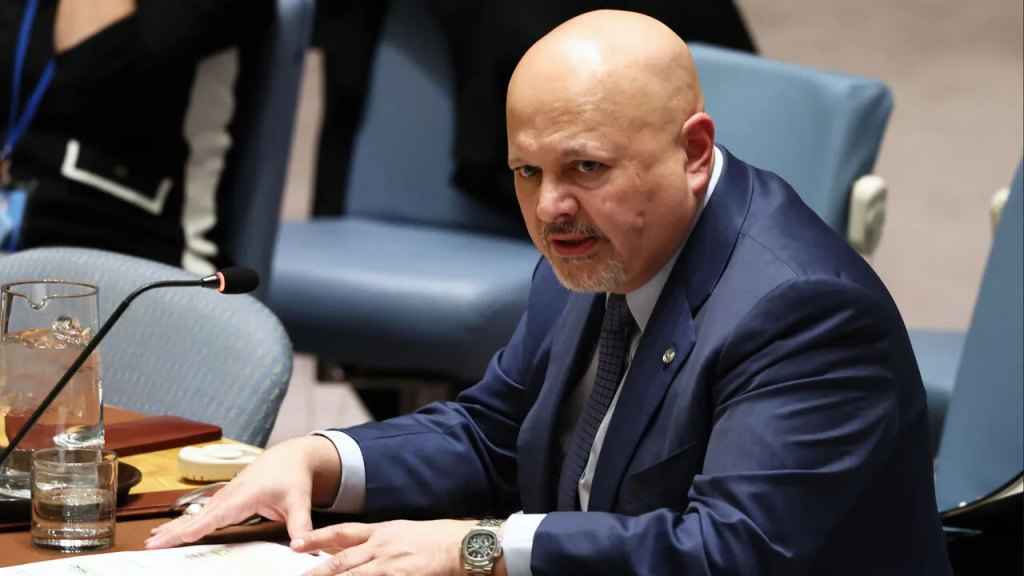
DISGRACED: Former ICC Chief Prosecutor Karim Khan left unceremoneously
Despite being hailed as a great achievement for Mankind, within a short space of time the ICC revealed itself to be both simply unfit for purpose and a racist court to boot. Writing in 2024, Amnesty International pointed out that the ICC had “focused” its prosecutorial lens “almost exclusively on Africa since it began operating in 2002.”. This racism has not escaped the notice of observers from both sides of the political spectrum. Conservative American legal scholar Professor Jeremy Rabkin notes that “Africans have reason to be wary”, and on the left, Professor Rachel López, an American expert in public international law, has pointed out that the ICC has broken the Court’s own anti-racism policy. The Rome Statute itself requires the ICC to follow and apply the law “consistent with internationally recognized human rights and be without any adverse distinction founded on grounds such as [inter alia] race.”
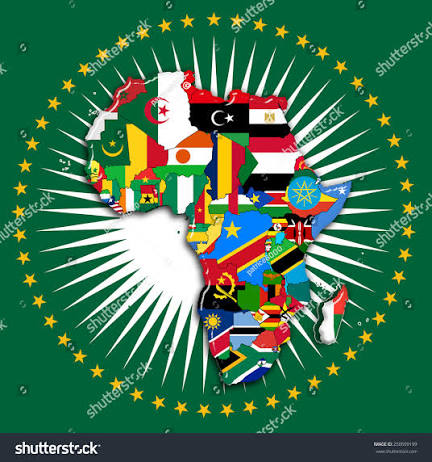
BEST TO QUIT: The writer argues that Africa needs to consider quitting the ICC en masse
Professor López observes further that “the ICC builds on a long history of criminalizing Blackness . . . Since the ICC supposedly prosecutes only ‘the most serious crimes of international concern,’ these convictions express the not-so- subtle suggestion that the ‘worst of the worst’ criminals on the planet are Black men.” Lopez adds that “the geographic focus of such analyses obfuscates a starker, uncomfortable truth: all those charged and convicted by the court have been Black or Brown and not one has been White.” Respected Yale University law Professor Rebecca Hamilton is equally blunt about the ICC: “One of the defining narratives of the Court’s first 15 years of operation has been that it has an anti-Africa bias.”
The Uppsala Conflict Data Program, a data collection program on organised violence, based at Uppsala University in Sweden, has recorded hundreds of distinct armed conflicts and civil wars since the ICC opened its doors in 2002. These wars have spanned Africa, Asia, Europe, the Middle East, and the Americas, including Mexico, Venezuela and Ecuador. Perfunctory window-dressing aside, the Court has in effect only ever focused on Africa.
The ICC’s racial profiling of black Africans has also been confirmed, as it were, from the horse’s mouth itself. On 17 May 2017, an International Criminal Court Judge, Marc Perrin de Brichambaut, gave a talk at Beijing Law School. The presentation was videoed and subsequently transcribed and published. De Brichambaut illustrated the European arrogance and systemic racism at the heart of the Court. In his talk he stated that European countries were “paying the bills for the ICC” and described African states as “a group of 54 countries who provide the suspects and the accused” for the Court. In so doing he confirmed what many Africans had long believed, that the ICC was a European-funded instrument of European – and especially French – foreign policy in Africa. Had a judge in the United Kingdom said that white people paid for his court and black people provided the suspects, that judge would have been summarily sacked. De Brichambaut was instead promoted to serve as Vice-President of the Court from 2018-2021.
CLOSE SHOP! US President Donald Trump has called for the total shut down of the controversial court
It is important to quash a persistent lie about Africa and the ICC once and for all. Both black and white apologists for the ICC’s racism have claimed that the reason for the Court’s nearly exclusive focus on Africa is due to African “self-referrals”, that is to say African ICC signatory states referring their own country to the Court. The reality of “Self-referrals” is that they were never envisaged in the Rome Statute. They are an example of the Court making things up as it went along. The ICC-friendly international legal scholar Professor William Schabas, present at the Rome Conference and author of the definitive 1,600-page The International Criminal Court: A Commentary on the Rome Statute, has clarified that “The drafting history of article 14 of the Rome Statute leaves little doubt that what was considered was a ‘complaint’ by a State party against another State.” The Chief Prosecutor at the time, the scandal-ridden Luis Moreno-Ocampo, conjured up cases regardless by corrupting the very Statute he had been appointed to uphold. Legal scholars have euphemistically said that he “shopped for work.” He pressured the governments of Uganda and Democratic Republic of Congo into referring crimes committed by rebel forces within their own territory — as opposed to the territory of another State Party — to the ICC prosecutor, ignoring the inconvenient fact that both countries had functional legal systems and were willing to prosecute. He did so because the Court was lying idle. Professor Schabas was scathing about Ocampo’s trick of “self-referral”: “There was only one problem: it is not in the ICC Statute. Yet, the judicial activism of the Pre-Trial Chamber on this point went unchallenged.” For “judicial activism” read making things up.
Judge de Brichambaut was very clearly aware of this political sleight of hand on the part of the Court and its Chief Prosecutor, a corruption of the Rome Statute he had himself negotiated, describing it as a “sort of pump priming. There was nothing. No precedent. So, he made a . . . very ambiguous choice”. The Court’s chicanery did not go unnoticed. The Economist, a supporter of the Court,noted that “impressions that the judges and prosecutor were making the rules up as they went along were often accurate”. Several equally corrupted Prosecutor-engineered “self-referrals” would follow in the Central African Republic, Mali and the Ivory Coast, often as an adjunct to European military involvement in those countries.
The African Union’s former chairman, Jean Ping, spoke for many Africans when he noted in 2010 that “[w]e are not against international justice.” He observed presciently, however, that “It [just] seems that Africa has become a laboratory to test the new international law.” In 2016 President Kenyatta also kicked back: “Africa is not a third-rate territory of second-class peoples, we are not a project, or experiment of outsiders.” African concerns were confirmed by other ICC Judges. In 2011, Sir Adrian Fulford, one of the few real judges at the Court, warned that “it is dangerous for first-instance judges to use a serious war crimes trial as a laboratory experiment.”
The ubiquitous Judge de Brichambaut provided more detail about how Africa had been targeted by largely un-or-under qualified judges in a dubious European legal experiment: “The [Rome] Statute is not a perfect legal object . . . you have in a text like the Rome Statute, many elements which are at a very unequal degree of elaboration . . .” [That is to say, not thought out]. He then went on to state “I tend . . . to be perfectly honest” in telling his students to “see [the ICC] as a major experimental organization, do not see it as a final construction. It will take many-many-many years to stabilize the institution and to create all the good practices which are inherent to . . . an international tribunal.” In the meantime, it would seem, Africa and Africans must make do with bad practices, apparently for “many-many-many years”.
A second issue must also be cleared up. A question asked by supporters of the ICC of critics is why has Africa not left the Court? The answer is simple. Economic and political blackmail by the European Union: No ICC membership, no trade deals, economic aid or development assistance.
As self-evidently the main focus of the Court, Africa must also ask itself why it should accept not just two-tier racist “justice”, but also consent to be “judged” by a flawed and corrupted third-rate court. In addition to being racist, the ICC has also failed in every one of the claims made to justify its existence. Far from being the model court promised to the World, it has judges who can’t judge and prosecutors who can’t prosecute, with the JusticeInfo.Net website adding that “[t]he first three prosecutors of the International Criminal Court have failed to be of high moral character.” The Court has not delivered “swift justice” as it promised to do: Former Ivory Coast President Laurent Gbagbo’s ten years in detention is proof of that. The ICC is not independent: It is dependent on two-thirds of its funding from the European Union and also grants prosecutorial rights of referral and deferral to the world’s most political body, the United Nations Security Council. Far from ending impunity and immunity, the Court has entrenched them. Instead of protecting sexual victims and delivering gender justice, the Court has been accused of systemic misogyny and is mired in repeated sexual misconduct scandals. The ICC promised to deal with the world’s most serious crimes. Instead the court has ignored any allegations emanating from western military interventions in Iraq and Afghanistan, focusing instead, for example, on low-hanging fruit such the alleged use of child soldiers in the DRC and pursuing Malian nationals for destroying mausoleums. The ICC’s claims to be victim-centred have been publicly contradicted by Human Rights Watch and the Court’s promises to usher in a new era of gender justice have been criticised as “partial and inconsistent”. And it is all too clear that the ICC has failed to provide the deterrence it promised of it.
Global North governments, politicians, legal scholars and human rights activists appear to be very content nevertheless to foist upon the Global South, and especially Africa, a dysfunctional Court that simply would not be allowed to exist in western countries. These supporters and enablers of the ICC, while accepting that the Court faces “criticisms of perversity, futility, and jeopardy”, and “has had difficulties fulfilling the expectations of its founders”, insist that Africa be dictated to by a court which they themselves describe as prone to “double standards”, “in crisis”, “oppressive”, “imperfect”, “deeply flawed”, “needs fixing”, “ineffective” and “tone-deaf”.
The African Union has labelled the ICC a “neo-colonial court”. It certainly fits the bill. The European Union’s fingerprints are all over the Court. Indeed, if, as Professor Mia Swart argues, it is “uncontroversial that international law has been shaped by colonialism and imperialism”, then the ICC is Europe’s handmaiden.
The sooner Africa is free of the International Criminal Court the better.
SOME OF THE MAINLY AFRICAN VICTIMS OF THE ICC JUSTICE IN RECENT HISTORY