PLAIN SOPHISTRY: Modern Chinese infrastructural development is unparalleled and a marvel to watch
In the first half of 2026, China’s economic foreign policy has indicated that for Beijing, diplomacy and trade relations are not distinct policy areas. Trade agreements, tariff concessions, investment promotion, supply chain linkages, internationalization of currency and technology cooperation as well as political diplomacy are now used as components of one comprehensive economic approach. It is significant with regard to Africa because China is doing both at the same time, one, that it is opening access to its market and two, it is reaching out for deeper connections in the areas of critical minerals, manufacturing, infrastructure and industrial supply chains.
Thus the first half of 2026 gives a clear sign of the direction in which Chinese diplomacy will be moving in the second half; towards a closer relationship with the Global South, closer economic ties with its neighbours in Asia, competition with Europe and prevention of the disruption of strategic supply chains.
- “Industrialisation is the true test of South Africa-China relations
In South Africa, it is not about whether China is opening its market, but the central economic question. Whether South Africa will be able to produce competitive value added goods to utilize that opportunity.
That’s where things get a little more complicated with the relationship. The substantial amounts of minerals and agriculture products already exported to China and the import of manufactured products, machinery, electronics and other industrial products indicates that South Africa is already a major trading partner of China. Ideally, a successful economic partnership will be structured to minimise structural asymmetry through growing South African involvement in higher value aspects of the partnership.
The South African government has specifically flagged sectors where the Chinese side should be investing more and doing industrial co-operation, including manufacturing, automotive production, batteries, pharmaceuticals, medical devices, rail manufacturing, steel, tyres and the digital economy. The 2025–2029 South Africa-China Trade and Investment Package was precisely formulated with these goals in mind. (Government of South Africa)
This direction was given further momentum during his visit in June by Deputy President Paul Mashatile. In his visit to China, South Africa has pitched itself as a portal to the wider African market, leveraging on the investment opportunity that it has to offer because of its participation in the African Continental Free Trade area. (Government of South Africa)
At stake is a quite considerable strategic opportunity. If South Africa can provide a reliable electrical supply, ports, railway networks, industrial facilities and regulatory certainty and access to African markets, it could be an appealing option for Chinese companies considering making investment commitments in other countries. This will, however, necessitate negotiations for productive investment from the part of South Africa and not only for more imports. - China and ASEAN and contends that this has become its key economic alliance
Until now, China-ASEAN relations constitute one of the most strategic aspects of China external economic policy. China has been and will remain the top trading partner of ASEAN for the next six consecutive years as bilateral trade surpasses US$1 trillion for 2025. In 2026, in the first half of the year, Beijing further consolidated this partnership by implementing the Protocol for the Upgrade of the ASEAN-China Free Trade Area 3.0 (FTA 3.0). (Chinese Foreign Ministry)
This relationship is one that has implications beyond just tariff cuts. ASEAN is deeply integrated in Asian manufacturing value chains, such as electronics, semiconductors, automotive components and increasingly advanced manufacturing. China thus has a clear interest in sustaining good business relations with the SE Asian economies, despite the geopolitic tensions in the Indo Pacific region.
Beijing sees in ASEAN diversified regional markets and partners in the value chain. China is an access to a vast market for consumers and industry for the ASEAN countries. This connection is so not just politically aligned, but also strategically interdependent.
That factor carries weight to the understanding of China’s diplomacy. Beijing shouldn’t necessarily expect its trading partners to endorse its political outlook. The mere fact of a certain level of economic interdependence can itself be a stabilising factor. - Europe: Competition without economical separation
However, the picture is far from rosy when it comes to China and Europe. The level of trade tension doesn’t seem to have receded much, with tensions shifting from export tax preferences to industrial subsidies, electric vehicles, export controls, market access, and China’s massive trade surplus that continues to plague the economy.
However, the first half of 2026 was also a testament to the fact that Beijing and Brussels have established an institutional framework for economic cooperation. On 29 June, China and the European Union held the first meeting of their new Trade and Investment Consultations mechanism. Four work streams identified: trade and investment balancing, export controls, IP
rights and WTO reform. The two sides agreed to further consultations at the ministerial level in the fall of 2026. (MOFCOM English). This suggests that China is looking to control competition instead of facing a full-scale economic decoupling. Both sides see Europe as too essential a market, technology partner and source of investment to realize an economic split as painless. Meanwhile, in Europe, the governments are increasing their awareness of Chinese supply chains and Chinese industrial competitiveness. Thus, this second period, in 2026, will most likely be one characterised by further negotiation and an increasing degree of strategic competition. ON A MISSION: China’s top diplomat toured Africa in a clear message about the seriousness with which Beijing takes relations with the continent.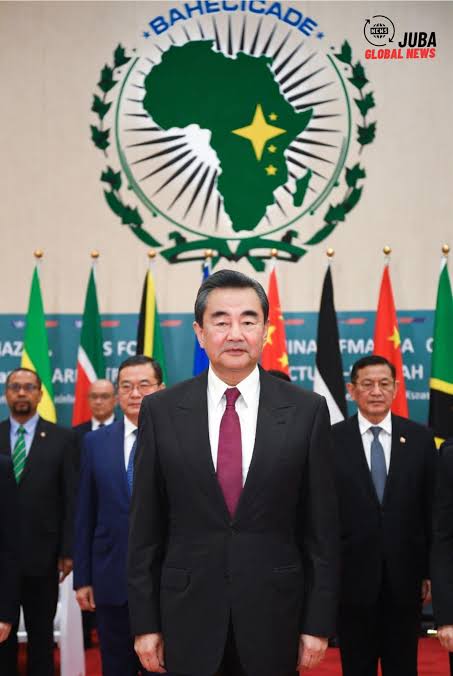
- ON A MISSION: China’s top diplomat Wang Yi toured Africa in one of the clearest foreign policy indications that showed the seriousness with which Beijing takes relations with the continent amid the rapidly changing world order.
- Central and eastern Europe: investment diplomacy
The case of China’s economic ties with Central and Eastern Europe is another example of the use of investment as a means to strengthen diplomatic ties.
In the first half of 2026, the trade volume between China and the countries of CEE was 580.1 billion yuan (US$85.6 billion), increasing 11% YOY. Chinese capital investment in the region, ranging from vehicle manufacturing to battery production is increasingly helping to fuel the bilateral trade. (China.org.cn)
This may be of strategic importance since Chinese companies are increasingly trying to build production capacity closer to their foreign markets. Investment can thus be a means for access to markets even in times of new constraints for traditional trade.
There’s a takeaway for African policy makers here: when negotiating investments, one should look not only at investment inflows to Africa but also at the productive capacity they generate.
In this chapter, the editors provide an overview of the Renminbi and discuss the financial aspects of Chinese diplomacy. - Technology Is Finding Its Way into China’s Diplomacy
Technological co-operation also marks a growth in China’s ambassadorial activities. Significantly is the fact that what can be called broadly China’s “AI diplomacy” has emerged.
In a bid to establish itself as a public-goods provider for the developing world in AI models, digital infrastructure, and technical training, Beijing has created a shuffle of institutions and policy plans. Beijing’s shuffle of institutions and policy plans aims to make Chinese modes for AI, digital infrastructure, and technical training more likely to serve the developing world as public goods. As early as July, President Xi Jinping encouraged China to expand international cooperation on AI, such as building international application cooperation centres and the World AI Cooperation Organisation. (Financial Times)
This poses a question and an opportunity for Africa.
Lower costs in accessing AI infrastructure, digital platforms and technical training could help to accelerate productivity in African economies. African governments, however, will have to take into consideration data governance challenges, technological reliance, cybersecurity, IP and domestic capability.
The goal should not be to achieve Chinese technological dependency instead of technological dependency on the west. This should aim at enhancing Africa’s technical voice through diversifying partnerships, and strengthening domestic capabilities. - What to anticipate in the 2nd half of 2026?
2026 will most probably be a year of implementation, not of just proclaiming new diplomatic efforts.
The first question that will arise for Africa is whether China’s offer of zero-duty for imports is likely to lead to improved African exports. Tariff liberalisation very likely will take a while to put in place, so careful consideration of the early evidence is required.
The final part of the China economic partnership pacts, and their implementation in South Africa, will be a priority. SA trade plans explicitly cite an Early Harvest Agreement as a target for 2026 in the framework of China Economic Partnership for Shared Prosperity. (South Africa’s Parliament)
It is important that the relationship should develop towards more and more industrial cooperation. Driving the automotive industry, critical minerals, renewable energy, batteries, agriculture, pharmaceuticals and digital technologies are expected to remain significant sectors.
In addition, the process of implementing the ACFTA 3.0 framework is expected to further boost China-ASEAN ties. China already trades more than US$1 trillion with ASEAN each year and incremental gains in market integration could make a significant difference.
But for Europe, it’s more complicated. The negotiations will probably continue, however structural issues like trade tensions in the area of industrial policy, electric vehicles and export controls and market access will stay in place.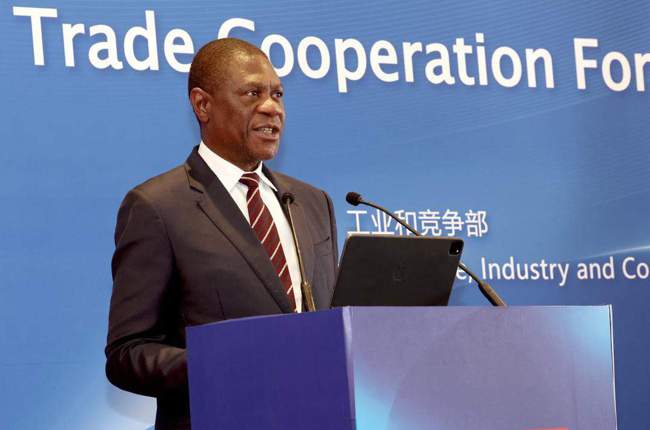
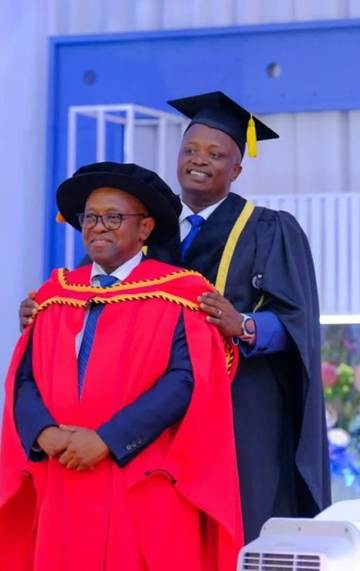
- WON OVER: Deputy President of SA, Paul Mashatile, was thoroughly impressed by China’s EV-dominated automobile industry, which he was to see exported into SA.
- Forecast: China’s Economic Diplomacy Dec-2026
My even lower bound estimate is that China will end 2026 with a wider and diversified external economic network than it started with. Asia is Beijing’s top priority and there’s been a pivot towards the Global South, ASEAN and emerging markets, but they’ll never give up on their ties to Europe and other major developed markets.
The shift from political partnership to preferential market access is the most significant thing for Africa. China’s zero-tariff policy offers a key opportunity to African exporters, but who will benefit at the end of the day will be decided by productive ability. Countries with the ability to engage in the processing of minerals, to develop exports of agricultural products that meet Chinese standards and to manufacture products of their own, will be able to retain a significant portion of value than countries that remain as privileged exporters of scarce raw materials.
If South Africa can leverage its mineral resources, industrial potential and AfCFTA market access with the Chinese investment pulse, then it’s in a very strong position. The country should therefore not only regard China as a market to export to, but possibly as a potential industrial partner. Strategic goal should be toward co-production, technology transfer, local supply chains and African market integration.
Greater focus on financial connectivity and yuan settlement, digital infrastructure and cooperation on artificial intelligence, are also likely to prevail in the second half of this year. These will slowly be the trend towards more multidimensional economic relations with China.
The basic danger is that African countries are in effect becoming more a part of the Chinese economy without growing enough to do so. Absence of industrial development is not economic transformation – it’s trade dependence.
There is, however, a huge opportunity.
But at the very time that international trade is fragmenting, China is providing African economies with enhanced access to the second-largest in the world, its own. The key for African governments is whether they are able to translate that access into industrialisation. - Conclusion: Trading with China to Building with China
The first half of 2026 indicates that Chinese diplomacy is witnessing new developments with a stronger inter-mesh between trade, investment, technology, finance and political ties.
China’s diplomatic presence itself is not the most significant aspect when it comes to Africa. It’s the opening up of China for zero-tariff trade and potential for greater in-rinse investment and industrial cooperation.
As for south Africa, that is even more precise. The country is endowed with mineral resources, an industrial economy, financial institutions and strategic location, which make it a huge potential channel for Chinese investments into Africa. However, this will happen as a result of a conscious effort to move away from commodity export to beneficiation, manufacturing, technology and regional value chains.
The gauge for China’s African diplomacy should thus not just be the number of agreements signed as “end of 2026” approaches.
Whether those agreements lead to increased African exports, increased industrial capacity, higher value jobs, technology transfer and strengthened domestic productive capabilities, should be it.
It is obvious that China is considering its stance in the next economic order of the world.
This is what Africa has to do!
ON A MISSION: China’s top diplomat Wang Yi toured Africa in one of the clearest foreign policy declarations that showed the seriousness with which Beijing takes relations with the continent amid the rapidly changing world order.