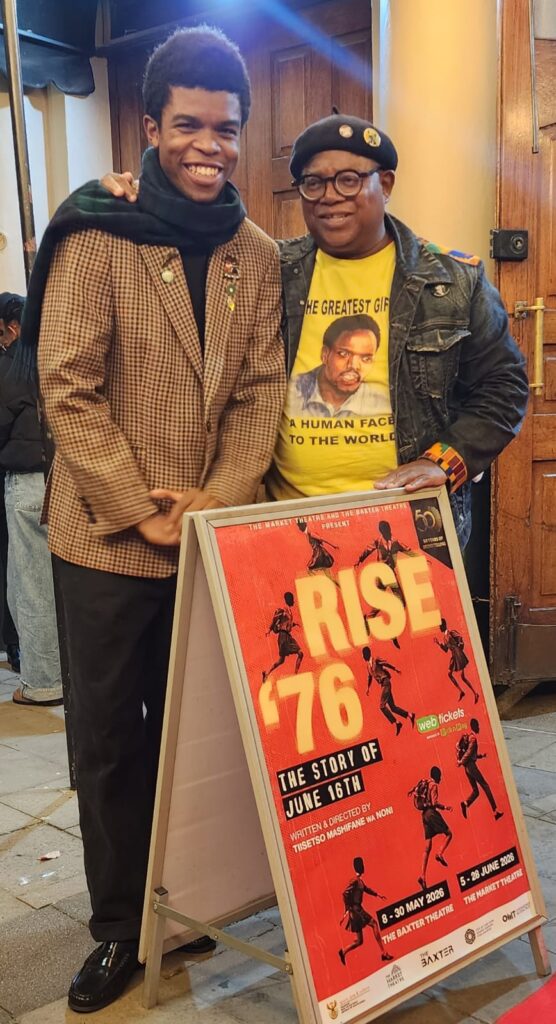
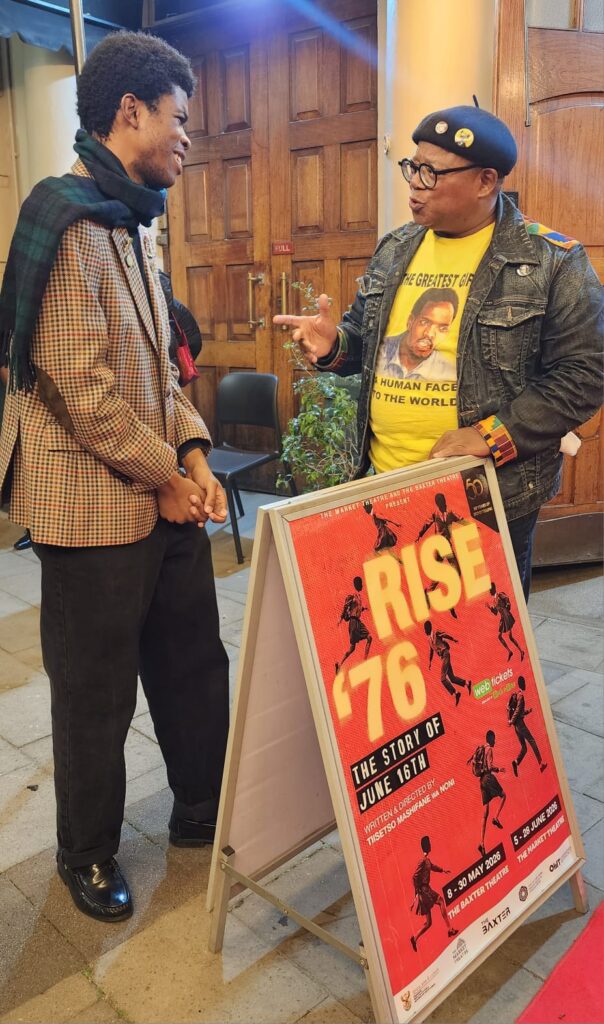
RISE 76’s director Tiisetso Mashifane wa Noni is a súper star on the rise. She has risen to staggering heights.
The young, multi award winning director who adapted the work for the stage was always going to meet history with ambition.
She must have done her own extensive research: archives, TRC reports, autopsy records and interviews.
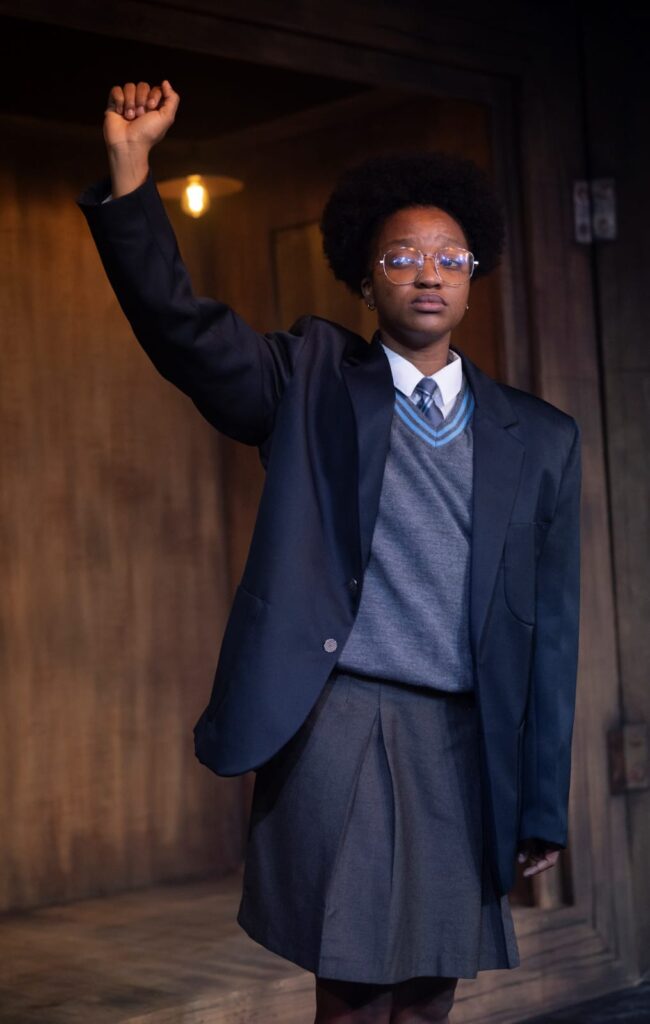
We know history has no single source.
But from where I was sitting, this is closest to a clear stage adaptation of historian Sifiso Mxolisi Ndlovu’s The Soweto Uprisings: Counter Memories of June 1976. And what a soul stirring theatrical performance it is.
Its outstanding achievement is that it does what 33 years of commemoration has often failed to do: it humanizes the tragedy without cheapening it. That is storytelling with muscle, research, insight and moral courage.
Sifiso Mxolisi Ndlovu: The Historian Who Refused a Narrow Story
Granted, we cannot make Wa Noni a socalled “first” to tell the story they way she does. There are others who came beforenher.
To understand RISE 76, you must first understand Sifiso Ndlovu. He is a product of the student uprisings himself. A child of 1976 who, from Bantu Education schools went on to study History at the Universities of Natal and Wits to fulfill a mission: to tell a more comprehensive story of the uprising.
Ndlovu is a Professor of History at UNISA. Also he is a member of UNESCOSs Scientific Committee responsible for updating the General History of Africa series.
In his book Counter Memories of June 1976, Ndlovu challenges the dominant narrative that students were the sole leaders of the resistance.
He argues, with archival rigor, that June 16 was not made only by placards and petrol bombs. It was made by parents who sheltered children, principals who tried to mediate, teachers who were expelled for defiance, school boards who wrote letters, journalists and editors who risked careers, and community members who carried the wounded.
Above all, Ndlovu transcends partisan politics. He refuses to hand June 16 over to any political party as property. He insists on a human record. Parents, principals, teachers, Black police, white doctors, nurses, Broederbond inspectors, all are placed in the same frame.
That is intellectual courage. That is history as it was lived, messy and shared. And this is what Wa Noni taps into.
There is an intuitive link between Ndlovu and the young producer/director, Mashifane wa Noni of RISE 76. The play ends up being an intergenerational encounter between a child of 1976 and a child of the child of 1976.
The historian gives facts and context. The artist gives breath and blood. Together they resurrect a national memory that politics had flattened.
Storytelling and Scope: Counter Memory on Stage
RISE 76 honors Ndlovu’s mission completely. It does not reduce 1976 to Hector, Tsietsi, and police bullets. Instead it brings the full cast into the room.
The production traces the build up with patience. Problems started in 1974. By February 1976, when schools reopened, tension was already simmering. Then the textbooks arrived in Afrikaans. Teachers were ordered to teach math and science in a language they barely spoke. Students refused to learn. Empty classrooms became classrooms of resistance.
The audience feels the frustration before they feel the fire. That slow burn is Ndlovu’s scholarship translated into stage time.
Most crucially, the play avoids divisive partisan point scoring. In an era where every historical event is claimed, RISE 76 refuses. It does not turn June 16 into ANC property or AZAPO property. It treats it as a human catastrophe. That is brave, and it is faithful to Ndlovu’s method.
Character and Context: No Villains, Only Humans
Ndlovu’s book insists that history is made by people, not slogans and symbols. The play follows the individual characters.
Mnr De Beer, the hardline Afrikaner school inspector carrying out Broederbond wishes, is not a cartoon villain. Wa Noni give him “a human face.” He believes in order and language survival. His rigidity causes harm, but we see the Broederbond policy behind the person.
Alfie Ndlovu the principal, a character torn from life, can speak Afrikaans. He tries to mediate by encouraging teachers to use English to teach Afrikaans. He is pragmatic, not heroic.
Teachers are divided. Some comply, some resist and are expelled. That division reflects the real dilemma of Black educators caught between survival and solidarity.
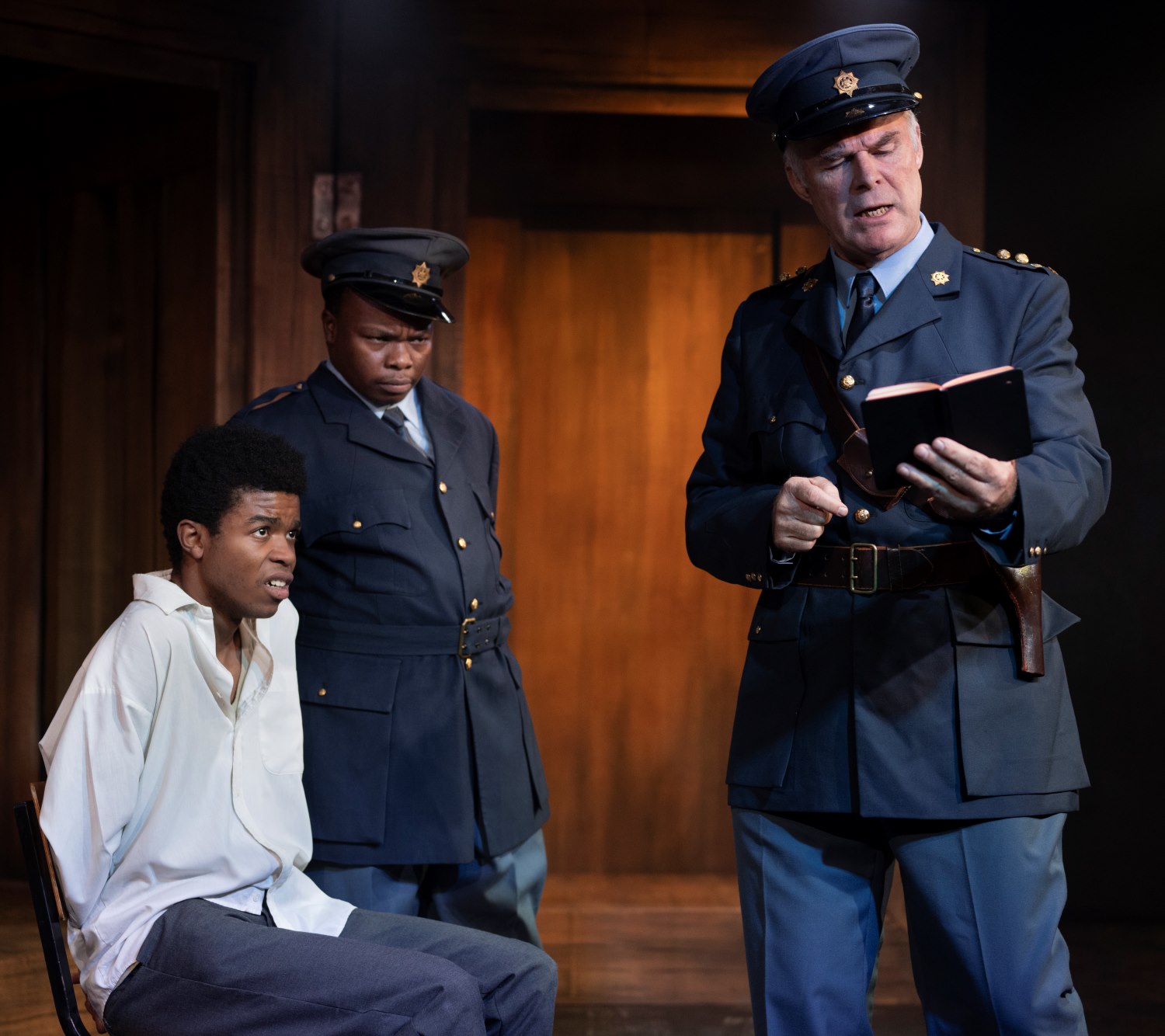
The most striking characterization is the Black police officer, “Razor”. He raids houses in the Green Mamba van to arrest Bafana Buthelezi, a composite of Tsietsi Mashinini and Seth Mazibuko. He displays brutality for approval.
Yet when confronted to explain his behaviour, later he says: “Betrayal is survival. I too must feed my family.” That line is uncomfortable because it is true. Many people can relate.
Ndlovu / Wa Noni forces us to ask what makes an oppressed man become the fist of the oppressor. The play does not condemn easily. It makes us think.
Even white police and doctors get interiority. Kleynhans, who kills Lesley Hastings Ndlovu on June 16, is shown traumatized by his own act. White pathologists and Black doctors and nurses at Baragwanath are depicted overwhelmed by blood and children.
Violence dehumanizes both the striker and the one holding the gun. That human side to violent police is rare on South African stages and it matters.
Historical Accuracy: Ndlovu’s Scholarship Alive
Wa Noni’s RISE 76 treats Ndlovu’s work with respect. It is fact based and accurate. It resurrects details often omitted: the June 13 strategic planning meeting that resolved the march would be peaceful. The role of radical poetry as “inflammatory” material that invited police attention. Testimonies from the Cillie Commission. The ratio of 48 police against over 2000 students.
We learn the agony of Sam Nzima, whose photograph of Hector destroyed his family life and career.
Above all, we see the black woman kneeling in pain, a visual that centers the overlooked trauma of Black mothers. We see an uncle searching for a four year old lost in chaos while the mother keeps her pain silent.
June 16 was not only students with placards. It was children, homes, futures interrupted.
The depiction of June 16, where Lesley Hastings Ndlovu was first killed, is vital. Many productions jump to Hector Pieterson. RISE 76 shows escalation. We learn that 176 students died that day across Soweto. The number is spoken, not shouted. That restraint makes it heavier.
Form and Artistic Choices
The production is raw and riveting. Acting is tight. Space becomes classroom, police van, hospital, kitchen. Sound and movement carry tension. Poetry that got Bafana killed is performed with urgency. When Bafana dies “for poetry,” we understand why the state feared words. It still does.
For some, the play is too long. The comprehensive detail that makes it rich also makes it heavy. Cillie Commission excerpts, teacher debates, hospital scenes, all valuable, but they slow momentum. A sharper edit would let emotional peaks land harder. Riveting should not mean exhausting. Yet there is a 15 minute break, and the work remains powerful to the end.
Another choice: the production presents hard cold facts with minimal analysis or interpretation. That is a strength and a limit. Strength, because it avoids lecturing and lets viewers conclude. Limit, because younger audiences unfamiliar with 1976 may leave moved but unclear about structural forces: Bantu Education, labor needs, Black Consciousness, Frelimo rallies. A few framing moments via narrator or projection could contextualize without preaching. Maybe.
Why This Matters Now
For the first time in 33 years, a mainstream stage work depicts the tragedy of imposing Afrikaans as a medium of instruction without slogan. It shows language as a weapon of policy. That is urgent today when debates on language, curriculum, and decolonization are alive. RISE 76 reminds us language policy is never neutral. It shapes who learns, who leads, who is buried.
The play also intervenes in memory. By showing Black police, principals, and parents who disagreed, it complicates “us vs them.” It shows oppression works by recruiting the oppressed. That lesson is painful but necessary for accountability and healing.
Verdict
RISE 76 is an outstanding and staggering stage production. It is great storytelling because it trusts the audience. It does not manipulate. It presents, contextualizes, balances. It honors teachers who wanted to teach, students who refused to learn, police who needed to feed families, parents who buried children.
Yes, it May be a bit too long. But it is soul stirring and historically responsible. Knowingly or not, Wa Noni honors Sifiso Mxolisi Ndlovu’s intellectual labor by making his counter memory live. It honors the dead by refusing propaganda. It honors the living by showing trauma inherited by all.
This is theater South Africa needs: research driven, morally complex, rooted in human experience. If you care about history, language, and how ordinary people get caught in political machines, see this play. Take your children. Take your students. June 16 was not just a date. It was a wound. RISE 76 does not bandage it. It opens it so we can see clearly, and maybe finally heal.
Don’t die before you see this. It runs until 28 June. It will be extended, I think.
of June 1976. And what a soul stirring theatrical performance it is.






![Bishop Joe Seoka during The Funeral Service of Professor Itumeleng Mosala [Image: Mandla Seloane]](https://gsmn.co.za/wp-content/uploads/2026/08/WhatsApp-Image-2026-08-20-at-15.59.13-1.jpeg)