

From boardroom liberation to procedural democracy: the quiet making of a government fluent in process and allergic to consequence.
There was a moment, not announced and not televised, when South Africa quietly changed posture. Not the moment of liberation. Not the first election. Not the swearing-in ceremonies or victory speeches.
A quieter moment.
A moment when the struggle, having won political power, began to imagine itself as a brand. Not in an immoral way. Not even consciously. It simply began to dress differently. Fatigues gave way to suits. Slogans gave way to policy frameworks. Cadres became Executives. Meetings became “engagements.” None of this was inherently sinister. In fact, much of it was necessary. Liberation movements are not designed to run states. They are designed to dismantle injustice. Once victory is achieved, something else must take over: administration, bureaucracy, technocracy. The grammar of power changes.
The problem is not that the struggle went corporate. The problem is that it never fully stopped being a movement. It became something stranger: a movement wearing a corporate costume, attempting to govern a constitutional state while retaining liberation instincts. From that tension, a new political culture was born. And that culture is now old enough to vote. The day the struggle went corporate, it did not abandon its moral language. It kept it. It just learned to translate it into management speak. Justice became “transformation outcomes.” Accountability became “consequence management.” Equality became “inclusive growth.” The words survived. The muscle behind them weakened. Over time, a quiet substitution occurred. We stopped asking whether something was right. We started asking whether it was procedurally compliant. We stopped asking who had done wrong. We started asking which process would interrogate the wrongdoing. We stopped asking who should go to jail. We started asking whether due process had been followed. Due process, of course, matters. But when due process becomes a shield rather than a pathway, it stops being a safeguard and starts being an alibi. This is the environment in which modern South African governance matured. Not in revolutionary fire. Not in institutional discipline. But in procedural fluency. A fluency so advanced that it can absorb scandal, metabolise outrage, and excrete reports without ever breaking a sweat.
This is why, today, South Africa does not lack accountability mechanisms. It is drowning in them. Commissions of inquiry. Ad hoc parliamentary committees. Task teams. Investigating directorates. Special units. Panels. Reviews. Internal processes. External processes. Parallel processes. Processes reviewing processes.
We have built a Cathedral of procedure. It looks impressive. It photographs well. It records well. It gives the appearance of seriousness. But like many Cathedrals, it is mostly visited by tourists and rarely by God. If at all.
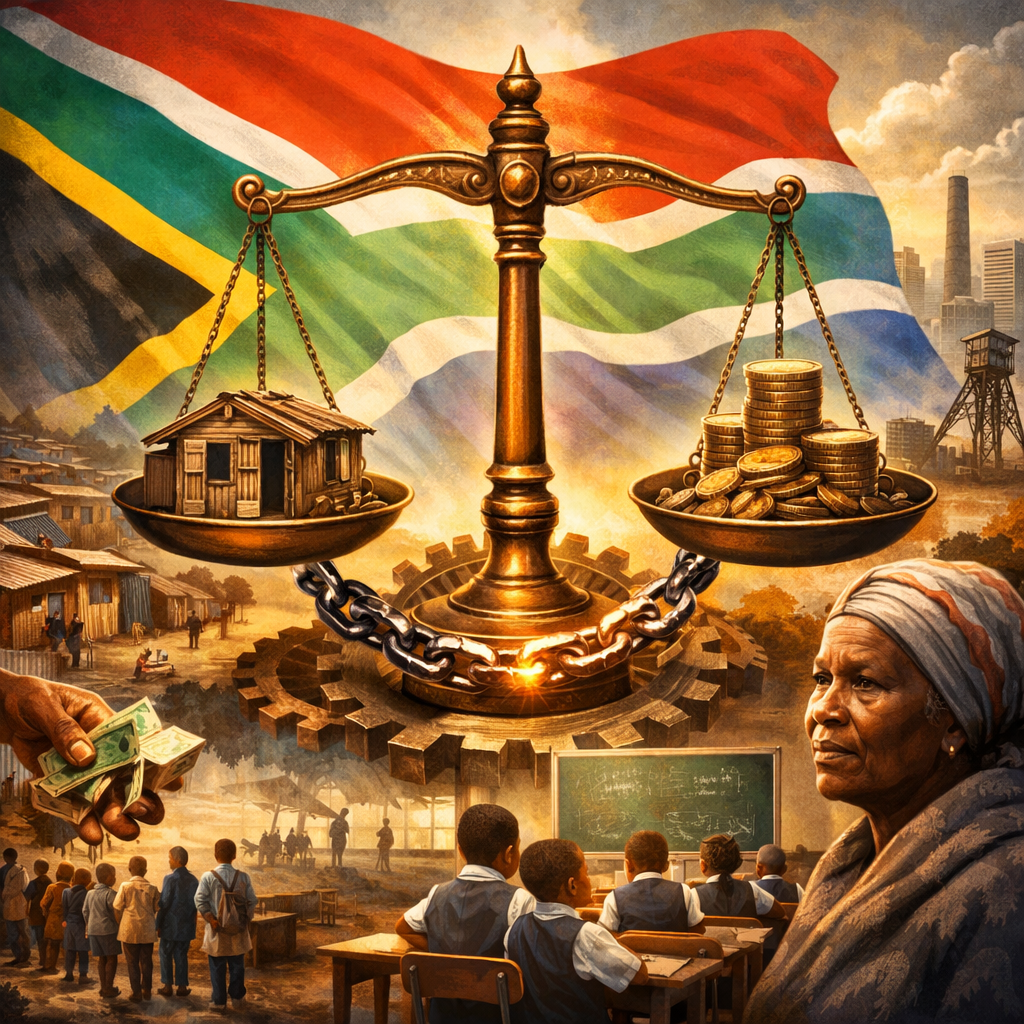
The National Dialogue, we are told, is urgently needed. This is charming. South Africa has been in a permanent national dialogue for years. It simply takes place in committee rooms, court annexes, and live-streamed hearings rather than in stadiums. It is the longest conversation in the country’s democratic history. It has produced almost no consequences. If dialogue were medicine, South Africa would be immortal. Instead, we are exhausted. What we call accountability has quietly mutated into performance art.
Actors arrive before cameras with carefully arranged remorse. Adjust their microphones, get served litres of bottled water in anticipation of dry declarations. Venues comfortably air conditioned. The decorum outshines that of the House of Lords. Lawyers speak at length about context. Officials explain that corruption exists, yes, but it is complex. Very complex. So complex that it becomes untraceable the moment handcuffs enter the vocabulary. Investigative units were dismantled for operational reasons. Political interference exists in principle, not in writing. Instructions were misunderstood. Documents are missing. Phones were lost.
In this ecosystem, everyone knows. No one saw. Everyone heard. No one remembers.
South Africa has perfected a rare political art: maximum disclosure with minimum consequence. We reveal everything. We punish almost nothing. We are the only country that can televise its own institutional decay and still describe itself as “a maturing democracy.” If Dante were writing today, he would not imagine new circles of hell. He would subpoena ours. The genius of this system is not that it hides corruption. It doesn’t. Corruption in South Africa is not subterranean. It is conversational. It attends conferences. It issues statements. It hires lawyers. It respects the process.
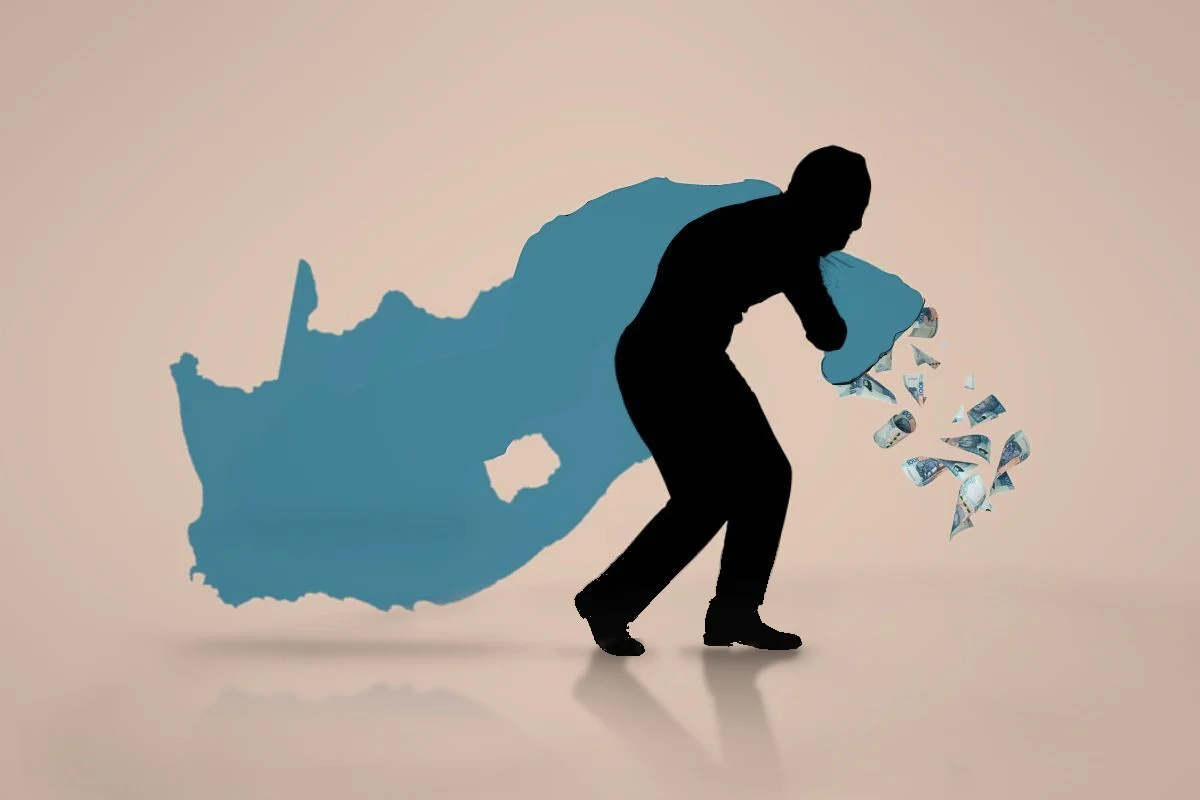
It understands that in a procedural state, time is more valuable than innocence. If you can delay long enough, you do not need to be cleared. If you can survive long enough, survival itself becomes proof of innocence. This is why villains return as whistle-blowers. This is why disgraced figures resurface as victims of political witch-hunts. This is why stepping aside has become a sabbatical.
This is not dysfunction. It is design. A design born from the unresolved psychology of trying to govern a constitutional democracy with movement instincts. Movements are built on loyalty. States are built on rules. Movements protect insiders. States punish offenders. We attempted to run a state as if it were still a movement. The results were inevitable. You do not jail comrades. You redeploy them. You manage them. You rehabilitate them. You wrap the language of morality around fundamentally immoral outcomes and call it balance. This is how corruption becomes survivable. Not because society approves of it. But because society is trained to expect it. The danger we face is not collapse. Collapse is dramatic. Collapse is noisy. Collapse invites intervention. What we face is something quieter. Normalisation. When dysfunction feels familiar. When outrage feels performative.
When people say, “At least they are investigating.” At least. Two words that have become the emotional budget of a wounded country. “At least it’s not worse.” “At least we still vote.” “At least there are commissions.” These are not endorsements. They are grief sentences. They are what people say when hope has become too expensive to maintain. Fatigue has become a governance strategy. You do not need to silence a population if you can tire it. Hearing after hearing. Report after report. Scandal after scandal. By the time one cycle ends, another begins. Not because the country has healed. Because the country is busy. A hungry citizen does not debate constitutional architecture. They debate bread prices. A parent whose child cannot find work does not track prosecutorial timelines. They track survival. This is not accidental. It is political economy. Keep people economically anxious and politically entertained. Let them feel included in the conversation. Just do not let the conversation end in prison numbers.
What makes this moment particularly obscene is that South Africa is not short of talent. We have brilliant judges. Fearless journalists. Courageous whistle-blowers. Capable investigators. Committed activists who won’t shut up. We do not lack diagnosis. We lack political courage. Our democracy is exceptional at identifying disease. It refuses surgery. We commission reports the way other societies commission monuments. We immortalise our own failure in hardcover and PDF. We hold launches for findings. We speak of renewal. Then we return to business. Corruption is condemned in principle and protected in practice. Because the deeper truth is uncomfortable: South Africa’s corruption crisis is not merely criminal. It is political. It is structural. It is profitable. Too many careers depend on it. Too many networks are sustained by it. Too many relationships are lubricated by it. Corruption is not a glitch. It is part of the operating system. And this is where the story circles back to that earlier, quieter moment.

When the struggle went corporate, it did not betray itself. It changed incentives. Once incentives change, behaviour follows. Today, the primary incentive in politics is not transformation. It is endurance. If you can endure scandal, you succeed. If you can endure exposure, you are resilient. If you can endure hearings, you are seasoned. Endurance has replaced integrity as the benchmark.
This is why the National Dialogue feels hollow. Because the country does not suffer from a shortage of conversation. It suffers from a shortage of endings. Real endings. Endings with prison numbers. Endings with confiscated assets. Endings with permanent removals from office. Everything else is theatre. Well-lit. Well-catered. Utterly safe.
South Africa is not a failed state. It is a comfortably malfunctioning one. Just functional enough to avoid revolt. Just broken enough to keep extraction profitable. The question is no longer whether we know what is wrong. We do. The question is whether we still possess the moral appetite to fix it. Or whether we will continue mistaking motion for movement. Process for progress. Noise for change. That is the real continuity. That is the story beneath the story.
The struggle went corporate. The state went procedural. And somewhere in between, Justice learned to wait.




3 Responses
Thanks for this take, Tshepo. I generally agree with it. The trouble is, what do ‘we the people’ do about it? One thing we know is that not ‘the people’ mind too much/enough about it. ‘Yet’… perhaps. Until it becomes personal, as it already is for anyone who has at least one foot in any ‘marginal’ category. That is, anyone who can’t afford to buy adequate (read private) health care, security, education, transport, access to nature, healthy food and time to live beyond survive. So that one can even remember and dream of, let alone act for, such basic human rights. I think part of the problem of ‘we the people’ is that we fail to recognise and mobilise around the stages of the grief you reference. While some people are in the angry stage, other are in the bargaining stage, while still others are depressed. And then there is the acceptance. Only trouble is, for the majority it seems acceptance of beleaguered new norms, as opposed to acceptance that it won’t change unless we make it. Acceptance as defeat vs acceptance as looking at actual reality in the face in order to be able to confront it again as the ever changing nature of dynamic life requires if we’re not just going to let ourselves be washed out to sea as so much helpless driftwood. Or alienation from hope as some might put it. So how do we
mobilise across the stages of grief, and beyond? How do we collectively and separately enable and remind ourselves to be willing to risk hope of better…by working across the broad spectrum of all of us in our respective stages of grief to buttress together against the current and build the bridges to something better despite? So how do enable that?
For malfeasance to thrive it all boils down to the absence of leadership, especially so when leadership itself is complicit in the enterprise. What holds the GNU together if not a pact of silence about the other’s transgressions.
Very Profound, everybody knows what the problem is, we talk, read, write about it and even experience these inequalities daily. The question is how do we take calculative, strategized action.