
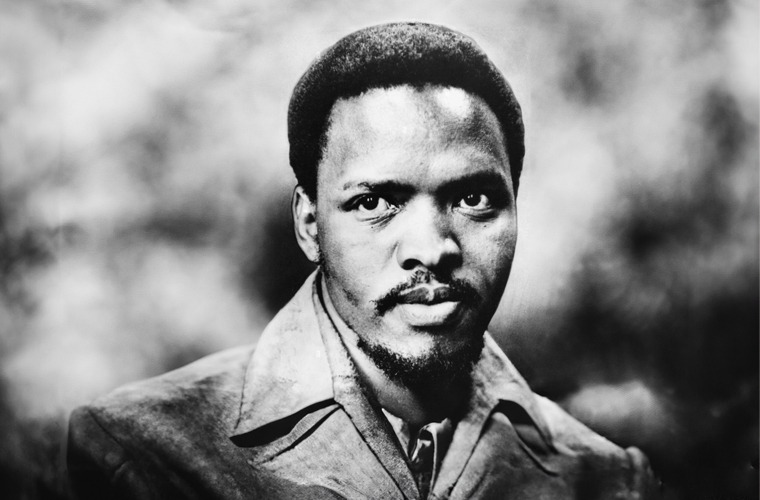
Today (18 December), the black world comes to a complete halt to mark the 79th birthday of one of the greatest Black men to ever walk the earth- Bantu Steve Biko.
Even though he had only lived for three decades and had been politically active for about a decade, Biko built a monumental and enduring legacy.
In paying tribute to him on the occasion of his 79th birthday, I wish to reflect on various aspects of Biko’s contribution.
The first is his contribution as a decolonial thinker. Like Kwame Nkrumah, Amilcar Cabral, Malcolm X, Frantz Fanon, Thomas Sankara, and many others, Biko and his peers dedicated an inordinate amount of time to seeking to understand the genesis, physiology, and anatomy of colonialism, and how to organise resistance against it.
To illustrate the point, Biko provides us with a plethora of insightful observations on the nature of colonialism in South Africa and how we as Black people should respond to it.
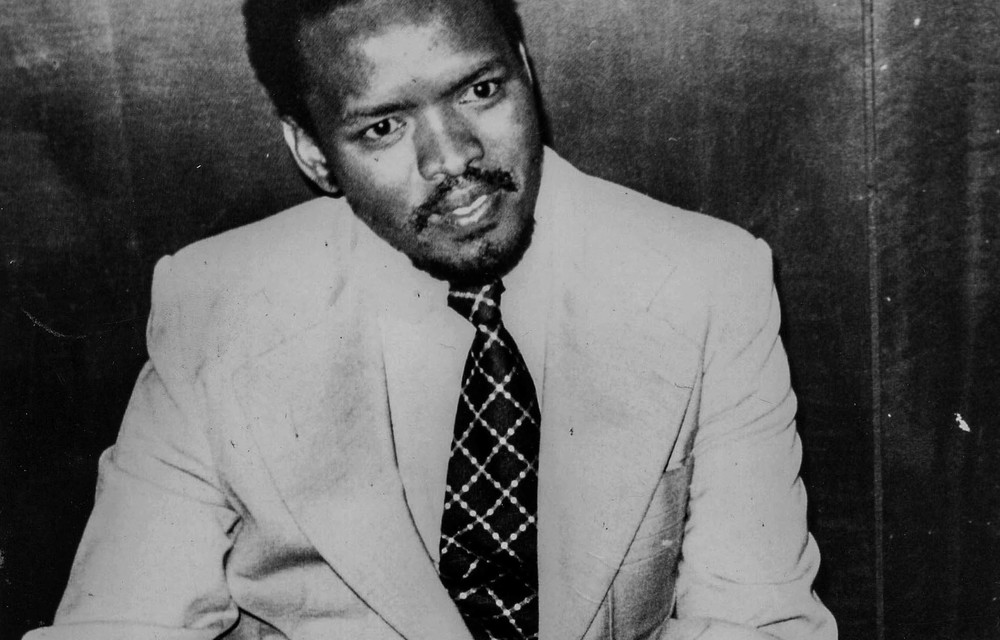
On the central problem in South Africa, Biko said “For the liberals, the thesis is apartheid, the anti-thesis is non-racialism, but the synthesis is very feebly defined. They want to tell the Black people that they see integration as the ideal solution. Black Consciousness defines the situation differently. The thesis is in fact a strong white racism and therefore, the antithesis to this must, ipso facto, be a strong solidarity amongst the blacks on whom this white racism seeks to prey.”
On the relationship between black and white people, he said “I am against the superior-inferior white- black stratification that makes the white a perpetual teacher and the black a perpetual pupil (and a poor one at that). I am against the intellectual arrogance of white people that makes them believe that white leadership is a sine qua non in this country and that whites are the divinely appointed pacesetters in progress. I am against the fact that a settler minority should impose an entire system of values on an indigenous people.”

On Black peoples’ participation in apartheid councils and other structures he said, “Our attitude is here is that you cannot in pursuing the aspirations of black people achieve them from a platform that is meant for the oppression of black people.”
On Black peoples’ attitude towards the system of colonialism, he said “Blacks no longer seek to reform the system because doing so implies acceptance of the major points around which the system revolves. Blacks are out to completely transform the system and to make of it what they wish. Such a major undertaking can only be realised in an atmosphere where people are convinced in the inherent truth in their stance…”
On the role of the black political party, he said “It’s not a question of whether people are ready or not. It’s a question of whether people should be made ready or not. You see when you talk of people being ready, I’m looking at it from a different sense. Are people ready for the final action, you, see? Now the political party that is formed may not necessarily be the final form that we need to take, but it is some kind of measure, right? It needs to be there anyway to promote us towards the final step. So that whether people were ready or not is irrelevant.
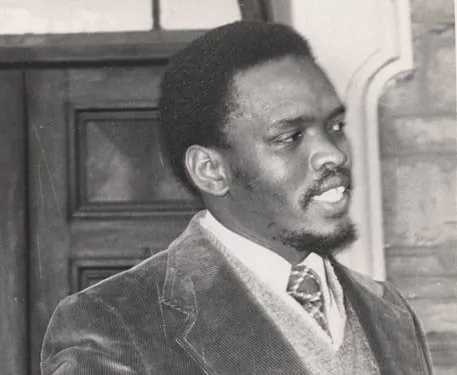
The point is what’s happening right or wrong. If it’s wrong, then we need some kind of platform that’s going to tell us what is right. And what to do in order to get towards that right. …So, this justifies the need for the emergence, the creation of a political party at this stage, as a constant reminder to the people that there’s something wrong in this system…”
Secondly, Biko and his peers didn’t just concern themselves with the nature of South African society in the seventies, they also postulated about the nature of a future South Africa.
In this respect, Biko makes what is in my view his most prophetic observation, when he says “I think there is no running away from the fact that in South Africa there is such an ill distribution of wealth that any form of political freedom which does not touch on the proper distribution of wealth will be meaningless. The whites have locked up within a small minority of themselves the greater proportion of the country’s wealth. If we have a mere change of face of those in governing positions what is likely to happen is that black people will continue to be poor, and you will see a few blacks filtering through into the so-called bourgeoisie. Our society will be run as of yesterday. So, for meaningful change to appear there needs to be an attempt at reorganising the whole economic pattern and policies within this particular country.”

Thirdly, Biko was also an organisational genius and institutional builder. As stated, Biko was politically active for a period of about 10 years. Within this period, one of his most enduring contributions was in setting up community based black institutions.
In addition to helping to create a national student organisation, the South African Student Organisation (SASO) and a national liberation movement, the Black People’s Convention (BPC), Biko and his peers also created a number of black self-help projects and related organisations.

In the area of health, they created Zanempilo Community Health Centre, which was opened in 1975 in the Eastern Cape. This is generally regarded as South Africa‘s first primary healthcare initiatives outside the state. Zanempilo still stands today. I visited it recently.
There was also Solempilo. This was a second health centre that was established in KwaZulu-Natal but was closed when the apartheid government banned the BCM in October 1977.

In the area of economics, they created home industries and cooperatives such as the leatherwork cottage industry in Njwaxa village near King William’s Town and Agricultural Schemes to improve food sovereignty. They also created Zimele Trust Fund in 1975. This fund aimed to help former political prisoners and their families become self-reliant.
In the area of media and publications, they created Black Review and Black Viewpoint to chronicle events within the Black community and provided an alternative perspective to that of the racist- white-dominated media.
In the area of education and training, they created a daycare centre to support working mothers by providing nutrition and education for their children. They also provided training for activists, equipping them with practical skills in areas like administration, public speaking, and social analysis and to combat high rates of illiteracy, they ran programmes offering adult education and skills training.
Biko also established the Ginsberg Educational Trust to provide bursaries and financial assistance to promising Black students.

All these projects were a practical expression of Biko’s Black Consciousness philosophy. There is also a sense in which, through these institutions and projects, Biko and his peers were also building the elements of what could be referred to as a parallel black state.
Fourthly, in my view, one of Biko’s most outstanding leadership attributes was his political maturity and magnanimity. Even though he was leader of the Black Consciousness Movement, which was the dominant political force for much of the 70s, Biko’s attitude towards the other older black political organisations and their leaders, was one of utmost respect.
For instance, in I Write What I Like, he writes “Who are the leaders of the black world then if they are not to be found in the apartheid institution? Clearly, black people know their leaders are those people who are either now in Robben Island or in banishment or in exile-voluntary or otherwise. People like Mandela, Sobukwe, Kathrada, M.D, Naidoo and many others will always have a special place of honour in our minds as the true leaders of our people.

They may have been branded communists, saboteurs, or similar names-in fact, they may have been convicted of similar offences in law courts, but this doesn’t subtract from the real essence of their worth. These were people who acted with a dedication unparalleled in modern times. Their concern with our plight as black people made them gain the natural support of the mass of black people. We may disagree with some things they did but know that they spoke the language of the people.”
Then in a letter to the American senator, Dick Clark, in December 1976 (which is also contained in I Write What I Like), Biko writes “America must insist on South Africa recognising the need for legitimate non-government-initiated platforms like the Black People’s Convention. Equally organisations banned in the past like the African National Congress should be re-allowed to operate in the country. America must call for the release of political prisoners and banned people like Nelson Mandela, Robert Sobukwe, Steve Biko, Govan Mbeki, Walter Sisulu, Barney Pityana, and the integration of these people in the political process that shall shape the things to come.”
In the same text, Biko also says “I personally would like to see fewer groups. I would like to see groups likes ANC, PAC and the Black Consciousness Movement deciding to form one liberation group. It is only, I think, when black people are so dedicated and so united in their cause that we can effect the greatest results.”

Fifthly, Biko’s articulation of Black Consciousness continues to resonate with the basic aspirations of Black people not only in Afrika, but also in other parts of the black world.
In Bahia, Brazil, there is what is called the Steve Biko Institute. According to the Institute’s website “The Steve Biko Institute was founded on July 31, 1992, on the initiative of black and black teachers and students who – in a pioneering way – created the first pre-Vestibular course for blacks in Brazil.
In many meetings in the gardens of the Faculty of Economics of the Federal University of Bahia, in the centre of Salvador and based on anti-racist struggles around the world, there was an urgent need to bring together black militancy at the national level around Education. The Institute then emerges seeking the insertion of blacks in academic space as a strategy for their social ascent and the fight against racial discrimination.

The Education of the Institute is born out of the recovery of its ancestral values of its students, based on the Black Consciousness Movement spread by the South African Bantu Stephen Biko in South Africa. Hence the name of the Cultural Institute Beneficent Steve Biko, chosen in honour of one of the fiercest fighters against the apartheid regime of racial segregation.”
This institute has translated Biko’s I Write What I Like into Portuguese. Another significant development that relates to Black Consciousness in Brazil is that, since the 1960s, Black people in Brazil commemorated national Black Consciousness Day. This day was originally marked on 13 May when slavery was officially abolished in Brazil. It was moved to November 20 in honour of a Black hero, Zumbi dos Palmares who led an anti-slavery rebellion against the Portuguese in Brazil.

Zumbi was captured and beheaded by the Portuguese in November 1695. The Portuguese put his head on a stick and paraded it among the Blacks in Brazil, as a way of paralysing them with fear.
Lastly, as we pay tribute to Biko, it always important to remember that, much of what he was able to achieve was largely because of the loyal and unwavering support of his wife, uMama uNontsikelelo Biko. Her sacrifices over the years as his wife and mother to his children constitute an incalculable contribution to our people’s quest for liberation.

And for this reason, I wish to also pay special tribute to her on the occasion of her husband’s birthday. We are grateful to Mama Nontsikelelo for her contribution to our liberation struggle.
Today, the land that birthed Biko – South Africa – finds itself in the grip of all manner of social crises– central among these is the crisis of black leadership. The systematic erosion and absence of courageous, ethical, and visionary black leadership in key facets of black life is perhaps one of the most tragic aspects of post 1994 South Africa.
At this time of national unease and anxiety about the direction in which South Africa seems to be going, Biko’s leadership example should serve as one of the reference points in our quest to find ourselves and ultimately bestow upon South Africa what Biko refers to as “the greatest gift possible- a more human face”


One Response