![Gender-based violence and femicide protest in south africa [image: M&G]](https://gsmn.co.za/wp-content/uploads/2026/05/37a6bca9-gbv-1024x614-1.jpg)
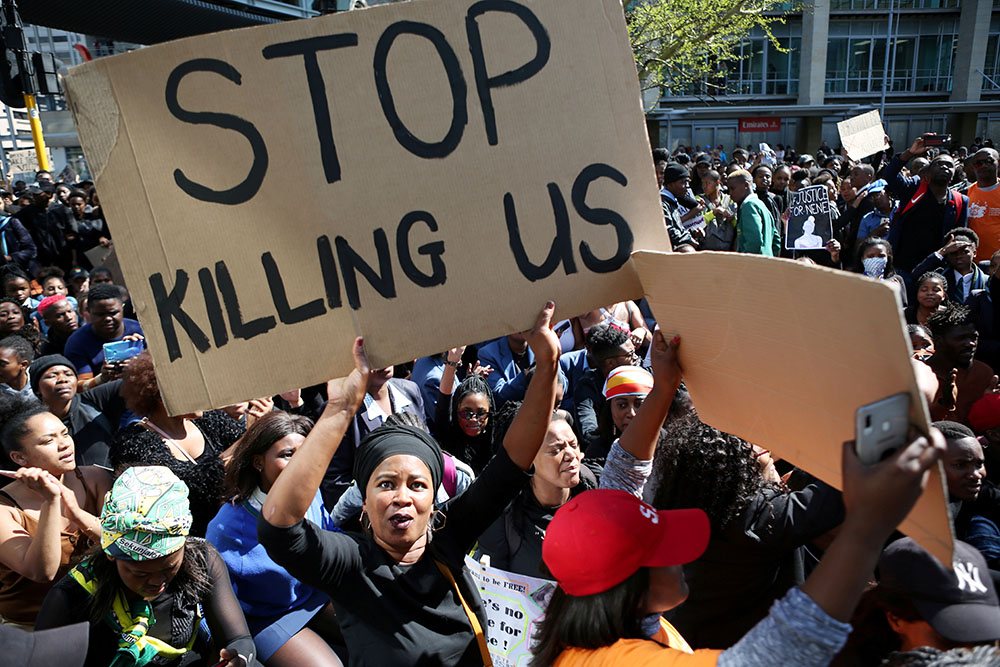
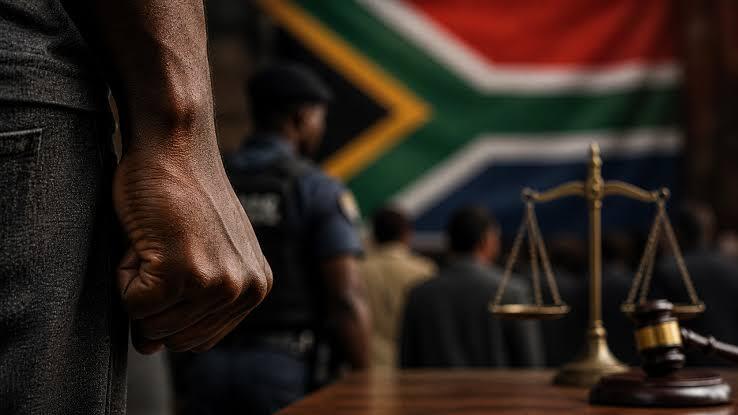
South Africa speaks often about peace. We celebrate reconciliation. We invoke unity. We remind ourselves of our democratic miracle. But peace is not a slogan — it is a lived reality. And for millions of South Africans, particularly women and young people, that reality remains fragile.
If we are honest, South Africa cannot claim peace while gender-based violence and femicide (GBVF) continue at crisis levels and economic exclusion persists on a massive scale. Safety and economic justice are not separate conversations. They are two sides of the same coin of national stability.
The statistics alone should disturb our collective conscience.
According to data released by the South African Police Service (SAPS), thousands of rape cases are reported every quarter. In recent annual crime statistics, over 50,000 sexual offences were recorded in a single year — and experts consistently warn that sexual violence remains significantly underreported.
South Africa’s femicide rate has historically been among the highest in the world, with research from the South African Medical Research Council (SAMRC) indicating that a woman is killed every few hours in our country.
Behind each number is a life interrupted, a family traumatised, and a community destabilised. Violence against women is not merely a criminal justice issue; it is a fundamental threat to peace and development. When women cannot live free from fear, participate fully in the economy, or access justice swiftly and effectively, the social contract is weakened. Yet GBVF does not exist in isolation. It is deeply intertwined with economic conditions.
South Africa’s official unemployment rate remains among the highest globally. According to Statistics South Africa (Stats SA), the unemployment rate has hovered above 30% in recent quarters, with youth unemployment exceeding 40% under the narrow definition and significantly higher under the expanded definition. Young women, particularly in rural areas and townships, face compounded vulnerability due to limited job prospects, skills gaps, and systemic inequality.
Economic dependency often traps women in abusive relationships. Financial insecurity limits escape options. A lack of affordable housing, childcare, and accessible legal services compounds the crisis. If a survivor has nowhere to go, no income, and no institutional support, “leave” is not a realistic solution. This is why peace in South Africa must be understood as both freedom from violence and freedom from economic exclusion.
The Constitution guarantees dignity, equality and freedom. But constitutional rights must translate into lived protection. The establishment of the National Strategic Plan on GBVF and the strengthening of specialised courts were important steps. However, implementation gaps remain. Survivors still report inconsistent police responses, lengthy court processes, and inadequate shelter capacity. Rural communities often experience even greater service deficits.
At the same time, economic reform has not yet delivered inclusive growth at the scale required. While macroeconomic stability and investor confidence are important, growth without inclusion deepens frustration. A peaceful society cannot rest on a foundation where opportunity is structurally unequal.
Economic reform must therefore become gender-responsive by design.
This means targeted support for women-owned enterprises, especially in townships and rural economies. It means expanding access to finance through blended funding models and reducing bureaucratic red tape that locks small businesses out of procurement systems.
It means investing in the care economy early childhood development, community health work, and social services sectors that both employ large numbers of women and strengthen social resilience. It also means recognising that social grants are essential, but cannot be a substitute for sustainable livelihoods. Long-term peace depends on economic participation, not perpetual precarity.
There is also a cultural dimension that policy alone cannot solve. Patriarchal norms, toxic masculinities, and intergenerational trauma require deliberate societal engagement. Men must be active participants in prevention efforts. Schools must integrate gender equality education. Faith leaders and traditional leaders must use their influence to condemn violence unequivocally.
Government leadership remains decisive.
Peace requires a capable state. It requires a professionalised police service, well-resourced forensic units, functional courts, and accountable public officials. It requires reliable electricity, safe public transport, and infrastructure that enables economic participation.
It requires corruption to be treated not as a political inconvenience but as a direct threat to national stability. The connection is simple: when justice systems fail and economic systems exclude, frustration accumulates. When frustration accumulates, instability follows.
True peace is preventive; it addresses root causes before crises erupt.
Imagine a South Africa where a young woman in a rural village can access funding to start a business, secure in the knowledge that if she faces violence, the justice system will protect her swiftly. Imagine cities where public transport is safe, police response times are consistent, and communities trust law enforcement. Imagine an economy where youth unemployment is not a defining feature of national identity.
That vision is not naïve. It is strategic.
Peace is built when women feel safe in their homes and streets. Peace is strengthened when young people see pathways to opportunity. Peace is sustained when justice is accessible, and the economy is inclusive. As South Africa stands at a crossroads, we can choose to continue managing crises reactively, or we can pursue bold, coordinated reform that tackles GBVF and economic exclusion as interconnected priorities.
If we choose peace, it should not merely be commemorated in speeches; it should also be embodied in action. It must be experienced in households, workplaces, and communities across the nation and that is the only peace worthy of our democracy.