There are two stories worth reflecting on whenever a society finds itself at a moment of acute political tension.
The first is the story of Anna. For years, Anna found herself trapped in a difficult, volatile relationship with a man named Evans. Whenever tensions escalated, well-meaning friends and vocal advisers offered her the exact same counsel: leave immediately, make a dramatic statement, burn the house down if you have to and show him you won’t take it anymore.
Desperate for resolution, Anna acted on impulse. She smashed her own crockery, tore down her own curtains, and spent freezing nights on the street to prove a point. Yet after every confrontation, Evans remained comfortably asleep in the master bedroom, entirely unaffected. The broken plates were hers. The torn curtains were hers. The sleepless nights and financial ruin were hers alone. Those who had encouraged the dramatic gesture had quietly moved on to the next conversation, leaving Anna standing in the cold, sweeping up broken glass with bleeding hands.
The second story concerns a fisherman who returned to the same river year after year carrying the same worn-out net. Each season he complained that the fish were disappearing. Each season he blamed the river. Yet he never changed his method.
One afternoon, an elderly fisherman watching from the bank asked him a simple, penetrating question:
“How many times must a strategy fail before it stops being a strategy and becomes a habit?”
That question extends far beyond the riverbank. It applies equally to civic activism, national politics, and the methods societies choose to express their deepest frustrations.
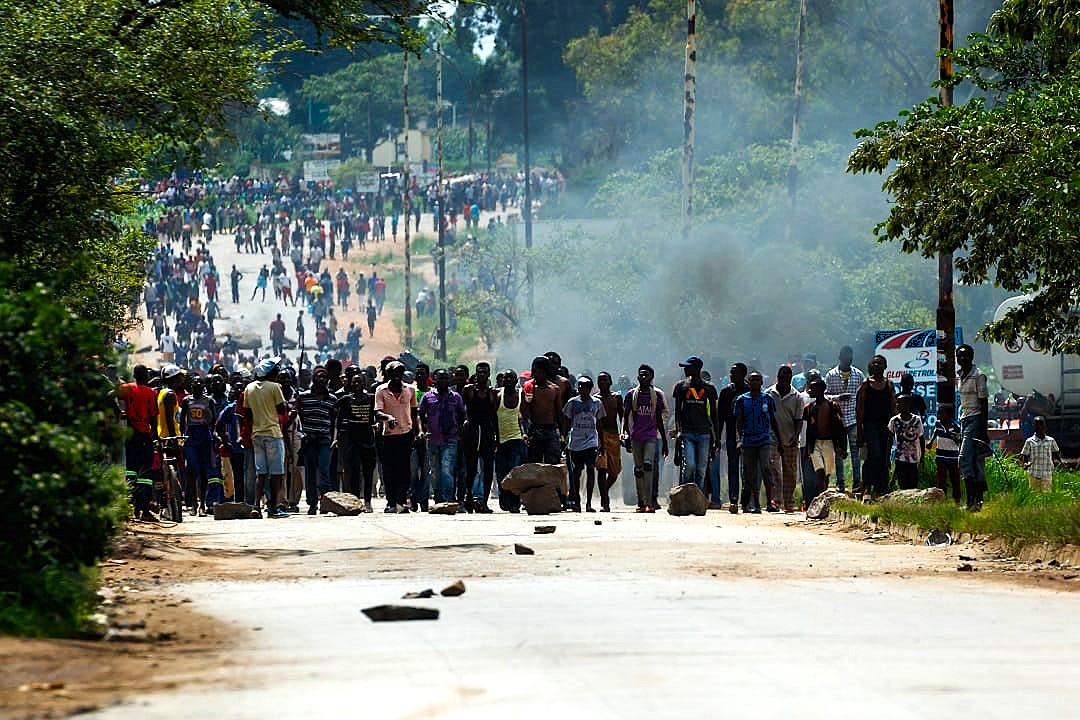
As Zimbabweans once again debate calls for demonstrations, stay-aways, and planned national shutdowns this 31st of July, what if the greatest danger facing a frustrated society is not the legitimacy of its grievances, but the methods it repeatedly chooses to express them?
Political scientists and behavioral psychologists have long observed that periods of political and economic tensions create a powerful demand for visible action. When people feel unheard, symbolic acts become deeply attractive because they provide an immediate sense of participation, emotional release, and solidarity.
Yet there is a fundamental psychological distinction between an action that expresses frustration and an action that resolves it.
The danger arises when a society begins to confuse visibility with effectiveness. A national shutdown may successfully communicate public anger to international headlines, but whether it produces meaningful policy change is a separate question entirely. True transformation depends on structural variables: organisation, institutional responsiveness, clear bargaining frameworks, and long-term strategy.
Without those elements, mass mobilisation devolves into a recurring psychological loop, an event repeated regularly without ever altering the underlying realities that inspired it.
One of the least discussed aspects of political mobilisation is the profound asymmetry of sacrifice it creates.
Consider Zimbabwe’s post-independence history. It is littered with cycles of mobilisation that generated enormous public expectation but produced little structural change. Different personalities emerged in different eras, yet the pattern remained identical: intense emotional investment, short-lived confrontation, and a population left behind to absorb the consequences.
Political history across the globe reveals a quiet, uncomfortable truth: political actors operate in insulated ecosystems. Whether in government or opposition, leaders possess financial resources, platforms, and international networks that shield them from the immediate shockwaves of economic disruption. When a city shuts down, a politician’s pantry remains stocked, their income remains stable, and their family’s daily life continues uninterrupted.
The same cannot be said for the musika vendor in Mbare, the kombi driver in Bulawayo, or the small shopkeeper in Mutare. In an economy where over 80% of citizens operate within the informal sector, a single day of disruption is not a noble political statement, it is a day without food. When transport routes are blocked or property is damaged, it is never state infrastructure that burns; it is the fragile, daily livelihood of a struggling neighbor.
History presents a clear behavioral pattern. Consider past calls for July 31st protests led by figures like Jacob Ngarivhume, or the endless cycles of agitation surrounding figures like Job Sikhala. Where do these movements end? When the dust settles, the instigators either leverage the chaos for political relevance, seek asylum, or quietly retreat into corporate or legal careers. The ordinary citizen who lost a week’s revenue, suffered injury, or faced a criminal record is left entirely alone to pick up the pieces.
A frequent mistake in political analysis is assuming that tactics successful in one environment can be copy-pasted into another.
A central argument often made by proponents of national shutdowns is to point to neighboring South Africa’s history of mass labor strikes. But this ignores a fundamental structural difference: South Africa’s protest ecosystem evolved around powerful formal labor unions, large corporate employers, and institutionalised bargaining mechanisms where unionised workers receive strike pay or protection.
Attempting to deploy those same street tactics into Zimbabwe’s overwhelmingly informal economy is economically ruinous. A shutdown does not leverage corporate capital to pressure a state; it simply halts the hand-to-mouth survival mechanism of the citizen.
This strategic misalignment extends to how we approach governance and legislative milestones. Consider the intense discourse that often surrounds major legislative changes, such as Constitutional Amendment Act No. 3 (CAA3). Whether one supported or opposed such legislation, the broader civic lesson remains identical. Democratic systems provide specific, critical windows for preemptive engagement through public consultations, parliamentary committee hearings, legal challenges, and direct lobbying of Members of Parliament before a bill becomes law.
Taking to the streets after a bill has passed through constitutional processes is an admission of tactical failure and will never reverse CAA3. Destroying local infrastructure on July 31st will not rewrite a law enacted in Parliament; it merely demonstrates that strategy has been replaced by retrospective anger. The President will not cancel the Act now, the Parliament will not restart the process.
When groups repeatedly pursue actions that fail to yield their stated goals, the psychological fallout is predictable: deep disillusionment, growing cynicism, and eventual public paralysis. People invest emotional energy, time, and scarce resources into a promise. When the expected results fail to materialize, trust in civic action erodes entirely.
Sustainable progress rarely emerges from a single dramatic explosion of anger. It is the product of persistent, often unglamorous engagement: institutional reform, policy advocacy, community organizing, business building, and public accountability. These methods lack the immediate emotional satisfaction of a street confrontation, but history proves they are the only mechanisms that endure.
As Zimbabweans reflect on the 31st of July, the central question is not whether frustrations exist. They do. Nor is it a question of whether citizens should participate in shaping their country. They must.
The real question is whether the methods being proposed today are likely to produce different outcomes from those witnessed so many times before.
Before locking your doors or stepping onto the street in anger, answer these three objective questions:
- Is destroying our own local economy really going to fix it? If you break a vendor’s stall or burn a delivery bus, have you weakened a government official, or have you crippled a neighbor?
- If we failed to engage legal channels like Parliament during the drafting of laws, will street chaos change the law today?
- When the smoke clears, who suffers most? Does the politician lose their dinner, or do you and your children pay the ultimate price?
Discontent is understandable, but anger is a poor strategist. Marching blindly into predictable chaos on July 31st is not courage; it is a psychological trap designed to turn ordinary citizens into political collateral.
Real, enduring change in Zimbabwe will not come from breaking our own storefronts or playing into the hands of career organisers who disappear when the police arrive. It will come from sustained economic participation, rigorous parliamentary lobbying, strategic civic education, and long-term institutional building.
Before shutting down a business, blocking a road, or stepping into predictable chaos, every citizen should pause and answer the question posed by the old fisherman beside the river: How many times must a strategy fail before it stops being a strategy and becomes a habit?
The answer we give on July 31st may reveal as much about our nation’s future as it does about its past.