Imperialism and colonisation are not sustained by brute force alone. They require a particular sophistication of intellect, organisation, imagination and political engineering. It takes considerable ingenuity, after all, to conceive of a maritime expedition from Europe to the southern extremity of Africa, establish a foothold there, and subsequently construct the military, political, economic and ideological apparatus necessary to sustain imperial domination.
Colonialism is therefore not merely an enterprise of conquest; it is an elaborate project of social transformation. South Africa provides an especially instructive case.
By the mid-nineteenth century, the British colonial project had already demonstrated an acute understanding of the importance of African political authority. The killing of King Hintsa in 1835 during the Sixth Frontier War was not simply an episode of frontier violence; it occurred within a broader colonial struggle to weaken African sovereignty and political autonomy. Under Sir Harry Smith and, subsequently, Sir George Grey, colonial policy increasingly moved beyond territorial conquest towards the systematic reorganisation of African society.
Grey, in particular, understood that durable imperial domination required more than military superiority. It required the transformation of the colonised subject himself: his worldview, aspirations, institutions and conception of political possibility.
Christianity and Western education consequently became important instruments in this larger project. Their historical significance, however, cannot be reduced to a simple binary in which Africans were passive recipients of colonial ideology. Africans appropriated, reinterpreted and sometimes turned these very instruments against colonial domination.
The educated African Christian became a paradoxical product of colonial modernity: created, in part, to facilitate the colonial order, yet capable of acquiring the intellectual resources with which to interrogate and ultimately resist that order. Thus, from the very machinery intended to produce accommodation, there emerged figures of extraordinary intellectual and moral resistance.
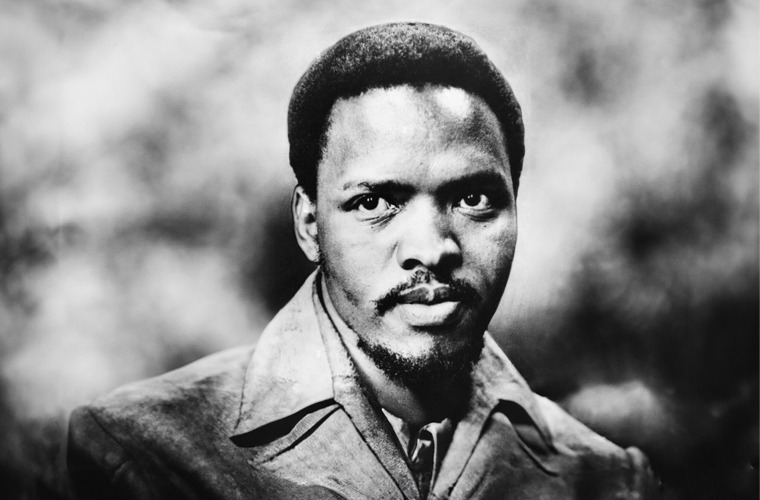
Among the most remarkable of these was Bantu Stephen Biko.

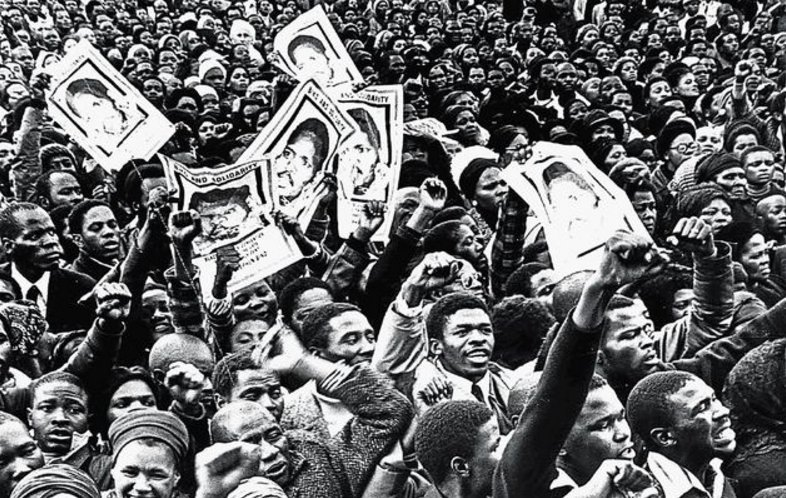
Biko‘s death on 12 September 1977, following his detention and severe assault by the apartheid security apparatus, marked one of the most consequential moments in the history of South African resistance. By then, the security establishment had identified him as an existential ideological threat. His physical elimination did not extinguish the movement he represented; indeed, it amplified it. Biko had become the principal intellectual force behind Black Consciousness, a philosophy and political praxis that sought to accomplish something deeper than opposition to particular apartheid laws. It sought to restore to the black person the psychological, intellectual and political capacity to define himself.
This is what makes Black Consciousness historically distinctive.
Its principal architects were, paradoxically, themselves products of the very missionary education and Christian intellectual traditions that colonialism had helped establish. Yet they refused to remain prisoners of the conceptual world into which they had been initiated. They appropriated its intellectual instruments and redirected them towards the recovery of Black agency.
In doing so, Biko and his contemporaries effectively discarded the script written for them. They insisted that the liberation of black people could not be achieved through perpetual intellectual dependence upon the categories, assumptions and political frameworks of their oppressors.
There was, in this respect, an affinity between Black Consciousness and the broader currents of Black self-emancipation associated with figures such as Marcus Garvey. Yet Biko‘s project possessed a distinctly South African philosophical character. At its centre was the proposition that the oppressed must first recover themselves as historical subjects.
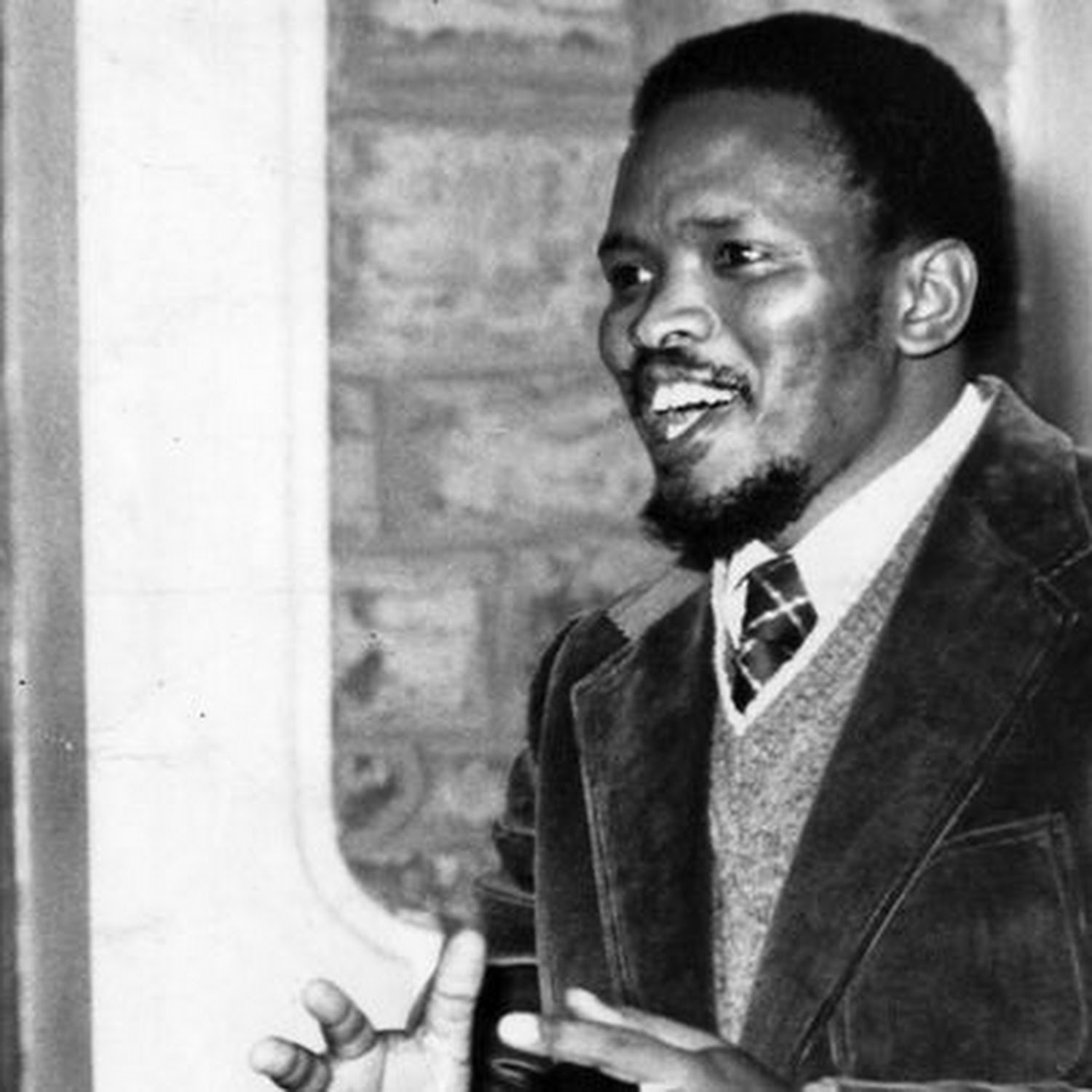
Psychological liberation was therefore not a peripheral concern but a necessary precondition for political liberation. A people who had been persuaded to regard themselves through the eyes of their conquerors could not easily construct a genuinely emancipatory future.
I would go further: Black Consciousness was arguably the most intellectually autonomous political initiative to emerge from twentieth-century South Africa.
Its significance lies precisely in its refusal to accept that liberation must be mediated through the ideological vocabulary of the dominant order.
This brings us to a more difficult proposition. Freedom attained through the dialectic of the oppressor is unlikely to constitute complete freedom. If the conceptual architecture through which liberation is imagined remains substantially inherited from the system of domination, political emancipation may occur while the deeper structures of economic and intellectual subordination survive.
It is here that the early Black Consciousness thinkers may have possessed an insight whose full implications were not always articulated. They understood that the question of liberation could not be separated from the questions of land, economic power, psychological autonomy and historical ownership.
The assertion that ‘South Africa belongs to all who live in it’ cannot, without qualification, resolve the historical contradiction created by conquest and dispossession. Nor can the proposition that ‘land belongs to those who work it‘, taken in isolation, adequately answer a historical situation in which the original dispossession of land remains materially consequential and largely uncompensated.
The same problem extends into the mineral economy. If liberation follows a century and a half of extraction, the mere transfer of ownership of exhausted or impoverished mines cannot, by itself, constitute economic liberation. Nationalising the remnants of an extractive economy after the greater value has already been removed would amount to inheriting the shell of a system whose wealth had been accumulated elsewhere. The deeper question is not simply who owns the mine, but who controls the architecture of accumulation, finance, technology, beneficiation, markets and capital formation.
It is possible, therefore, to understand why the architects of Black Consciousness were sceptical of political programmes that appeared to offer liberation without fundamentally interrogating the economic order beneath it. Their suspicion of the Freedom Charter and of forms of multiracial political mobilisation should be understood within this larger intellectual context—not simply as rejection of solidarity, but as anxiety that the terms of liberation themselves might remain structured by inherited power.
Yet there is one dimension in which even this radical critique can be taken further.
The problem is not capitalism alone. It is the broader architecture of concentrated financial power through which wealth is accumulated, mediated and reproduced. Capital and finance are historically intertwined, and political systems that appear ideologically opposed have at times operated within remarkably similar structures of monetary dependence, debt and concentrated ownership.
The twentieth-century opposition between capitalism and communism therefore ought not to obscure the deeper question: “who controls the mechanisms through which social surplus is accumulated and allocated?”
One cannot adequately reject capitalism while leaving unquestioned the financial architecture through which capital exercises power. The problem is not merely the existence of markets or private enterprise; it is the concentration of economic sovereignty in institutions whose interests may transcend national boundaries and democratic accountability.
The global financial order has repeatedly demonstrated its capacity to subordinate political choices to the imperatives of capital accumulation.
This is also where the limitations imposed by Bantu Education become historically significant. A system designed to produce functional subjects rather than autonomous intellectuals could hardly be expected to equip its graduates to recognise the more sophisticated mechanisms of global economic power.
The colonial project did not need every African to remain illiterate. It needed sufficient numbers to become educated within a conceptual framework that did not fundamentally challenge the architecture of domination.
Black Consciousness disrupted that arrangement.
It awakened the black subject from the psychological slumber induced by centuries of racial humiliation and political subordination. It restored dignity not as a sentimental abstraction, but as a political resource. It transformed consciousness into an instrument of resistance and insisted that liberation begins with the recovery of the self as a historical agent.
His importance lies not merely in the fact that he opposed apartheid, nor even in the fact that he became one of its most powerful intellectual adversaries. His deeper significance lies in his insistence that a people cannot be liberated by others on their behalf. Liberation must involve the recovery of intellectual sovereignty, psychological autonomy and the capacity to determine one’s own historical destination.
The tragedy of Biko‘s death is therefore inseparable from the magnitude of his intellectual contribution. The security apparatus could destroy his body, but it could not extinguish the philosophical proposition he had placed before South Africa: that the oppressed must cease to understand themselves through the categories of the oppressor.
I salute Steve Biko and the men and women of Black Consciousness who stood with him. They did more than resist apartheid. They reopened the question of what genuine freedom might mean.
And that question remains unfinished.