Maritime security is often discussed in terms of naval power, territorial waters, piracy, freedom of navigation and the protection of commercial shipping. Yet its consequences extend far beyond the maritime domain. For countries that depend heavily on imported food, fertiliser, fuel and other agricultural inputs, the security of sea lanes is fundamentally a food-security issue.
The contemporary disruptions affecting the Black Sea, Strait of Hormuz and Red Sea demonstrate this connection. When merchant vessels are attacked, detained, diverted or prevented from safely transiting strategic waterways, the immediate victims may be shipowners and seafarers, but the consequences are ultimately transmitted through global supply chains to farmers, consumers and vulnerable economies.
This is particularly significant for Africa and the wider Global South. Many developing countries are highly dependent on imported fertilisers and food commodities. Disruption to maritime trade therefore raises not only freight and insurance costs but also the cost of agricultural production. If farmers cannot obtain fertiliser at affordable prices, the consequences may only become apparent months later through reduced yields, higher food prices and greater dependence on imports.
The principle that emerges is straightforward: maritime security is food security. Protecting merchant shipping and keeping essential maritime corridors open should therefore be regarded as part of the international community’s broader responsibility to protect global food supplies.
The Black Sea: Maritime Insecurity and the Food Crisis
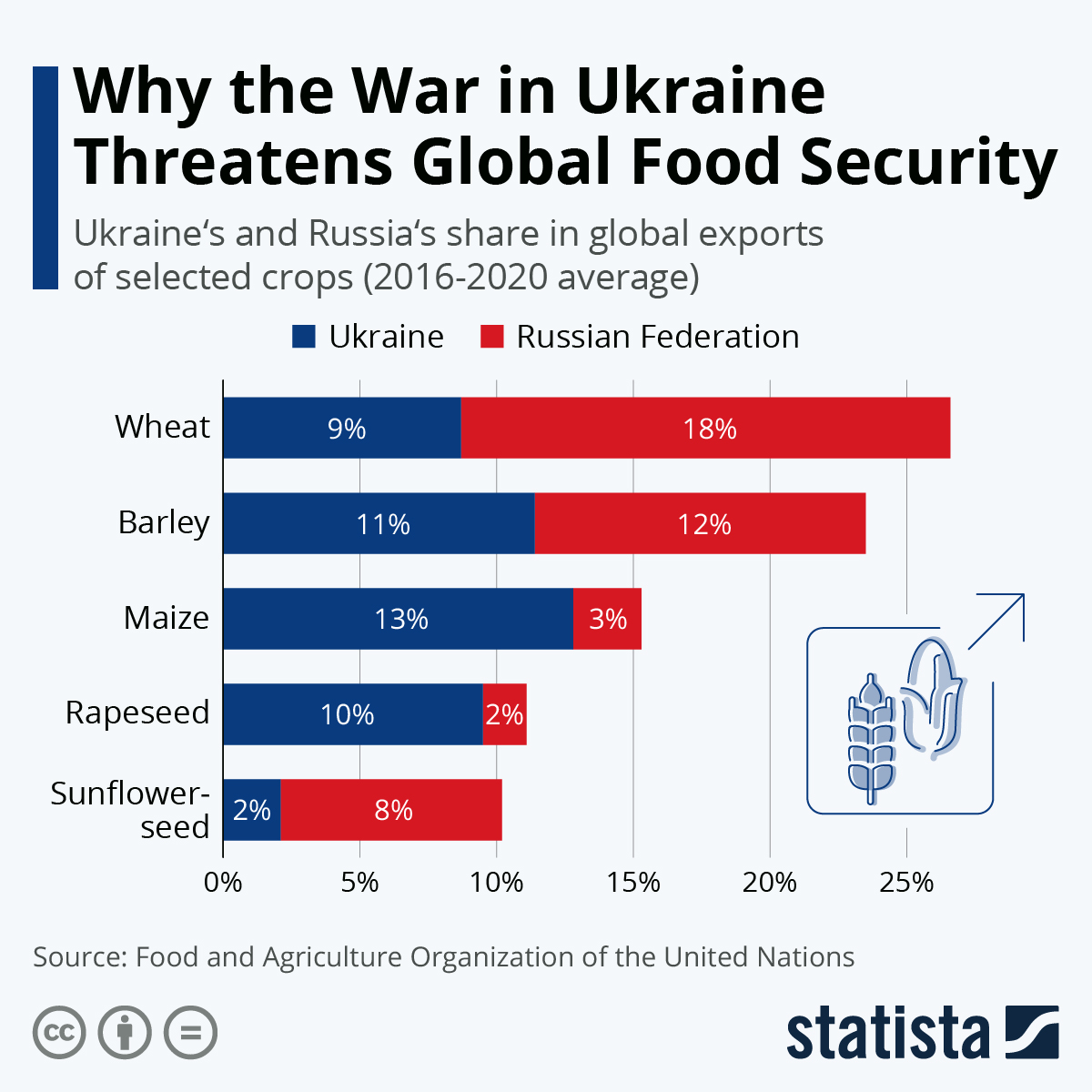
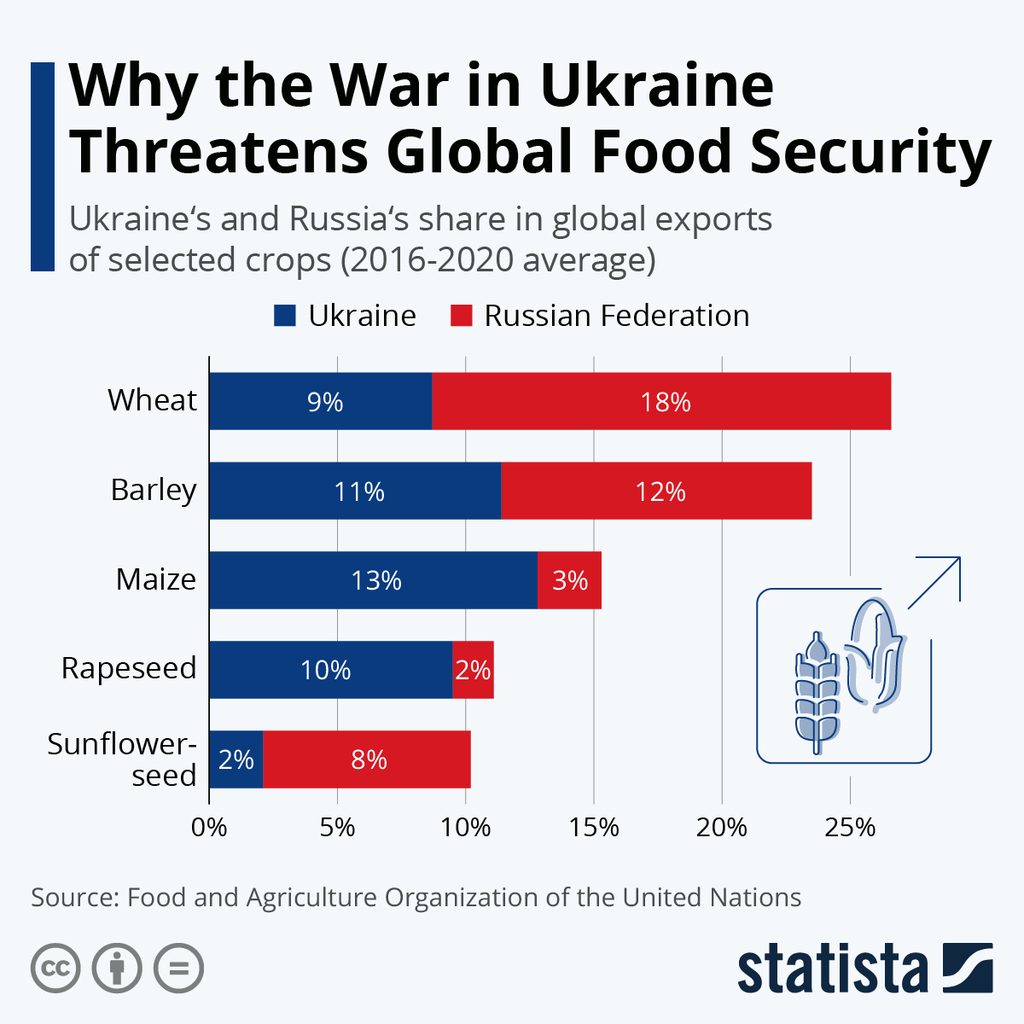
The war between Russia and Ukraine provides one of the clearest examples of the relationship between maritime security and food security. Russia and Ukraine have historically been major suppliers of grain, cereals and agricultural commodities to international markets. Russia is also an important supplier of fertilisers.
The disruption of Black Sea shipping following the outbreak of the war created immediate concerns about the availability and affordability of food and agricultural inputs. The United Nations recognised the seriousness of the situation through the arrangements concluded in 2022, including the Black Sea Grain Initiative and the separate United Nations–Russia memorandum intended to facilitate unimpeded access for Russian food and fertiliser exports to global markets. UNCTAD has noted that the disruption affected developing and least-developed countries particularly severely.
The significance of these arrangements went beyond the interests of Russia and Ukraine. Their purpose was to keep essential commodities moving despite a military conflict. This illustrates an important principle for future crises: food and fertiliser supplies should, as far as possible, be insulated from geopolitical confrontation.
The subsequent deterioration of maritime security in the Black Sea demonstrates the continuing vulnerability of civilian shipping. In July 2026, the International Maritime Organization condemned attacks on civilian merchant vessels operating in the Black Sea and Sea of Azov, warning that such attacks endanger seafarers, threaten navigational safety and disrupt global supply chains.
The implication is important. A merchant vessel carrying grain or fertiliser is not merely another commercial asset. Its safe passage may affect food prices thousands of kilometres away. An attack on such a vessel can therefore produce consequences far beyond the immediate theatre of conflict.
Sanctions, Shipping and the “Chilling Effect”
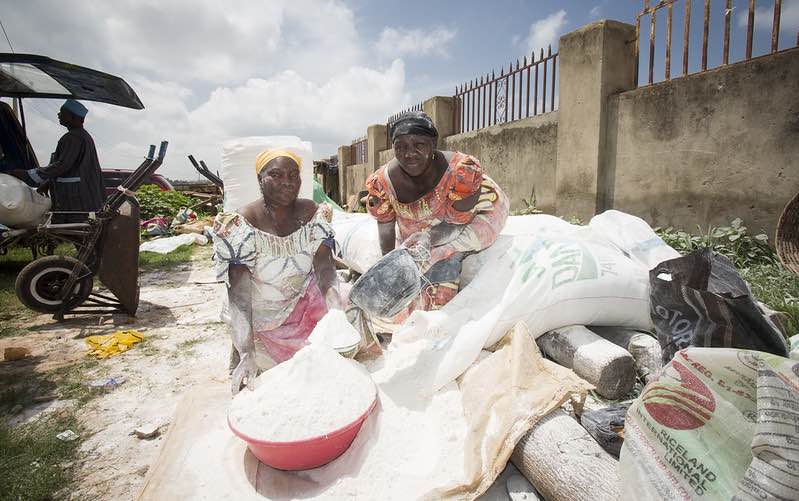
THREATENED: Nigerian enterprises like most people in Africa are affected negatively by food insecurity
The issue becomes more complicated when economic sanctions are considered.
Sanctions are an established instrument of international and national policy and may serve legitimate objectives, including responding to aggression or attempting to change state behaviour. However, the practical operation of sanctions can sometimes create consequences beyond the legal restrictions expressly imposed.
This is particularly relevant to food and fertiliser. Even where humanitarian or agricultural exemptions exist, banks, insurers, shipping companies and other commercial actors may become reluctant to handle transactions involving sanctioned jurisdictions because of compliance risks, reputational concerns or uncertainty about the applicable rules.
UNCTAD previously described this phenomenon as a “chilling effect”, noting that over-compliance, reputational risks and market avoidance could create obstacles to Russian food and fertiliser exports. It also highlighted the increased costs associated with insurance, financial transactions, shipping and transportation.
This distinction is crucial. It would be inaccurate to suggest that every Western sanction legally prohibits Russian food or fertiliser exports. In many cases, exemptions, licences or humanitarian provisions exist. The problem is that a formal exemption does not necessarily guarantee that a commercial transaction will occur smoothly.
A bank may still decline a payment. An insurer may require additional approval. A shipowner may decide that the voyage presents excessive compliance risk. A trader may seek an alternative supplier. Collectively, these decisions can reduce the availability of essential commodities even when the commodities themselves are not formally prohibited.
For the Global South, the question should therefore not be whether sanctions are politically justified in a particular dispute. The more practical question is whether sanctions regimes are designed and implemented in a manner that prevents essential food and fertiliser supplies from becoming collateral damage.
The answer should be stronger humanitarian safeguards, clearer exemptions, transparent licensing procedures and reliable mechanisms through which legitimate food and fertiliser shipments can move.
Africa and the Global South
Africa has a particular interest in this debate because agricultural production in many African countries is highly sensitive to the cost and availability of fertiliser.
UNCTAD has previously highlighted the disproportionate impact of fertiliser costs on developing economies. Fertiliser accounts for a much larger share of agricultural production costs in parts of Africa than in wealthier economies. The consequence is that a disruption that may be absorbed by a wealthy economy can become a serious food-security problem in a poorer one.
This vulnerability is not confined to grain-importing countries. Countries that produce food domestically may still depend on imported fertiliser, fuel, machinery or agricultural chemicals. Consequently, maritime disruption can affect both sides of the food equation: the supply of food commodities and the ability of farmers to produce the next harvest.
This is why the impact of maritime insecurity should not be measured merely by the number of ships delayed or the number of voyages cancelled. The more meaningful question is what happens to the price and availability of food months later.
A prolonged increase in fertiliser prices, for example, may cause farmers to reduce application rates. Lower application can reduce yields. Reduced yields can increase food imports. Increased imports can place additional pressure on foreign exchange reserves. Higher import costs can then feed into domestic inflation.
A maritime-security crisis can therefore become an agricultural crisis, an inflation crisis and eventually a development crisis.
The Strait of Hormuz: Food Security Beyond the Black Sea
The Strait of Hormuz demonstrates that the maritime-food-security relationship extends well beyond the Russia-Ukraine conflict.
Hormuz is commonly associated with oil and gas, but its importance to food security is equally significant because the region is an important producer and exporter of fertiliser. The WTO has reported that the 2026 conflict severely disrupted trade in urea and phosphate fertilisers and identified a number of African and Asian economies as particularly vulnerable to resulting shortages and price increases.
UNCTAD similarly reported that shipping through Hormuz had fallen by more than 95 per cent during the disruption and warned that rising energy, fertiliser and transport costs were increasing risks to food production and food prices.
The lesson is that energy security and food security are interconnected. Modern agriculture depends heavily on energy, particularly for the production of nitrogen fertiliser, transportation, irrigation and processing. When maritime insecurity disrupts energy and fertiliser markets simultaneously, the effects can multiply.
For countries such as South Africa and others in Africa that rely substantially on imported agricultural inputs, such disruptions are particularly concerning. The WTO has specifically identified South Africa among economies vulnerable to disruption of nitrogen fertiliser supplies from the Gulf region.
This reinforces the need for African states to treat maritime security not simply as a defence or foreign-policy issue, but as an essential component of national food-security planning.
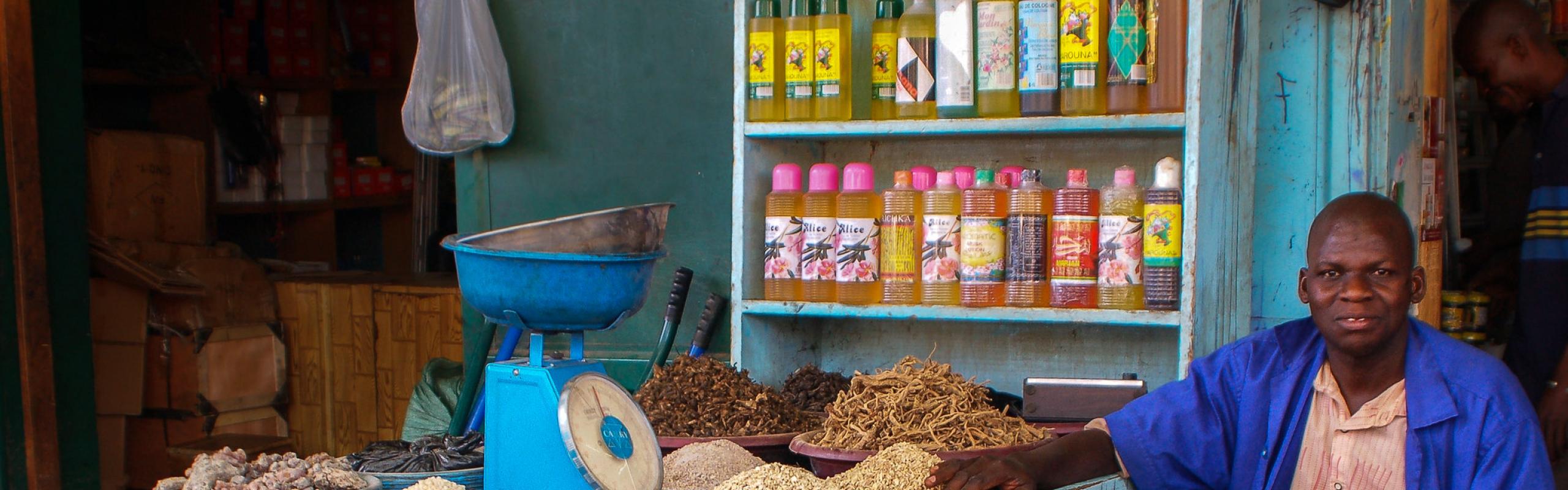
SMALL BUSINESSES: No one can escape the impact of a lack of food security
The Red Sea and the Cost of Rerouting
The Red Sea and Gulf of Aden provide another illustration of how attacks on merchant shipping can affect food security even when food-producing countries themselves are not directly involved in the conflict.
Attacks against commercial vessels in the Red Sea have forced shipping operators to reassess the risks of using the Suez Canal and the Bab el-Mandeb route. Where vessels avoid the area, longer voyages increase fuel consumption, crew costs, insurance exposure and the time required to deliver cargoes.
The IMO has described the Red Sea as a critical maritime corridor for international trade and warned that renewed attacks threaten seafarers, shipping security, the marine environment and global supply chains.
For food commodities, time and cost matter. Grain, fertiliser and other agricultural products may be commercially viable at one freight rate and uneconomical at another. A longer voyage may also require additional working capital and increase uncertainty for importers in countries already facing high food prices.
This creates an important distinction between the availability of food and its affordability. A commodity may technically remain available on international markets while becoming inaccessible to poorer consumers because transportation, insurance and energy costs have increased.
The Cape Route and South Africa’s Strategic Position
The disruption of major maritime corridors also increases the strategic importance of alternative routes around the Cape of Good Hope.
For South Africa, this creates both opportunities and responsibilities. Increased traffic around the Cape can provide opportunities for ports, bunkering, logistics, ship repair and related maritime services. At the same time, additional traffic places greater demands on port infrastructure, maritime surveillance, search-and-rescue capacity, environmental protection and navigational safety.
South Africa should therefore approach increased Cape traffic as more than a commercial opportunity. It is also a maritime-security responsibility.
The country has an interest in ensuring that vessels carrying food, fertiliser, fuel and other essential commodities can move safely through its surrounding maritime space. This includes strengthening cooperation between maritime authorities, ports, security agencies and international organisations.
The Cape route also demonstrates why maritime resilience must form part of food-security policy. If major chokepoints become unreliable, alternative routes must be available. But alternative routes are not cost-free. A longer voyage can increase the price of a commodity before it reaches the importing country.
Consequently, diversification of maritime routes should be accompanied by investment in infrastructure and regional maritime cooperation. South Africa can play an important role in this regard, particularly as a major maritime gateway between the Atlantic and Indian Oceans.
Protecting Humanitarian Maritime Trade
The international community should therefore consider stronger mechanisms for protecting legitimate food and fertiliser trade during periods of geopolitical conflict.
Such mechanisms need not exempt an entire country from lawful sanctions. Rather, they could establish carefully monitored humanitarian maritime corridors for qualifying shipments of food, fertiliser and other essential agricultural inputs.
The principle should apply without political discrimination. If Russian fertiliser is lawfully destined for an African state, it should be possible for that shipment to move under a transparent humanitarian mechanism. Equally, Ukrainian grain and agricultural products should receive equivalent protection.
Such arrangements could involve the United Nations, IMO, relevant flag and port states, insurers, banks and other commercial actors. The objective would be to provide sufficient legal and operational certainty that legitimate humanitarian shipments can proceed without exposing commercial participants to unreasonable sanctions or security risks.
The experience of the Black Sea arrangements demonstrates that such mechanisms are possible. The challenge is to develop them before the next major maritime crisis rather than after global food prices have already risen.
What Should South Africa and the Global South Do?
South Africa and other developing countries should adopt a more proactive approach to maritime food security.
First, maritime security should be incorporated into national food-security planning. Government assessments of food security should consider not only domestic agricultural production and strategic reserves but also the security of the sea routes through which food and fertiliser enter the country.
Second, South Africa should strengthen maritime surveillance, port security, search-and-rescue capabilities and contingency planning for increased Cape traffic.
Third, African states should advocate within international institutions for clear humanitarian protections for food and fertiliser shipments during geopolitical crises.
Fourth, the Global South should support greater diversification of food and fertiliser suppliers and maritime routes. Diversification reduces vulnerability to any single chokepoint, supplier or geopolitical dispute.
Finally, international organisations should continue to distinguish between legitimate economic restrictions and measures that unintentionally obstruct essential humanitarian trade. The WTO, IMO, UN and other institutions have different mandates, but they can contribute to a coordinated international response.
Conclusion
The central lesson of recent maritime crises is that the security of shipping cannot be separated from the security of food, which particularly vital for needy destinations such as the African continent and many parts of the Global South.
The Black Sea demonstrates how conflict – too often avoidable – can disrupt grain and fertiliser markets, as Ukraine conflict clearly shows. The Strait of Hormuz also shows how energy and fertiliser disruptions can rapidly spread into agricultural markets. The Red Sea demonstrates how attacks on merchant vessels and the rerouting of ships can increase transportation costs and undermine supply chains. The growing importance of the Cape route highlights South Africa’s strategic position in a rapidly changing global maritime environment.
For the Global South, these developments are particularly serious because poorer economies have less capacity to absorb higher freight, energy and fertilizer costs. It was particularly welcome news when a few years ago Russian President Vladimir Putin offered to supply fertilizer for free to Africa’s poorest economies, a gesture that was widely welcomed by the continent and the African Union.
The international community should therefore treat food and fertilizer shipments as matters of global humanitarian importance, regardless of geopolitical differences especially against the Russian Federation. This does not require ignoring international law, or legitimate security concerns. It requires ensuring that the enforcement of those measures does not inadvertently undermine the ability of vulnerable populations to obtain food and the agricultural inputs necessary to produce it, irrespective of the country of origin.
The principle should be clear: food and fertiliser must not become collateral damage in geopolitical conflict.
Maritime security is consequently not merely about protecting ships. It is about protecting the systems upon which millions of people depend for food, livelihoods and economic stability. For South Africa and the wider Global South, securing those systems should be regarded as an essential element of national, regional and global security.
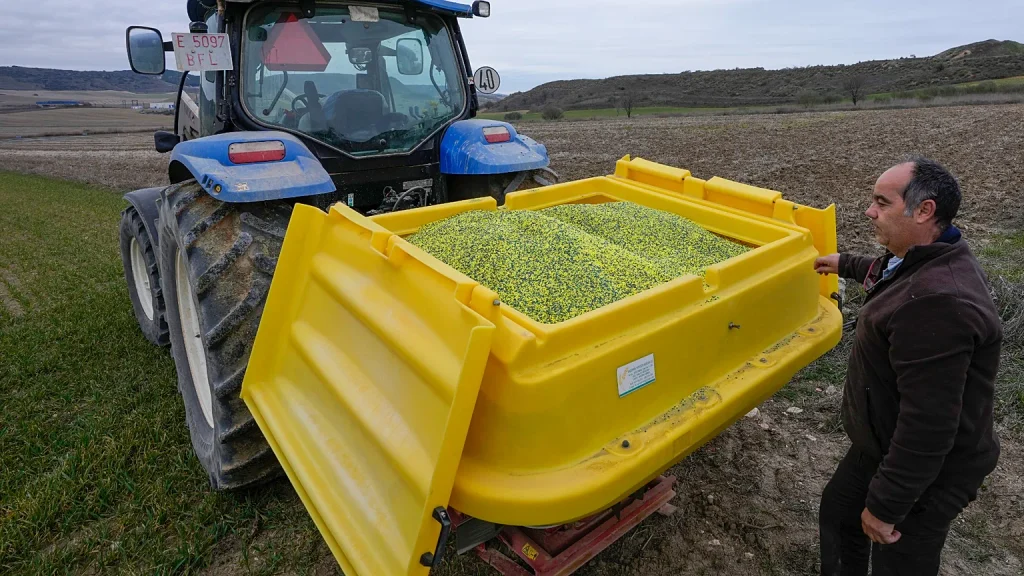
RUSSIAN fertilizer