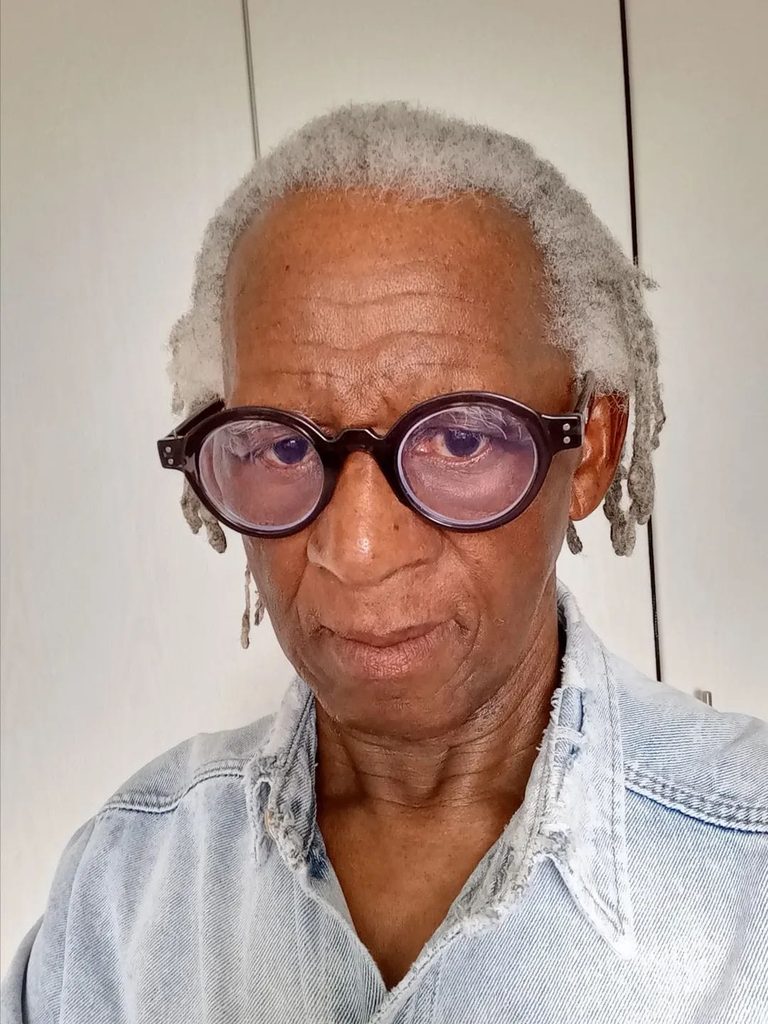
If you read his story with comprehension, you soon learn that Fanie Jason did not wait for photography to find him. He went looking for it.
It is 1974. Gugulethu. Dust roads, crowded yards, passbooks and police vans. A young man walks through the township carrying a camera where other young men carry nothing but hunger. He is fashionable in the style of the time, bell bottoms flaring, platform shoes raising him above the dust. But his walk is familiar. It is the same walk he did as a boy.
“I looked at photography as a form of breaking the yoke of poverty which I grew up in, as a child of a blind father,” he says.
Between the ages of 10 and 15, he walked barefoot from one house to the next with boxes of potatoes balanced on his head, selling so that his family could make ends meet. No shoes. No childhood. Just responsibility. That image, a child with potatoes on his head, is where his photography begins. Not in a studio. In survival.
When he left high school and started working, he did the same thing with a camera. What others would call a street photographer or a township photographer, he lived as a daily hustle. From door to door, yard to yard, taking photography to the people. Family portraits on stoops. Beauty queens after church. Children in borrowed jackets. Mothers who wanted to be remembered as dignified. He brought the studio to the street because the street could not afford the studio.
“I did the same with photography, but this time I was more fashionable, wearing bell bottoms and platform shoes, but still walking from one house to the next taking photography to the people.”
That discipline, walking every day, knocking on every door, made him more than a photographer. It made him an archivist of township life.
FROM HUSTLE TO CONSCIOUSNESS
At first photography was bread. Later it became a weapon. He became more conscious about the role of photography and demanded more from it.
Growing up in Gugulethu as a young man was tough. You had two schools: the immediate surroundings outside, and the strong family values at home. Outside, there was pressure to make a fast living. Many of his best friends went in and out of prison trying to make a decent living for themselves. Inside, his family was strict, disciplined, anchored in faith.
He chose the second school, but not with arrogance.
“I would never think I was better than them, knowing what I know now,” he says. “Most of these stinking rich families in Europe or America did not get rich by honest means. Some of their hands are soaked in blood of innocent people through slavery, colonialism and murder.”
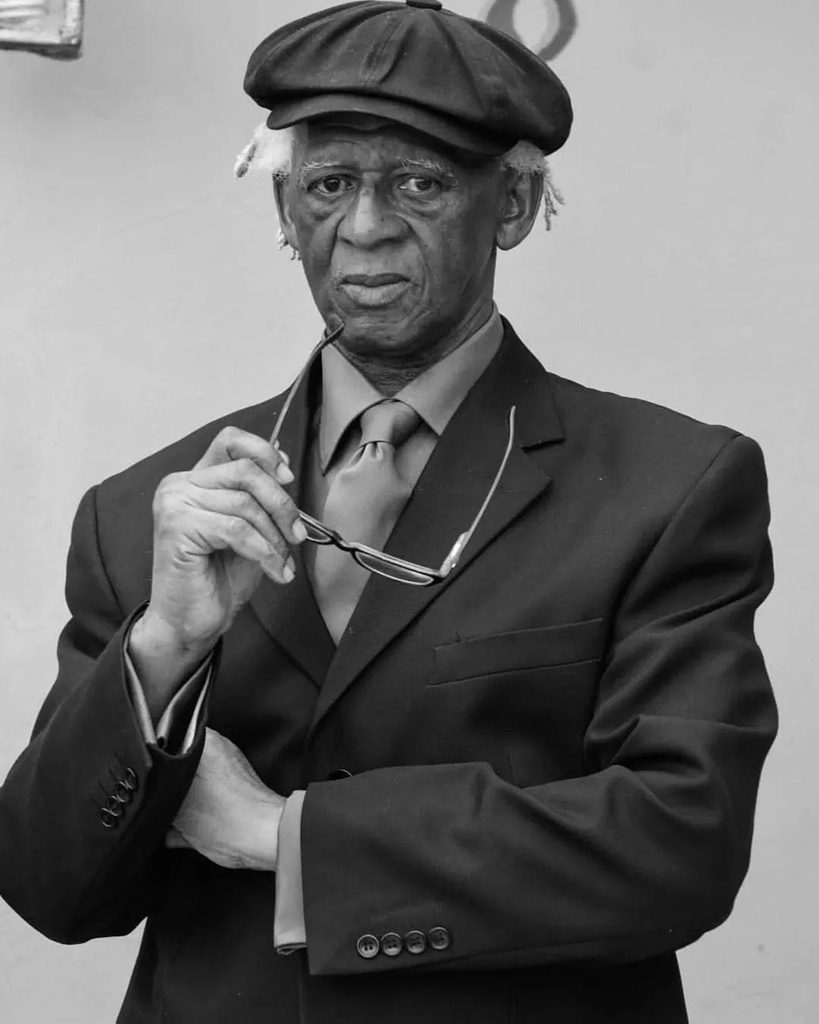
His friends stole to become rich. He was taught by the church, thou shalt not steal. Looking back, he does not judge them.
“My friends did nothing I should be ashamed of. Unfortunately my destiny was the arts and photography, but even to be a decent photographer you need cash.”
It is a profound Black Consciousness critique, born not from books but from the street. What is theft? Is it the young man in Gugulethu who steals bread, or the empire that steals a continent? Capitalism, he says, is based on stealing and robbery. “If you think I am telling you lies, what Trump or Netanyahu is doing to the Palestinians or in Venezuela is daylight robbery and murder. That is what capitalism is based on.”
If you grew up in a township, you have to be all over to survive. His writing sounds like that, all over, because survival is all over. One minute you are thinking about fashion, the next about politics, the next about beauty queens, the next about police.
That is what makes his lens unique.
THE TOWNSHIP AS RUNWAY, STAGE AND PARLIAMENT
His archive holds what official archives erased.
Township life was not only suffering. It was beauty. It was beauty queens in hand-sewn sashes, posing with pride after winning Miss Gugulethu, their Afros perfect, their smiles defiant. It was fashion, young men and women turning poverty into style, tailoring their own clothes, ironing them with coal irons.
It was music. The bands that practiced in garages, the jazz that drifted from shebeens, the choirs that sang freedom songs at funerals.
It was politics. The meetings held behind closed doors, the funerals that became rallies, the faces of organizers who would disappear the next day. He photographed them because he knew that if he did not, no one would.
He lifted himself by his bootstraps, but he never lifted himself out of his community. He lifted his community with him into the frame.
Self-discipline was his camera strap. Strong family values taught him to show up every day, to clean his lens, to respect the person in front of it, whether that person was a famous activist or a domestic worker who wanted one beautiful picture to send home to the Eastern Cape.
THE HISTORIAN WITH PLATFORM SHOES
Today we celebrate him as a renowned photographer who captured history, culture, politics and fashion. But his making was not glamorous. It was potatoes on a barefoot boy’s head. It was a blind father he had to help support. It was walking in platform shoes until his feet hurt because a picture could buy maize meal.
He is not a photographer who visited the township. He is a photographer who was formed by the township. His lens understands both dignity and desperation because his life lived both.
He reminds us that great art does not require great capital. It requires great commitment. Even to be a decent photographer you need cash, he says, but he had little, so he used what he had: legs that could walk, eyes that could see, and a family ethic that said work hard and respect people.
If you look at his photographs now, you will see what he saw in 1974: a people who refused to be defined by poverty. Who dressed up when they had nothing. Who sang when they were told to be silent. Who organized when they were told to be obedient.
That is the history he captured. Not just events, but spirit.
From barefoot potato seller to bell-bottomed street photographer to conscious cultural custodian, his journey is township bootstraps in its purest form. He went looking for photography because photography was the one tool that could break the yoke and still keep him honest.
And through it, he gave his community something no thief could steal: its own image, proud, beautiful, and eternal.
And this is not the whole story.
We salute Fanie Jason. A legendary icon.