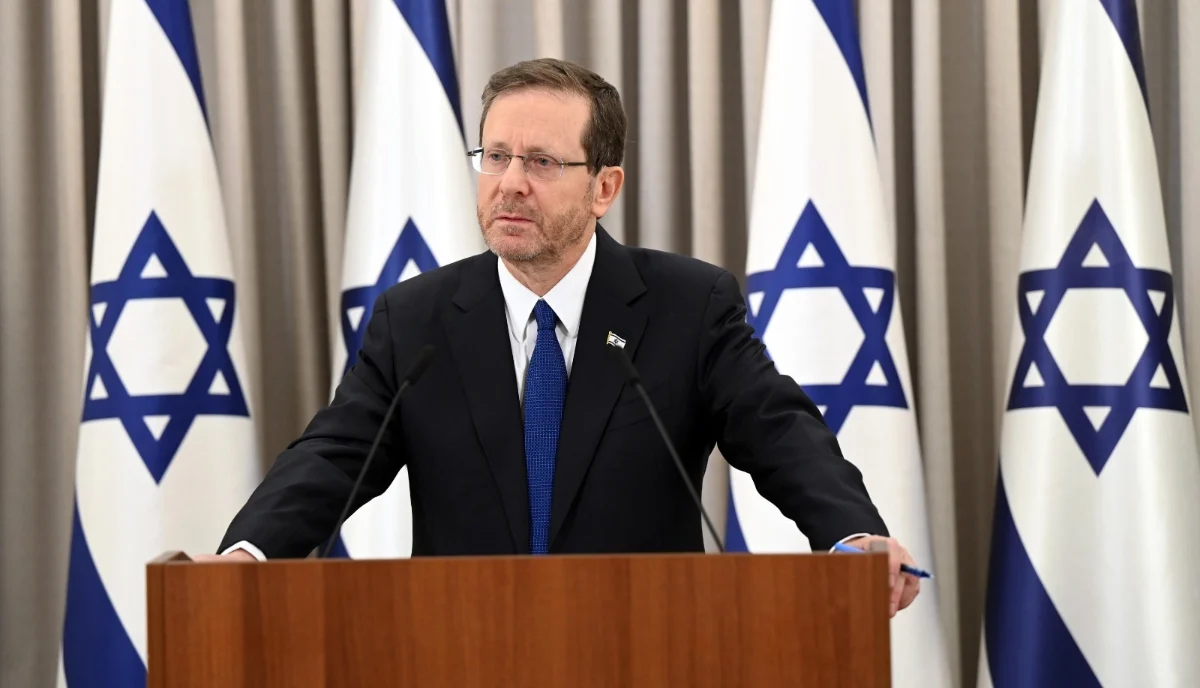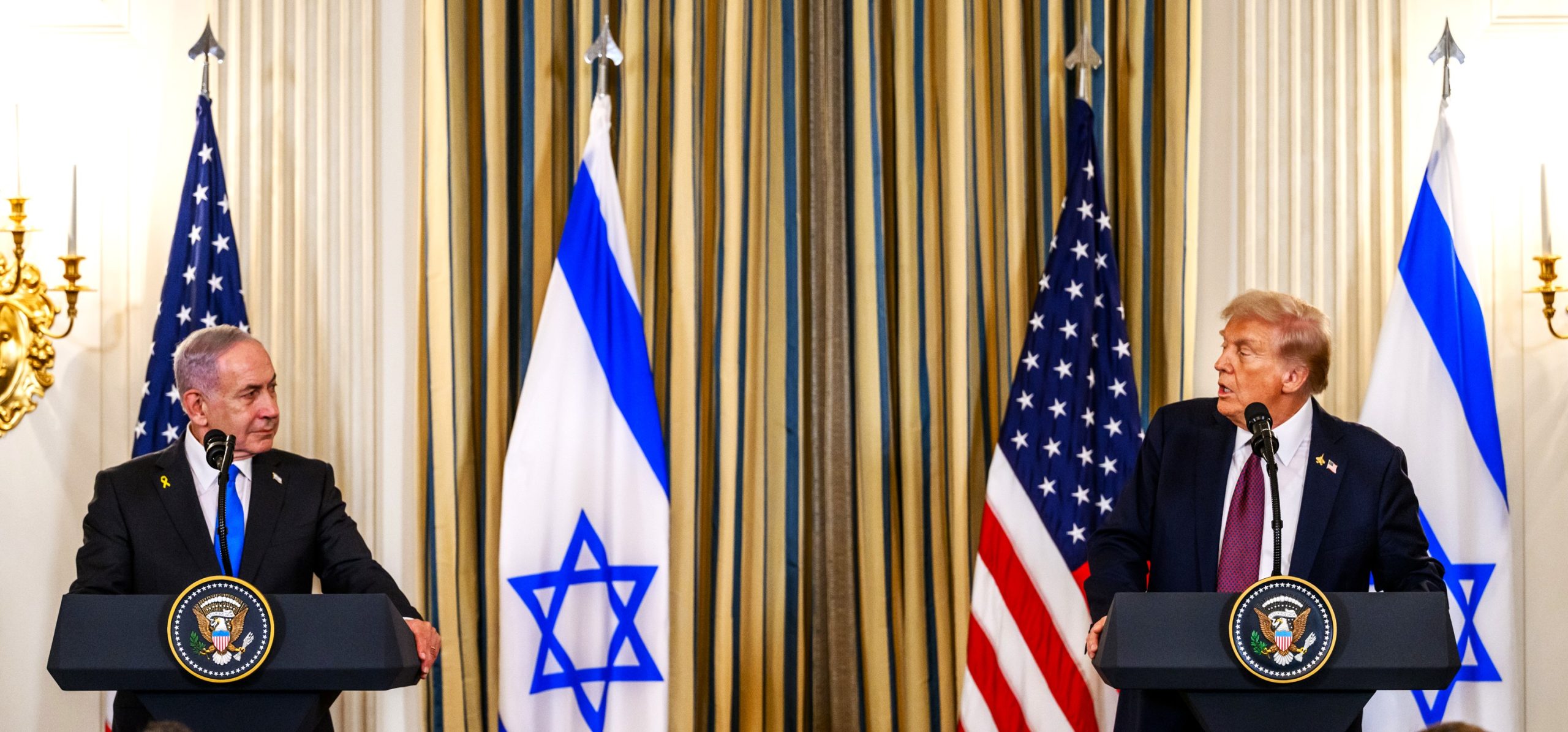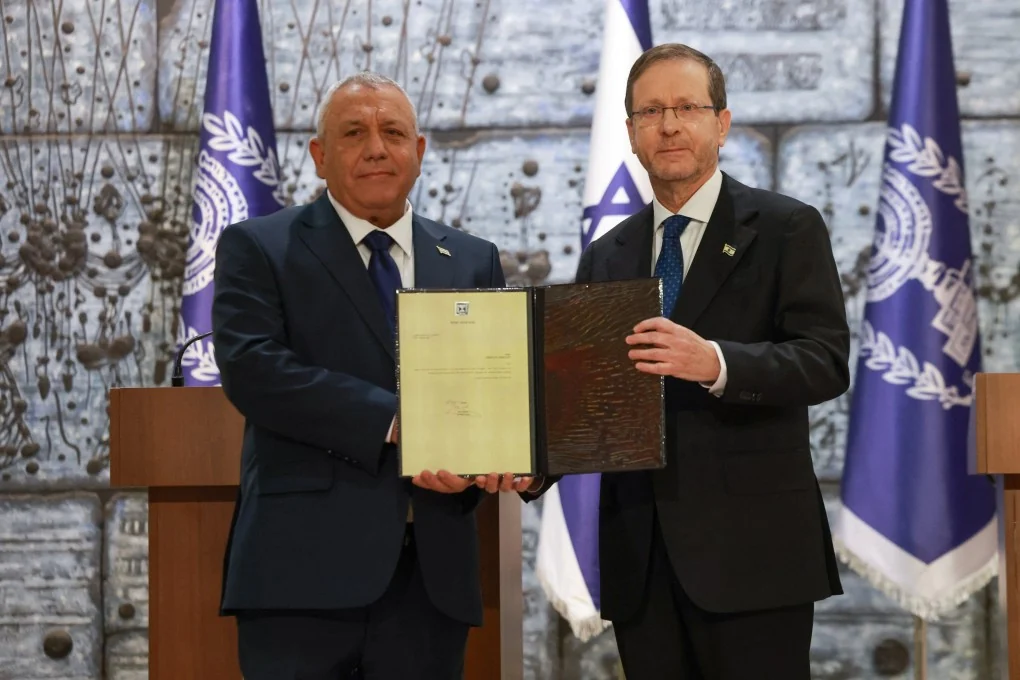
NEW GOVERNMENT LOOMS LARGE: Israeli President Isaac Herzog gives permission to Opposition leader Gadi Eisenkot to form a new government, marking the end of the war-laced Netanyahu era.
Today, on a Sunday filled with political expectation, Israeli President Isaac Herzog finally stepped onto the stage. He did what the numbers told him to do. He did what he had delayed doing on Friday. He lifted the mask, just a little, and handed it to Gadi Eisenkot. 67 to 46. That was the arithmetic. 67 recommended Eisenkot. 46 recommended Benjamin Netanyahu. 7 abstained. Herzog, the man in the wings, could no longer pretend he had not heard the music. And yet, as in the opera, lifting the mask does not reveal the face. It only reveals another mask beneath it. For Eisenkot now holds the mandate, but he does not yet hold the government.
The Second Faustian Pact
Two days ago, on Friday 6th November, we spoke of Herzog’s Faustian choice. Today, the pact has simply been passed on. Now it is Eisenkot who must sign. He has 28 days. Perhaps 14 more if Herzog is merciful. In those days he must do what no arithmetic can do for him: he must make 48 and 19 sit in the same room and call it a government. 48 Jewish-led Members of the Knesset who campaigned to remove Netanyahu. 19 Arab-led Members who also recommended Eisenkot, but whom the 48 refuse to sit with. This is the Phantom’s cruel joke. The majority exists on paper. It does not exist in the flesh. Eisenkot speaks of a “national emergency government.” It is a beautiful phrase. It sounds like unity. It sounds like healing. But in the Knesset, words are not deeds. Avigdor Liberman has already said the quiet part aloud: a government dependent on the Arab parties will be short-lived, and in the long run, it will only strengthen Netanyahu. Liberman wants another road. Forget the Arab parties, he says. Bring in the ultra-Orthodox. Bring in Shas and United Torah Judaism. Make 61 without the 19. But that road too demands a signature in blood. For Eisenkot’s condition is mandatory service for all. And mandatory service for all is the very stone on which Netanyahu’s last government broke. The rabbis will not bless a government that drafts their sons. The secular will not bless a government that exempts them. Either way, Eisenkot must sell a piece of his soul to buy a majority.
The Man Who Cried Chaos
And while Eisenkot negotiates, Netanyahu does what the Phantom does best: he sings from the shadows. On Saturday evening, in a video statement that was less a concession than a curse, Netanyahu warned that if a minority government is formed with the Arab parties’ support, Israel will “simply not survive.” He called them “terror supporters.” He said they want to eliminate the State of Israel. Let us be clear about what this is. It is not analysis. It is incantation
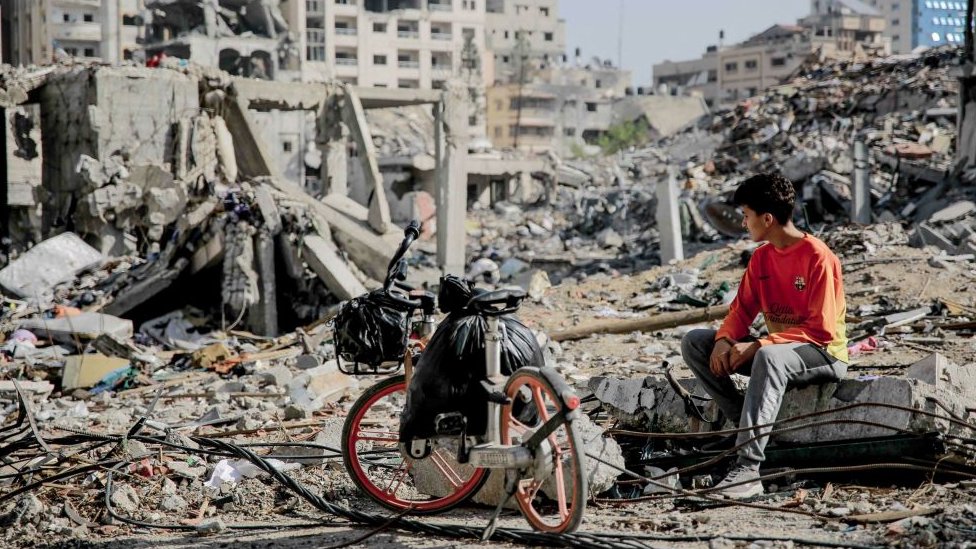
UNCERTAIN FUTURE FOR GAZA CHILDREN: Will the new Israeli leader continue to on a warpath, or choose negotiated peaceful coexistence?
Netanyahu has lost the recommendation of even his own ally, United Torah Judaism. He has 46 names. He cannot form a government. And so he must make the other man’s government illegitimate before it is even born. He must turn 19 elected representatives of Palestinian citizens of Israel — 20% of the population, voters, taxpayers, doctors, teachers, mothers — into a threat. He must turn arithmetic into apocalypse. He calls it chaos. In truth, it is fear. Fear that if Arabs and Jews govern together, even from outside, the old story — that Israel can only be safe if Palestinians are silent — will collapse. Eisenkot has answered with his own test: any partner must recognise Israel as a Jewish and democratic state, must accept the Declaration of Independence, must accept that Hamas must be dismantled, must accept mandatory service for all. It is a test designed to reassure Jews. But we must ask: who is testing whom? Is Eisenkot testing the Arab parties for loyalty? Or are the Arab parties testing Eisenkot for humanity?
America Has Spoken, But Has Israel Heard?
We wrote on Friday that America has spoken. Now we know more clearly what America said. On Tuesday, the Democrats swept Congress — House and Senate — in a blue wave that even the pollsters did not predict. The voters spoke of cost of living. They spoke of the Iran war. They spoke of corruption. And, in the mouths of Vice President Vance himself, they spoke of “our relationship with Israel.” On the same day, President Trump announced he had agreed with Netanyahu to end the $3.8 billion annual military aid to Israel. The old Memorandum of Understanding runs to 2028. Trump says it will end early. Two messages, from two directions, arrived at once: America is tired of paying for endless war, and America is tired of paying for endless occupation. And yet, in Jerusalem, the opera continues as if Washington were on another planet. Netanyahu’s supporters say he has lost bipartisan support. Eisenkot’s supporters say he can restore it. But restoration will have a price, and Washington has already named it: stop the settler violence, stop the new settlement construction, implement the 20-Point Plan for Gaza. The question is not whether Eisenkot wants to pay that price. The question is whether he can pay it, if his government depends on men who will not sit with Arabs, or on rabbis who will not send their sons to serve.
The Man in the Dock
And behind all of this, like a basso profundo under the orchestra, is the trial. Netanyahu is still on trial since 2020. Three cases. Bribery, fraud, breach of trust. Cigars and champagne. Regulatory favours for favourable headlines. He finished his own testimony in June after 98 hearings. The judges have urged prosecutors to drop the bribery count. Losing office will not put him in jail tomorrow. But losing office will strip him of the one shield he has used for years: the power to delay, to reform the judiciary, to bargain for a pardon without admitting guilt. President Herzog declined a pardon in April, saying a plea deal must be tried first. That plea deal is still waiting. And beyond Jerusalem, the ICC warrant from November 2024 still stands. It does not vanish because a president hands a mandate to another man. A new government will not hand Netanyahu to The Hague. No Israeli government would. But a former prime minister who travels will travel as a man, not as a state. This is the other Faustian pact. Netanyahu signed it long ago: stay in power to stay out of prison. Now power is slipping. The bill is coming due.
Will the Bombing Stop?
This is the question that matters. Not to the Knesset. Not to Washington. Not to the opera critics. To Gaza. In Gaza, mothers are not reading Herzog’s statements. They are listening for drones. They are holding their breath. Will Eisenkot be different? Let us be honest, as we were on Friday. Eisenkot is not a dove. He was Chief of Staff. He sat in Netanyahu’s war cabinet. He resigned not over Gaza, but over the absence of a plan for after Gaza. What will change under Eisenkot is not the doctrine. No Jewish-led party in this Knesset supports a sovereign Palestinian state tomorrow. No prime minister will dismantle the security architecture — control of borders, airspace, the Jordan Valley — that all of them share.
What might change is the management.
A government without Smotrich and Ben-Gvir might slow the formal advance of E1 and the legalisation of outposts. It might crack down on the settlers who beat a Washington Post journalist and attacked European diplomats in Taybeh. It might, because Washington demands it, implement the ceasefire and the 20-Point Plan. Might. That is the word on which Gaza now hangs. Might is not peace. Might is not justice. Might is the thin space between one Phantom and the next.
The Opera Is Not Over
Two days ago we wrote: When a President delays, it is because history is watching him decide. On Sunday, Herzog decided. He chose the arithmetic over the fear. He chose 67 over 46. But history is not finished with him. Nor with Eisenkot. Nor with Netanyahu. Nor with us. For the Phantom still sings. He has simply changed his mask. Now he wears the mask of the minority government. The mask of the ultra-Orthodox deal. The mask of the man who says Arabs will bring chaos. The mask of the man who says a new prime minister will bring salvation. We must not mistake the lifting of one mask for the end of the opera. The jury is still out. The music is still playing. The audience — in Gaza, in the West Bank, in Tel Aviv, in Washington, in London, in Pretoria — is still waiting to see the face.
And until that face is the face of peace, the opera will not be over.
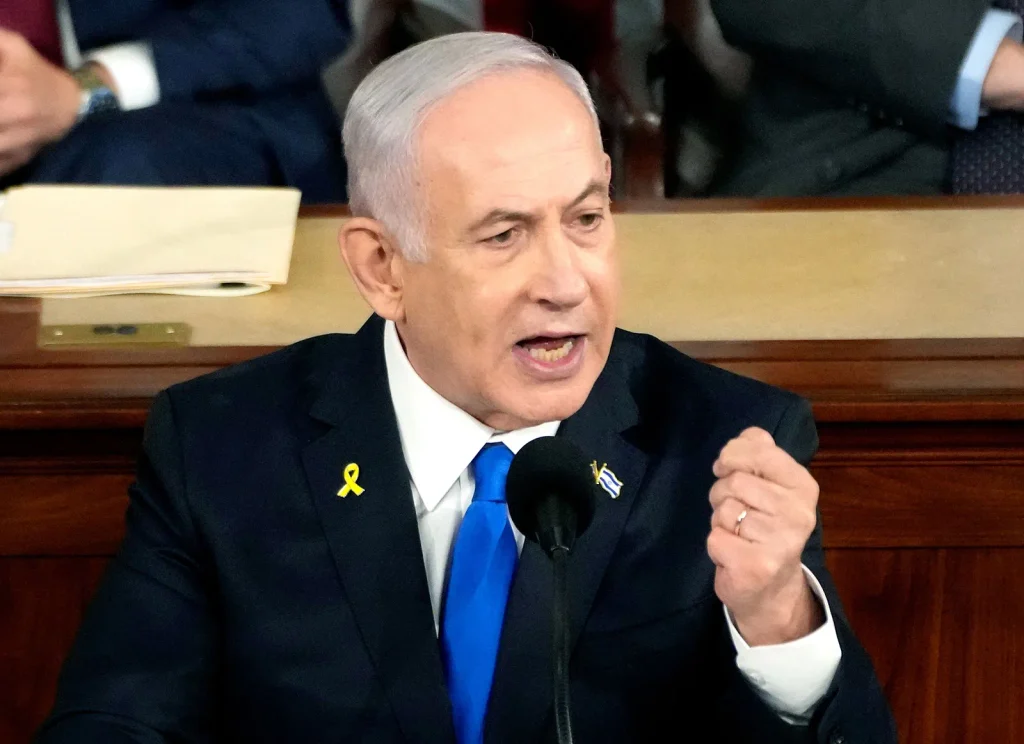
THE END IS NIGH: Controversial Israeli leader Benjamin Netanyahu’s future looks bleak