
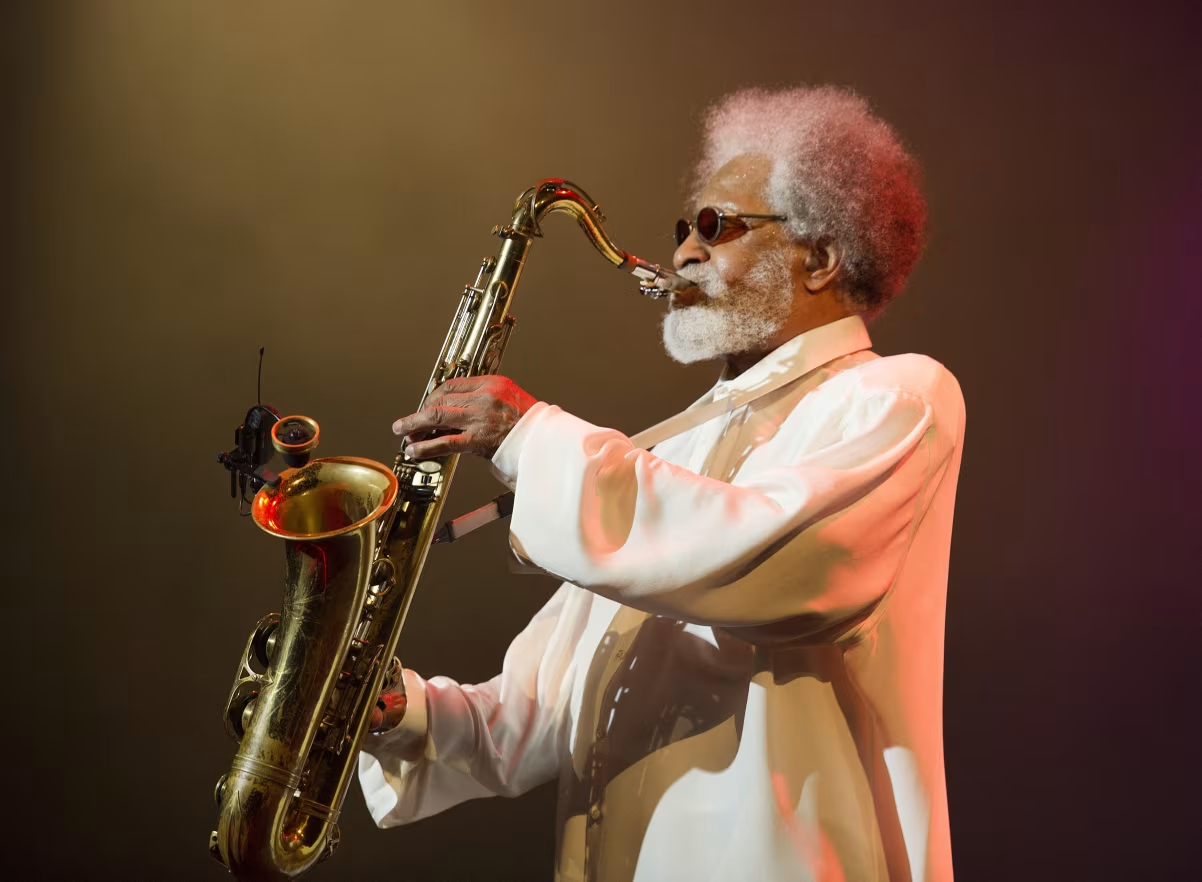
As news of Sonny Rollins‘s passing travelled across the jazz world, much was written about the musician. The giant. The innovator. The architect of modern tenor saxophone.
The man who stood shoulder to shoulder with Miles Davis, Thelonious Monk, Max Roach, Clifford Brown, Charlie Parker and the other titans who altered the course of twentieth-century music.
The Inner Life of Sonny Rollins
What made Sonny Rollins singular was not only the scale of his musicianship, but the depth of his self-interrogation.
Listening to Sonny speak through his Horn over the years, one encountered a man profoundly suspicious of artistic complacency. Again and again, he returned not to triumph, but to inadequacy. To questioning. To the unsettling awareness that greatness itself could become a trap if one stopped searching.
This explains the famous withdrawal to the Williamsburg Bridge more clearly than mythology ever could. Sonny was not escaping the world romantically. He was confronting himself.
Despite already being celebrated globally, he spoke openly about dissatisfaction with his own playing. He sought “peace inside.” He wanted, as he once reflected, to make himself “right inside in every way.”
That statement alone reveals the magnitude of the man. Most artists protect success. Sonny distrusted it. He subjected himself repeatedly to solitude, discipline, yoga, spiritual inquiry, and relentless practice because he understood something increasingly rare in modern culture.
And perhaps this is where the deepest connection between Sonny Rollins and the Titans of that era resides. Beneath the technical brilliance, beneath the mythology of bebop and post-bop, there existed a generation of Black musicians engaged in something far more demanding than entertainment.
They were constructing selves under pressure. Searching for freedom through discipline. Attempting, through sound, to become more fully human. Sonny never stopped searching. That may ultimately be his greatest lesson.
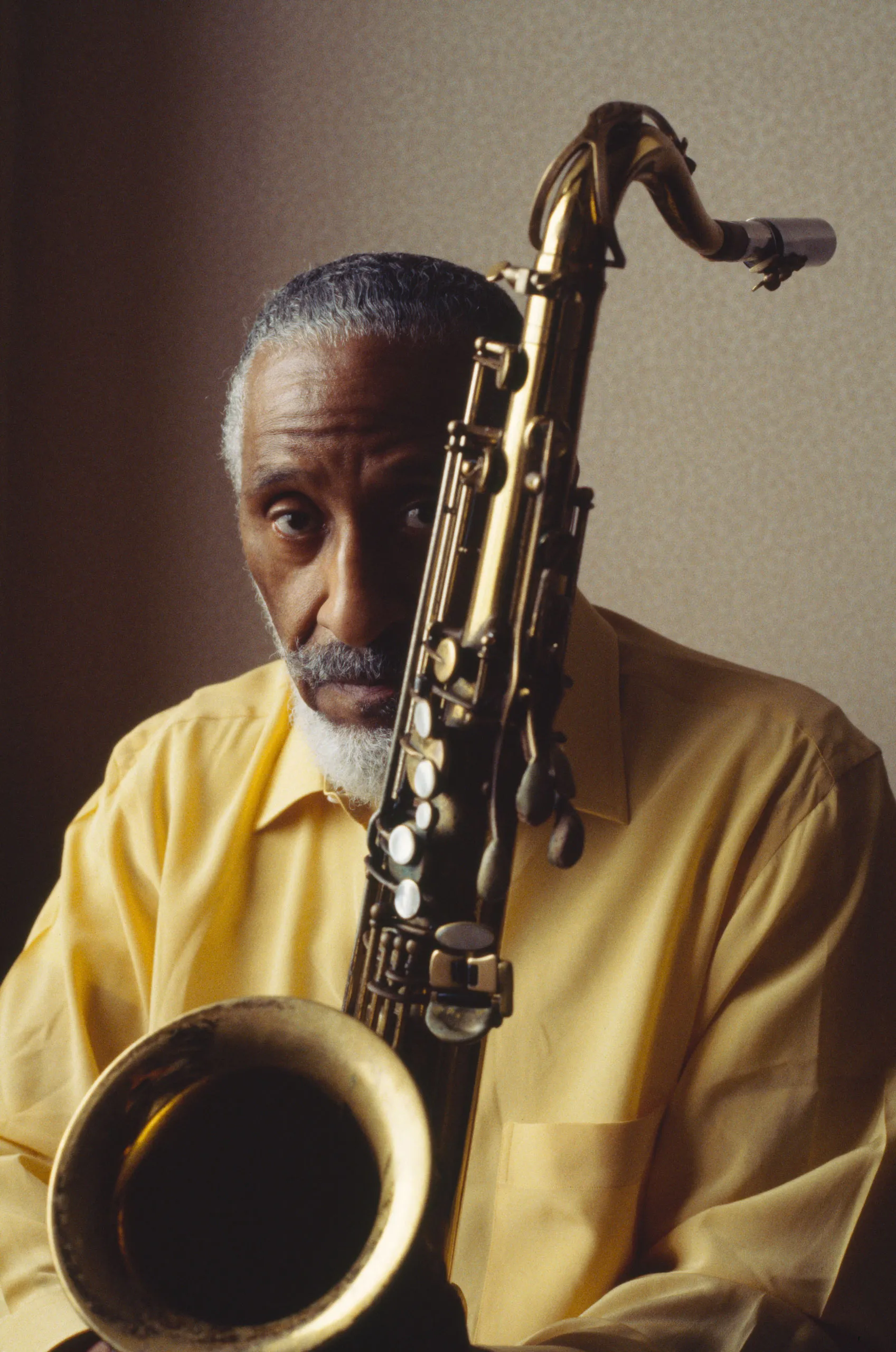
Yet there comes a point where criticism, however insightful, reaches its limits. Then comes a point where history must yield to testimony. Because the deepest truths about a human being are often carried not by historians or journalists, but by those who sat closest to the fire.
For me, one such voice belongs to René McLean.
René is, of course, the son of Jackie McLean, one of the most distinctive voices in modern jazz and a lifelong companion in that remarkable fraternity of musicians who transformed jazz into something larger than genre. Yet René occupies a place in this story that extends beyond lineage. Sonny Rollins was his godfather. Not symbolically. Not ceremonially. In the deepest sense of the word.
Over the years René became part of South Africa’s own musical landscape. Through his marriage to Thandiwe January-McLean, his teaching, mentorship, performances, and engagement with young musicians, he established roots that connected Harlem and Johannesburg in ways both visible and invisible.
Many South African musicians know René not merely as Jackie McLean’s son, but as a teacher, elder, and custodian of a living tradition. There is a further symmetry to this story. It was Hugh Masekela, that great connector of people and possibilities, who introduced René to Thandiwe. Such was Hugh’s gift. He never merely brought musicians together. He brought lives together.
Perhaps it is fitting, then, that through René we encounter a different Sonny Rollins. Not the public figure. Not the giant on the album cover. But the man. The guide. The spiritual elder.
Listening to René speak about Sonny, one quickly realizes that music occupied only part of their relationship. Their conversations ranged across spirituality, morality, religion, race, politics, Black consciousness, culture, business, family, and the lifelong challenge of becoming a better human being. The image that emerges is extraordinary. Sonny Rollins took mentorship seriously. Not as performance. Not as obligation. As vocation.
For decades he remained available to René in a way that is increasingly rare among public figures. He listened. He advised. He challenged. He encouraged. He accompanied.
Through René McLean’s testimony, we are reminded that Sonny Rollins belonged to that increasingly rare category of human beings whose influence extended far beyond their profession. The saxophone was only the visible instrument. The deeper instrument was the soul. And that instrument, by all accounts, remained in tune until the very end.
What follows are the reflections of René McLean. I have chosen to leave them untouched. Some voices are not meant to be interpreted. They are meant to be heard.
REFLECTIONS OF SONNY ROLLINS:
Rene’ McLean
Sonny was my Godfather, Padrino, Babalawo, Spiritual guide. He was the living essence of what it means to be a true mentor & guide. He took the title, role & responsibility seriously to heart. He was ever present in my life & consciousness, as my dad JMac was. He would always say to me “Rene if you need anything at all
I’m here”.
From around 14yrs of age we began having serious conversations about what I call Life’s lessons ranging from Spirituality, morality, religion, Politics, Race, Culture, Black Conscience, music, business of music, his childhood, life & family, growing up in Harlem etc.
I can’t think of anything we didn’t talk about. It was a very rich lifelong relationship.
Clifton Anderson his nephew & I went to be with him on Friday 5-22-2026, when I was returning to go see him on Monday, I got word that our Guru had transitioned. We were expecting it and knew that the hour was near.
We are extremely Blessed to have had the honour of sitting at his feet throughout our lives. His life has been an exemplary one, the good, bad & ugly.
We mourn & celebrate his life.
We’re most grateful for the wisdom, guidance & music he shared with us all.
It is significant to mention that Sonny Rollins made his transition on the day of Arafah of the lunar Islamic calendar, 9th day of Dhul- al – Hijjah day of Atonement. The day before the Hajj pilgrimage followed by the Holiday of Eid al-Adha. Atonement, exactly what Sonny would tell me he was striving for in this life & the next life to come. We pray that the Creator, the most high grant him paradise an abode of eternal Bliss, Peace, Blessings, Love as he joins the Ancestors.
Some musicians leave recordings behind. Others leave methods of listening. Sonny Rollins left a way of living.





One Response
Beautiful Tribute my brother