In the last decade, something quiet but profound has happened in South African media. One by one, names we grew up reading in the daily and Sunday papers have reappeared — not on mastheads owned by Naspers or Arena, but on their own websites, newsletters, and YouTube channels.
Len Maseko. Jovial Rantao. Abbey Makoe. Zubeida Jaffer. Edward Tsumele. Themba Khumalo. Len Kalane. Quanita Hunter. And a host of others.
They are founding and launching online platforms and publications. This is a positive step in the direction of ownership and diversity of voices. For the first time, many of them get to decide what gets covered, how it gets framed, and who gets to speak.
It is worth pausing to understand why this moment matters, and why it is also so uncomfortable.
FROM EMPLOYEES TO OWNERS: THE LEASH COMES OFF
For decades, far too many black journalists did not have the genuine freedom to write what they liked or to practice leadership and managerial roles in the ways they envisioned.
They were employees. Talented, award-winning, essential employees. But they always had to report to white bosses and white-owned boards. Editorial meetings were run in a culture, and often in a language, that was not theirs. The story list was set by people who had never lived the story.
Uncomfortable as it may be to say it: black journalists and editors never fully knew freedom of self-expression and freedom of the media inside those institutions.
Frankly, they were like monkeys or dogs on a long leash. The leash was not always visible. Sometimes it was an advertiser. Sometimes it was “what the readers will understand.” Sometimes it was a publisher who said, “that’s not news.”
It was for this reason that it was easy to celebrate journalists from this 1960s – 1980s background as heroes. They had to be. Just to survive in those newsrooms, to get a byline on a front page, to cover politics while being the only black person in the room — that was already part of the struggle.
THE GREAT UNBUNDLING: 2014 – 2024
Then the industry collapsed.
Newspapers closed. Staff were cut. Salaries stagnated. Senior black journalists who had given 20 years were offered packages or simply dropped. Many clammered for jobs in government.
At the same time, the internet opened. A domain name cost R100. Substack was free. A phone could record video.
So many did what any professional with a name and a network would do: they launched their own one-man platform. A site. A column. A podcast. A WhatsApp broadcast.
This was survival. But it was also legacy. If you spent your life building a reputation as a political analyst or arts critic, you do not want that to disappear because a printing press closed.
The problem is that this approach is disparate and fragmented. We now have more than 20 brilliant individual platforms instead of one strong collective one.
THE PARADOX: DIVERSITY WITHOUT AUTHORITY
Look at the landscape today.
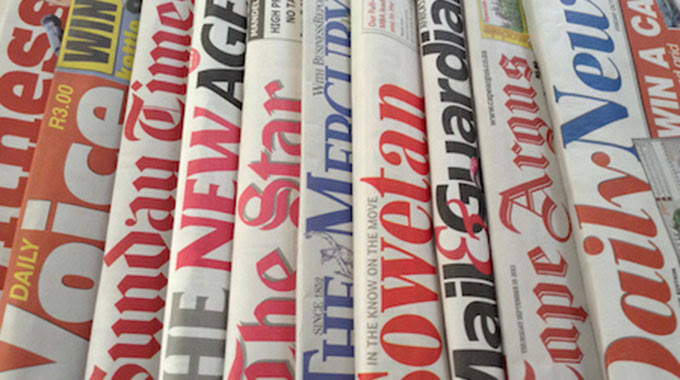
There is no single Black news source or platform that is considered as authoritative on news and commentary in the way that the Daily Maverick, News24, or Business Day are.
That includes radio. Power, Kaya, Jozi FM and others in Gauteng have huge audiences. But they are not seen as a single “black media bloc.” They compete for the same advertisers, the same guests, the same scoops.
Presumably, this means democracy is thriving. Many voices. No one gatekeeper.
But it also means fragmentation. When a major story breaks — land, state capture, racism in schools, Madlanga, illegal immigrants — there is no one black-owned outlet that sets the agenda the next morning. Instead, there are 15 threads, 18 opinion pieces, and 13 podcasts, all good, none dominant.
Compare that to the Daily Maverick or Media24. It is a white-owned platform, and it reports and analyses largely from that worldview, despite having excellent Black contributors. It rarely leads with articles that explore land dispossession as a structural issue, or the daily mechanics of economic inequality, or racism as a system rather than as individual incidents. That is not because the journalists are bad. It is because the institution’s center of gravity is elsewhere.
So we have a situation where the people with the lived experience are dispersed, and the institution with the resources speaks for everyone.
THE TOWER OF BABEL QUESTION
This brings us to the provocative question: is this fragmentation advancing common Black interests, or is it a Tower of Babel? Can African journalists and editors unite?
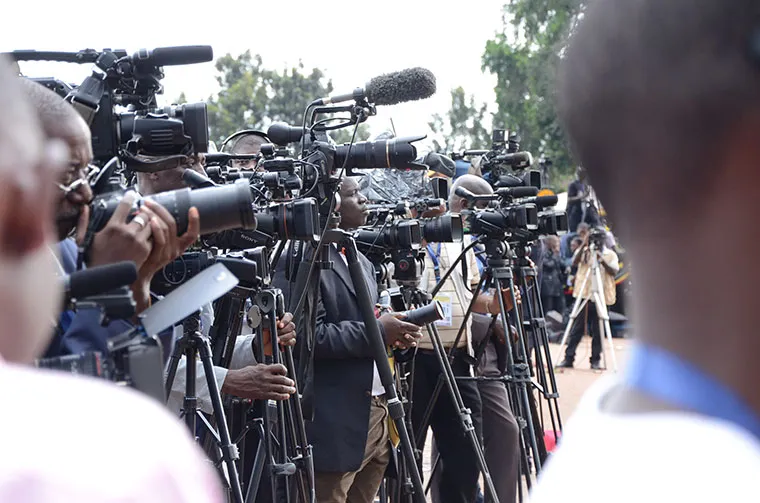
On one hand, the Babel argument is real. When you have 30 small sites, advertisers don’t know where to go. Government PR officers don’t know who to call. Young journalists don’t know where to apprentice. There is no pooled investigative budget. No shared legal defense. No collective bargaining power.
Rivalry and competition can become pettiness. Instead of building, we duplicate. Three platforms interview the same minister. No one can afford to send a reporter to cover the land court or Madlanga Commission for 6 months.
On the other hand, the “one big platform” idea has its own ghosts. Who owns it? Who edits it? Whose politics does it reflect? Who is the Big Chief? Zulu, Xhosa, Sotho, Indian, Coloured — “Black” is not a monolith. The moment you consolidate, you also risk creating a new boss, a new leash.
So the tension is real: do we want unity of voice, or multiplicity of voices?
WHAT WOULD BE THE ADVANTAGE OF COMING TOGETHER?
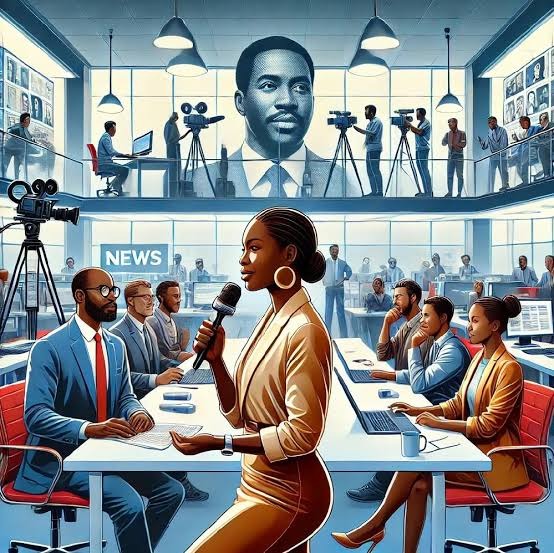
Let’s be concrete. What would happen if Maseko, Rantao, Makoe, Jaffer, Tsumele, Khumalo, Kalane, Jaffer, Hunter and others came together to launch one strong, solid platform?
First, authority. Advertisers, government, and the public understand institutions. “I read it on [One Black Platform]” carries more weight than “I saw it on 12 different Substacks.” Authority is what gets you into the press briefing and gets your FOI request answered.
Second, resources. One platform can hire 2 investigative reporters. It can pay lawyers. It can run a fellowship. Twenty individuals cannot.
Third, agenda-setting. Right now, land dispossession and economic inequality or Madlanga and Cat Matlala are “special interest” stories. A consolidated platform could make them front-page, every week, until the country is forced to deal with them. That is power.
Fourth, mentorship and succession. Young black journalists need newsrooms, not just tips. They need editors who have lived their experience. A single institution can provide that pipeline.
Fifth, data and technology. One platform can build an app, a paywall, a podcast network, and sell it. Fragmented creators are stuck on Twitter and YouTube algorithms. They are scurrying for advertising.
BUT WHAT WOULD BE LOST?
Consolidation also has costs.
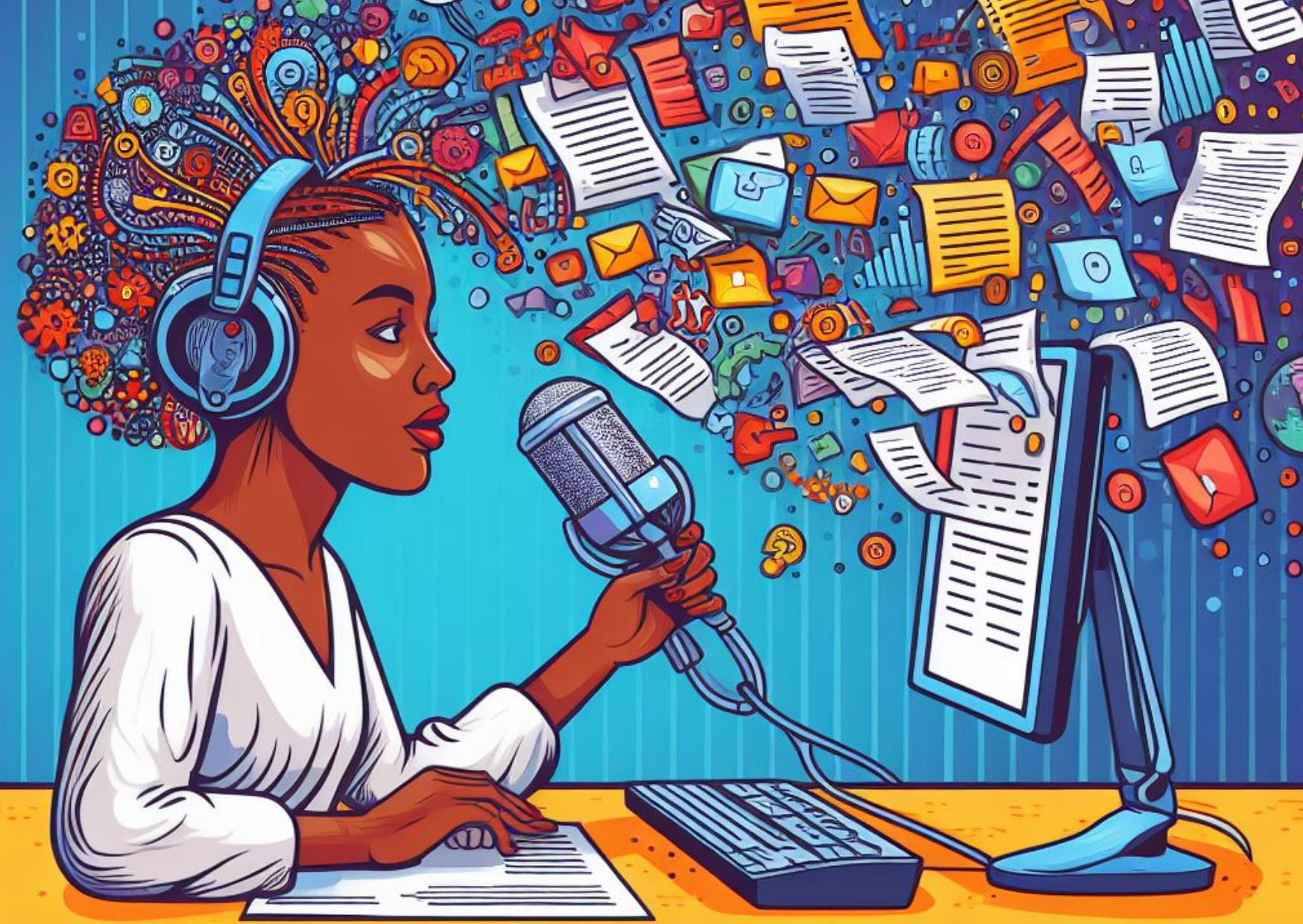
Editorial independence. The moment you have a board and investors, the leash comes back. Whose line on the ANC or MKP? On Israel/Palestine? On the EFF?
Voice. Part of the power of the current moment is that Abbey Makoe can sound like Abbey Makoe, and Zubeida Jaffer can sound like Zubeida Jaffer. A house style flattens that.
Speed. Big institutions are slow. The internet rewards the solo operator who can publish in an hour.
And politically, “Black media” is not one thing. A platform that tries to speak for everyone risks speaking for no one. This is a symptom that One Africa or Black Unity is a myth.
SO WHAT IS THE THIRD WAY?
Perhaps the answer is not “one platform” or “30 platforms.” Perhaps it is a federation.
Think of it like this: keep the individual brands. That is the freedom people fought for. But build shared infrastructure behind them.
A joint sales house so advertisers buy “the network,” not just one site.
A shared legal fund.
A shared CMS and podcast studio.
A joint investigative desk that feeds stories to all members.
A weekly roundup that says: “this is what Black media is saying this week.”
In other words: independence in voice, interdependence in power.
That way you avoid the Tower of Babel without rebuilding the old newsroom with a new name.
THE STAKES ARE BIGGER THAN JOURNALISM
This is not just about careers. It is about who defines reality. It is not about black media mogul.
For 30 years of democracy, the dominant narrative about South Africa — what is a crisis, what is progress, what is “the economy” — has been set by institutions whose owners did not live apartheid and do not live in townships.
That does not make them evil. It makes them partial.
Black journalists launching their own platforms are correcting that partiality. They are saying: we will now report from the lived experience. We will ask about land. We will ask about wages. We will ask about racism not as a scandal but as a system.
If they stay fragmented, that correction will remain marginal. If they consolidate badly, they will recreate the same problems.
If they find a new model — federated, funded, and free — they could shift the center of South African media for the next 30 years.
FROM LEASH TO LEADERSHIP
The launch of these platforms by Len Maseko, Jovial Rantao, Abbey Makoe, Zubeida Jaffer, Edward Tsumele, Themba Khumalo, Len Kalane and others is not just a career move. It is a political act.
It is the moment the monkey and dog comes off the leash.
The danger now is that 30 free dogs run in 30 directions and get tired. The opportunity is that they run together and change the direction of the pack.
South Africa does not need another Daily Maverick or Media24 with black faces. It needs a Black-owned media institution with enough weight to set terms, enough plurality to reflect difference, and enough independence to tell the truth.
Sadly, the Sunday Times and the Sunday World are just enough.
That will require ego to be set aside. It will require money. It will require trust — the one thing apartheid media destroyed.
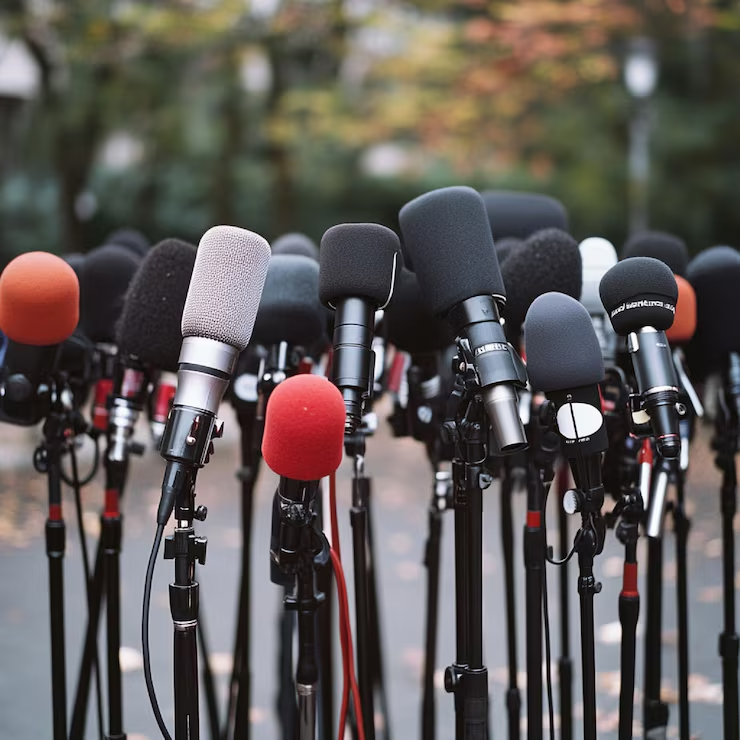
But the alternative is worse: a democracy where everyone has a microphone, but no one has an audience. Where we are all speaking, and no one is being heard.
The leash is off. The question now is: what do we build with the freedom?