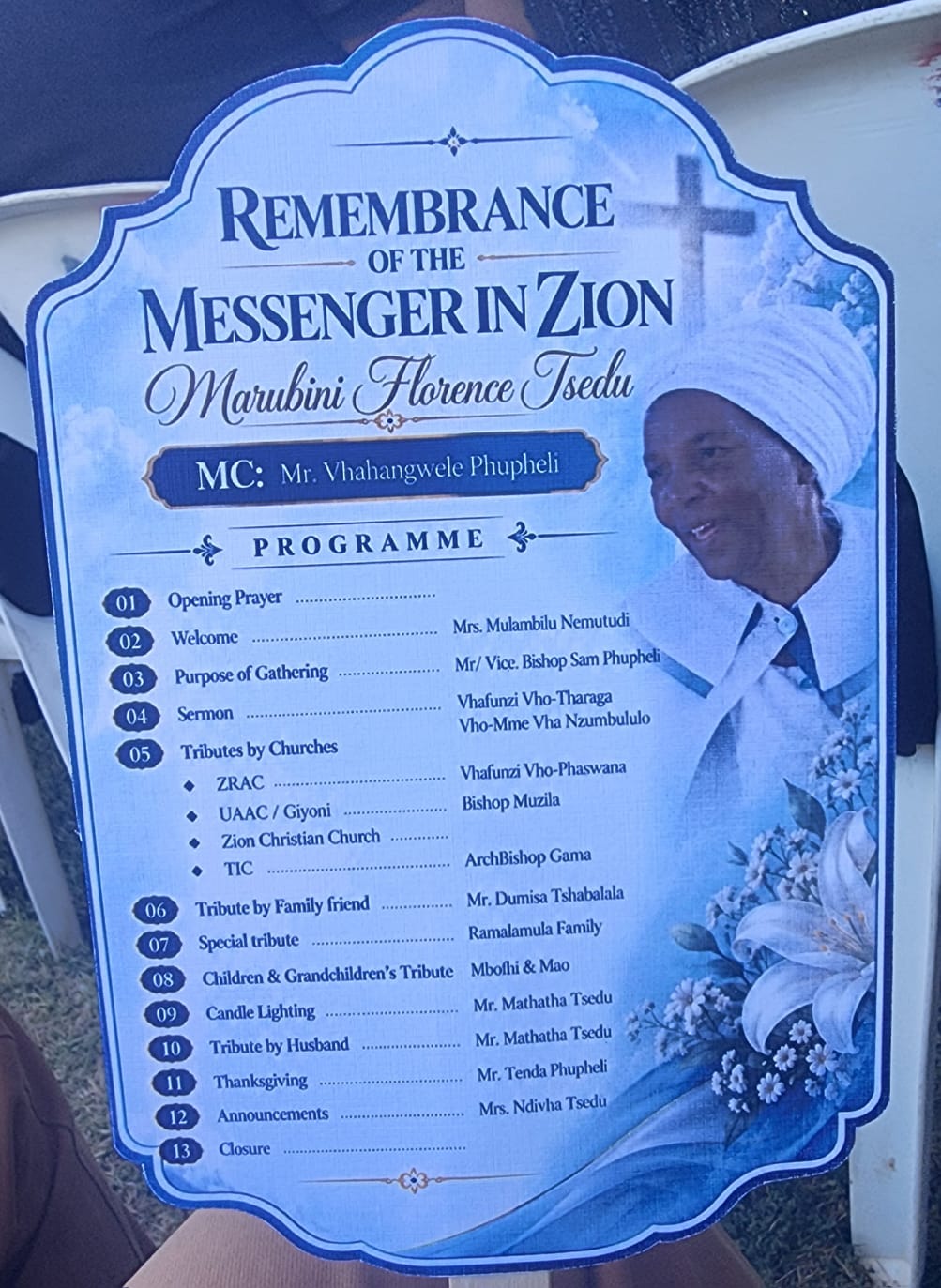
On this Saturday, more than a dozen of us journalists and editors turned up for the remembrance service of big brother and industry colleague, Mathata Tsedu’s wife, Marubini Florence Tsedu. We came as colleagues. We left as family.
In addition, there were a few hundred people who filled up a blue and white marquee in the yard to listen to soul-stirring testimonies and speeches.
The colours were deliberate. Blue and white – the colours of the Zion Christian Church – clean, heavenly, peaceful. The marquee itself became a cathedral.
From the moment the service started, there was no weeping without singing. The Zion women came in uniform, with drums. Not the polite drums of a Sunday church service, but the deep, ancestral drums that speak to the soil. They sang. They stomped. They danced in a circle that refused to be broken by death.
Different strands of the Zion church – often divided by small doctrinal differences and colours of cloth – were united on that day by one woman’s life. They sang for Marubini as one.
It was grief with rhythm. It was mourning that moved.
Then came the testimonies, and the picture of Marubini became clear.
There was no doubt that Marubini was a woman, mother and wife who epitomized selfless love for her husband, children and grandchildren.
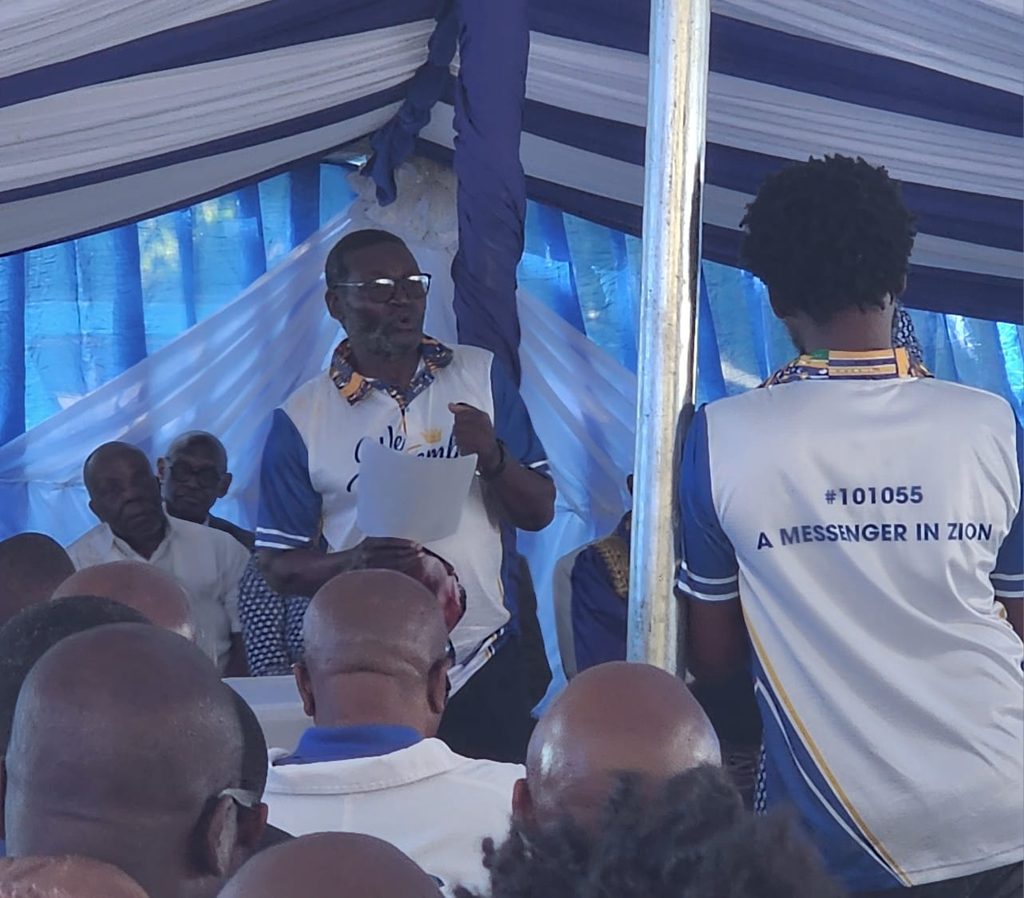
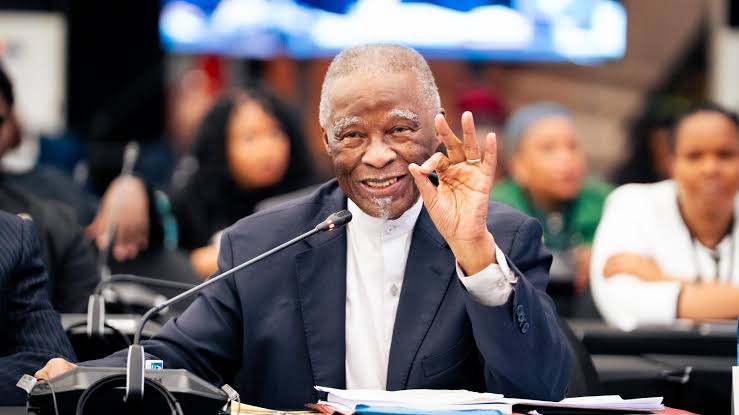
GRIEVING HUSBAND: Renowned journalist Mathatha Tsedu addresses mourners
Speaker after speaker said the same thing in different ways: She fed people. She waited. She prayed. She held the home together while her husband, Mathata, held the newsrooms together.
In journalism, we know Mathata as a giant – fearless, ethical, stubborn about the truth.
Behind every giant who speaks truth to power is often a quiet giant who keeps the house from falling. That was Marubini. For more than 50 years she was the anchor that allowed him to be brave outside because he had peace inside.
Above all, she was a woman who feared and praised God and was held in high esteem by church leadership and members. The church mothers spoke about her with reverence. Not because she shouted the loudest “Hallelujah,” but because she lived it.
She was at church when no one was watching. She prayed for other people’s children. She visited the sick. In the Zion church, where motherhood is ministry, she was a minister.
We journalists are not good at church. We are good at deadlines and doubt. But on this day, we listened. The sermons were the Africanization of western religion.
The bonus was to be in the company of veteran journalists who have become an extended family that supports one another. We sat together under the tree and marquee – men and women who have covered wars, elections, massacres, commissions, who have been fired, hired, threatened and celebrated together for 40 years.
We are no longer colleagues. We are an extended family that buries each other’s parents, that marries each other’s children, that now mourns each other’s wives.
We laughed. We remembered old newsroom stories. We held Mathata’s hand. And posed for pictures to memorialize the occasion.
We hope and pray that the Tsedu family will grow stronger from here. The void Marubini leaves is huge, but the foundation she laid is stronger. Her children spoke with such composure and grace that you knew they were raised by a mother who taught them how to mourn with dignity.
As we left, the drums were still beating in our hearts and souls. The women were still dancing. Grief had not ended, but it had been transformed into gratitude.
Marubini is now a guardian angel that loves and protects us all – her husband, her children, her grandchildren, her church. And yes, even us journalists who came to mourn a colleague’s wife and found a sister and mother.
May her soul rest in eternal peace.
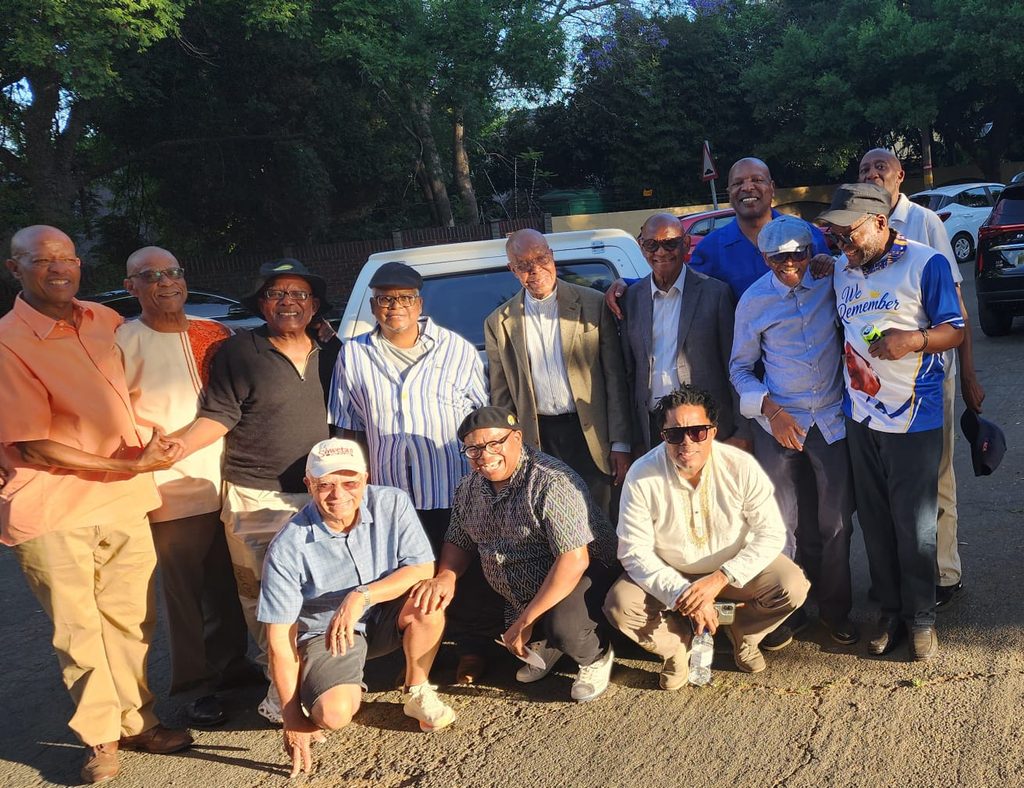
REUNION OF OLD COLLEAGUES AND FRIENDS: Veteran journalists, mostly retired, supported Mathatha Tsedu as he continued to grief for his late wife Florence, who passed away recently. Photos: Supplied.