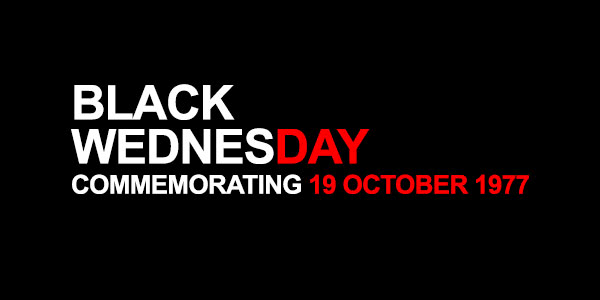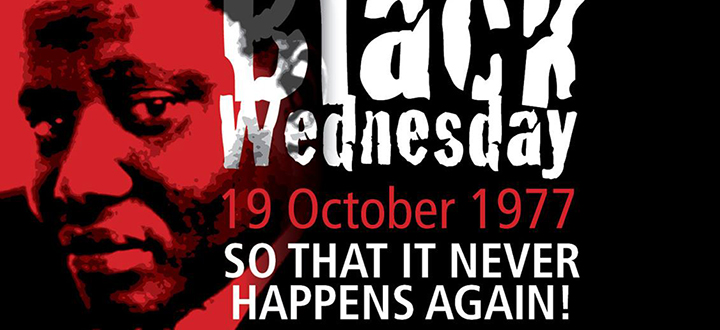
On 19 October 1977, the apartheid regime did what it does best when it is afraid: it banned. On that day, notoriously known as Black Wednesday, Minister of Justice Jimmy Kruger banned 18 Black Consciousness organisations in one sweep. SASO, SASM, BPC, BCP, BWP, and 13 others – all gone with one signature. Two newspapers, The World and Weekend World, banned. Hundreds of people detained.
This was less than a month after the regime had murdered the chief proponent of Black Consciousness, Bantu Stephen Biko, on 12 September 1977. They killed the man on the 12th, and on the 19th they tried to kill the movement. The logic was crude and colonial: cut off the head, and the body will die.
They were wrong. For almost 50 years, every effort to crush Black Consciousness has failed. Because you cannot ban an idea whose time has come. You cannot kill a spirit that lives in the condition of the oppressed.
1. The Vacuum and the Rise: Why BCM Had to Happen
To understand why the state was so terrified, you must understand the vacuum.
After the Sharpeville massacre in 1960 and the Rivonia arrests in 1963-64, the apartheid state banned the ANC, the PAC and the SACP. The leadership was in jail on Robben Island or in exile in Lusaka, Dar es Salaam and London. Inside the country, there was an acute political vacuum. Black politics was dead. Fear ruled.
Into that vacuum stepped NUSAS, the National Union of South African Students. NUSAS was white, liberal, well-meaning, and completely inadequate. It claimed to speak for Black students, but it spoke about them, not with them. Its politics was to plead with white power to be less cruel. Its non-racialism was a non-racialism where whites remained leaders and Blacks remained grateful followers.
Black students at the so-called bush universities – Turfloop, Fort Hare, Zululand, Durban-Westville – saw through this. In 1968 at the NUSAS conference at Rhodes, they walked out. And in 1969, under the leadership of Steve Biko, Barney Pityana, Harry Nengwekhulu and others, they formed SASO, the South African Students Organisation.
SASO’s message was simple and revolutionary: For Black people, especially students, to take their future into their own hands. To stop defining themselves through white liberal eyes. Black man, you are on your own.
That was the birth of Black Consciousness. Not as an academic theory, but as a psychological weapon. Biko said the most potent weapon in the hands of the oppressor is the mind of the oppressed. So the first battlefield was the mind. Black Consciousness told the oppressed: You are Black, you are beautiful, you are human, and you must free yourself first in your head before you can free yourself in the street.
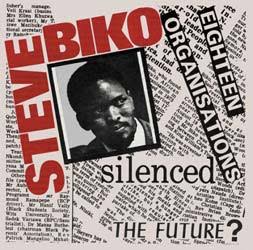
For ten years, from 1969 to 1977, BCM filled the country. It was everywhere. It built community projects, health clinics at Zanempilo, home schools, literacy programmes, theatre, journalism. It became the philosophy of the new generation.
2. The High Point and the Brutal Response: 1976 and 1977
Perhaps the high point of the Black Consciousness Movement was the 1976 student upheavals.
On 16 June 1976, students in Soweto did not march because the ANC in exile told them to. They marched because SASM – the South African Students Movement, a BC affiliate – and the spirit of Black Consciousness had taught them that to be Black is to refuse Afrikaans as a language of oppression. They marched because BCM had made them conscious.
The state was shocked. It realized that its greatest danger was not an army from outside. The greatest danger was to allow the Black man to think for himself, to take his fate into his own hands. A Black child who thinks is more dangerous than a Black child with a gun.
So immediately following this eruption, the state decided to act in a brutal manner. The response was systematic: torture, murder, and then banning.
In August 1977, they arrested Biko. They beat him to death. They crushed his skull. And they thought that would end it. When the anger did not end, on 19 October they banned all BC organisations. They thought that would be the funeral of Black Consciousness.
Many of its exponents were jailed, tortured, died and ran to exile. Mthuli ka Shezi was pushed in front of a train. Onkgopotse Tiro was parcel-bombed. Mapetla Mohapi died in detention. The rest, like Saths Cooper, Strini Moodley, Terror Lekota, went to Robben Island for up to ten years. The movement was decapitated and scattered.
For ten years it had lived. On paper, it was now dead.
3. The Second Attempt to Crush: The UDF Wars of the 1980s
But the spirit did not die. It went underground into churches, into trade unions, into classrooms.
The apartheid state launched a second, more cunning attempt to crush it in the mid-1980s.
By then, the ANC had regained influence inside the country through the United Democratic Front (UDF), launched in 1983. The UDF was Charterist, non-racial, aligned to the ANC. On the ground, especially in the townships, this led to internecine wars between BC affiliates – AZAPO and AZASM – and UDF organisations.
People were necklaced. Houses were burnt. In Port Elizabeth, in Langa, in Alexandra, Black-on-Black violence was encouraged while the security forces watched and supplied arms to both sides.
To many analysts, this revealed that BC was clearly targeted to be utterly destroyed for liberal non-racialism to prevail and dominate. It was not just apartheid that wanted BC gone; sections of the white liberal left and the Charterist movement also wanted it gone, because BC asked uncomfortable questions: Who will lead after liberation? Will Black people still be followers in their own country? What does non-racialism mean when the economy remains white?
The relentless attack worked. By the late 1980s, AZAPO was isolated, labelled as divisive, as anti-white, as CIA. Its members were attacked as impimpis. Its meetings were disrupted.
4. The Third Attempt: Co-option and Dilution in the 1990s
By the early 1990s, the BCM was almost annihilated. Or so its enemies thought.
When negotiations began, some of its top minds were co-opted into the new government. The language of Black Consciousness – Black self-reliance, self-help, pride – was relabeled as Batho Pele and Vukuzenzele. “People First” and “Build Yourselves.”
But closer scrutiny showed the dilution of its essence. Batho Pele is about better service delivery from a government still controlled by white capital. Vukuzenzele is about starting a small tuck shop or planting a small garden. Black Consciousness was about self-determination among the oppressed, where everything had to be done according to the People’s Will, where the economy itself had to be reimagined for Black majority ownership. Where psychological liberation must lead to material liberation.
What the new government adopted was the slogan without the substance. The philosophy was emptied of its radical content: Who owns the land? Who owns the mines? Who controls the mind of the child? BCM was turned into a cultural badge to wear at funerals, not a programme for governing.
Thus, the third attempt to crush BCM was not by banning it, but by hugging it to death.
5. The Resurrection: FeesMustFall and the Return
And yet, almost 50 years later, the philosophy is resurrecting itself from the grave.
Because conditions make it necessary.
In 2015, when students across South Africa rose under #FeesMustFall and #RhodesMustFall, they did not quote the Freedom Charter. They quoted Steve Biko. They quoted Frantz Fanon. They said “Black pain” and “Black consciousness” and “decolonise education.” The white liberal university, like NUSAS before it, did not understand them. The students said: We are Black, we are on our own.
It was Black Consciousness, in skinny jeans and with Twitter, but it was BCM. The essential element – the refusal to beg for inclusion into a white world, the demand to create a Black world – was back.
Thus the spirit of Biko lives and has resurrected the BC philosophy in very hard conditions. Because the conditions that created BCM have not changed: Black people are still at the bottom of the economy, still told their language, hair, history and pain are inferior.
You can ban 18 organisations. You can murder a man. You can start a civil war against AZAPO. You can co-opt leaders with ministerial posts. But you cannot crush the need for a Black child to love himself in a world that tells him to hate himself.
6. Its Biggest Weakness Today
Its biggest weakness today is being deliberately twisted and misrepresented for convenience.
Everyone now claims Biko. Tenderpreneurs claim him to justify looting. Politicians who have abandoned the poor claim him in speeches. People who have never read I Write What I Like use his face on T-shirts. Black Consciousness is used as anti-white anger, when Biko’s project was pro-Black love.
It is twisted to mean Black exclusion, when it meant Black self-love as a prerequisite for true humanity – including for whites. It is twisted to be a weapon for personal enrichment, when it was about communal self-reliance.
This is the final attempt to crush it: not by banning, but by misquoting. Misapplying its exhortations.
But even this will fail. Because every time a young Black person is made to feel inferior, every time they are told to wait, every time they are told their history starts in 1994, Black Consciousness will return.
You cannot crush a philosophy that answers the question: Who am I? And why am I here?
Biko’s answer still stands: You are Black, and you are more than the hell they built for you.
That is why, after 50 years of banning, killing, isolating, co-opting and twisting, the spirit lives.
Black Wednesday failed.
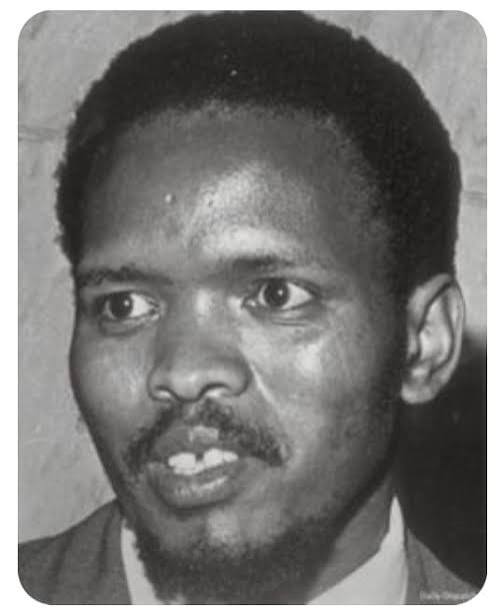
CENTRAL CHARACTER: Black Wednesday followed the political killing in police custody of Black Consciousness leader Bantu Steve Biko on 12 September 1977