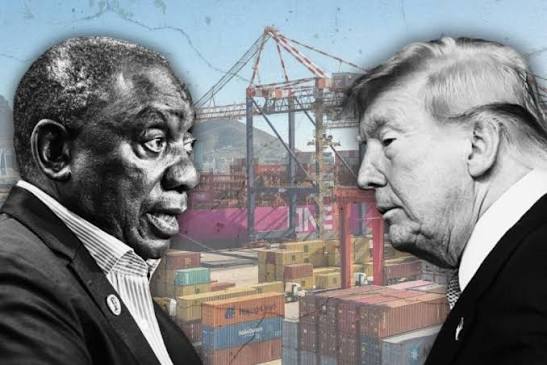
There is a peculiar ritual in international economic relations. A powerful country makes a decision, a smaller country scrambles to assess the damage, and commentators begin debating whether the affected economy will survive.
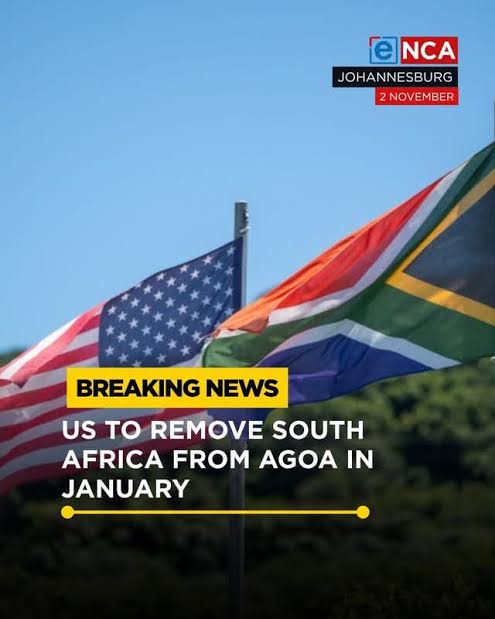
South Africa is now performing its part in this familiar drama following the Trump administration’s announcement that it intends to terminate the country’s eligibility for preferential access under the African Growth and Opportunity Act (AGOA) from 1 January 2027.
But the government’s response introduces an important complication. Pretoria says it engaged Washington for months, offered additional concessions and worked within the appropriate diplomatic channels, only for the United States to introduce new issues that had not formed part of the negotiations. If that account is accurate, the story is not simply one of a country that failed to prepare for an economic shock. It is also a story about the limits of negotiation when the parties do not appear to agree on the terms of the negotiation itself. That deserves scrutiny.
South Africa should continue engaging Washington. The American market matters, businesses and workers face genuine risks, and diplomatic relations should not be abandoned in a fit of national indignation. But neither should we assume that every economic difficulty can be resolved by offering another concession.
A country can arrive at the negotiating table prepared, make reasonable compromises and still discover that preparation cannot compensate for an imbalance of power.
The question now is whether South Africa can turn that uncomfortable lesson into a more resilient economic strategy.
When the rules of engagement become uncertain
According to the Department of Trade, Industry and Competition, South Africa made additional concessions during negotiations that began in 2025, going beyond concessions offered in 2015. The department says those proposals sought to address American concerns while protecting constitutional requirements, biosecurity, domestic producers and South Africa’s obligations under World Trade Organization rules.
The department has expressed frustration that Washington subsequently raised issues it says had not formed part of the negotiations. Minister Parks Tau has maintained that the AGOA decision does not define the entire bilateral relationship and that a solution depends on both parties’ willingness to engage.
These are important claims, although they should not be mistaken for a complete, independently verified account of the negotiations. Washington has its own stated rationale, citing barriers to American trade and investment, corruption and national security and foreign policy concerns. The US has not publicly resolved Pretoria’s allegation that new issues were introduced into the process.
We therefore have two competing accounts: Washington says South Africa does not meet the programme’s eligibility requirements; Pretoria says it made substantive efforts to address concerns and is now confronted with additional issues. We should resist the temptation to settle this dispute through political allegiance. The relevant questions are what was raised, what was negotiated, what concessions were offered and what conditions Washington ultimately expects South Africa to satisfy. Yet a broader lesson emerges regardless of how the dispute is resolved.
When one party can change the political terms surrounding economic access, the other party’s dependence becomes a source of vulnerability. The stronger party does not need to close every door. It only needs to make the cost of losing access sufficiently concerning. This is why South Africa needs both diplomacy and diversification. The first seeks to improve the relationship. The second reduces the damage when diplomacy fails. Neither can substitute for the other.
Let us put the numbers in perspective
The public debate has sometimes made AGOA sound like the switch that keeps the entire South African economy running. The available figures tell a more complicated story.
According to figures cited by South Africa’s trade ministry, exports under AGOA fell from approximately $4-billion in 2024 to $1.7-billion in 2025. The ministry says that, in 2025, AGOA exports accounted for about 10% of South Africa’s exports to the United States and approximately 1% of total exports worldwide. Around 89% of South African exports to the US entered under ordinary World Trade Organization most-favoured-nation terms.
These figures challenge two equally unhelpful narratives. The first is that losing AGOA automatically means losing the entire American market. It does not. The withdrawal of preferential treatment is not, in itself, a prohibition on South African goods entering the United States. The second is that a programme representing around 1% of global exports cannot cause serious damage. That conclusion is equally careless.
National aggregates can conceal concentrated losses. A trade preference may account for a relatively small proportion of national exports while remaining critical to a particular manufacturer, agricultural producer, supply chain or employment-intensive industry. The distinction between exposure and vulnerability is fundamental.
Exposure tells us how much trade is connected to a particular arrangement. Vulnerability tells us what happens when that arrangement changes, how easily affected businesses can adjust and who bears the cost. An exporter with several established markets may redirect sales more easily than one dependent on a single buyer. A large company may absorb higher tariffs that could render a smaller competitor unviable. A region dependent on a particular industry may experience significant employment losses even if the national trade figures appear manageable.
The econometric task is to identify these differences rather than hide them behind a national average. Government should publish a sector-by-sector assessment of tariff exposure, export substitution, employment risk and the likely time required to establish alternative commercial relationships. It should distinguish between temporary disruption and permanent losses in productive capacity. The question is not whether the economy will collapse. It is where the damage will occur, how extensive it could become and what interventions can realistically reduce it.
If our analysis can tell us the national value of lost preferences but cannot identify the workers, firms and communities most exposed, then we have measured the trade relationship without adequately measuring its developmental consequences. Pretoria deserves credit for preparation. Now comes accountability.
The government’s account of its engagement with Washington matters because it complicates the suggestion that South Africa simply sat back and waited for a decision. Before the announcement, Trade Minister Parks Tau said South Africa had made practical proposals through established channels, was prepared for the outcome and would continue pursuing alternative markets. Government has also pointed to new market opportunities for fruit exporters and to efforts to broaden commercial relationships across Africa, Europe, Asia and other regions. That preparation should be acknowledged. But readiness is not the same as resilience, and a strategy is not validated simply because it existed before a crisis. The next phase requires evidence.
How many firms can redirect their exports? How much additional trade has actually been secured in alternative markets? Which businesses need assistance with standards, logistics, financing or market entry? What support will protect workers without preserving uncompetitive business models indefinitely? Government says support will be tailored to affected companies and that it will work with social partners to strengthen productive sectors, diversify exports and protect jobs. That is a reasonable starting point. The test is whether it produces results.
A trade mission is an activity. A signed memorandum is an intermediate milestone. A confirmed order is evidence of market access. Sustained production, higher domestic value addition and employment are stronger indicators of economic impact.
The public should insist on this distinction.
We have heard enough announcements about economic opportunity. We need to know whether those opportunities are being converted into production, income and jobs.
Africa cannot remain an emergency exit
South Africa has repeatedly identified Africa as a priority for trade diversification. The present dispute makes the case for turning that commitment into a practical programme.
The African Continental Free Trade Area offers opportunities to expand manufacturing, agricultural processing, services and regional supply chains. A stronger continental market could give South African businesses greater scale and reduce their exposure to political decisions made in distant capitals.
But regional integration requires more than diplomatic enthusiasm. Border delays, inconsistent regulations, costly transport and fragmented payment systems continue to make trade unnecessarily difficult. South Africa must help remove these barriers and develop commercial partnerships that create value on both sides of a border.
Nor should we simply replace dependence on the United States with dependence on another major power. Diversification is not achieved by moving all our eggs from one basket into a different basket, particularly if the new basket is equally vulnerable to political disruption.
A resilient economy has multiple markets, a broader range of competitive products and domestic firms capable of adjusting when conditions change. It also has the productive infrastructure to take advantage of new opportunities. Alternative markets mean little if exporters cannot move goods efficiently, meet technical standards or finance the transition to new customers. Diversification must therefore be linked to industrial policy, logistics reform, skills, technological upgrading and stronger domestic supply chains. Otherwise, it risks becoming a diplomatic slogan with a long list of destinations but few additional orders.
The question of sovereignty is also a question of economics
South Africa should not be required to abandon its constitutional obligations merely to preserve preferential access to a foreign market. Equally, it should not assume that declaring its sovereignty protects businesses from the consequences of international trade decisions. Principle and pragmatism must work together.
Pretoria should continue negotiating with Washington, seek clarity on the conditions for restoring eligibility and explore any workable arrangement consistent with South Africa’s laws and obligations. It should also explain the negotiations to the public as far as diplomatic constraints permit.
But it must pursue diversification with the same seriousness, regardless of whether negotiations eventually succeed. A negotiated resolution would be welcome. It would not remove the need to reduce concentrated market exposure. Losing AGOA would be costly for some firms. It would not make diversification optional. The mistake would be to treat a diplomatic breakthrough as permission to return to business as usual.
Econometrics must interrogate the victory narrative
The deepest lesson extends beyond trade policy. Governments routinely present economic performance through aggregate indicators: exports, investment, GDP growth, fiscal balances and trade agreements. These measures matter, but they do not automatically reveal whether an economy is becoming more resilient or whether its gains are broadly shared.
South Africa must evaluate trade not only by how much it sells, but also by what it produces, how much value remains in the country, how many people are employed and how widely the benefits are distributed.
It should measure market concentration, the capacity of firms to enter new destinations, local supplier participation and the employment consequences of trade shocks. It should also examine whether public support strengthens productive capability or merely postpones commercial failure. These are questions econometric analysis can help answer. But the quality of the analysis depends on the questions asked, the assumptions tested and the willingness to confront inconvenient findings.
We should neither manufacture a catastrophe to criticise government nor manufacture reassurance to defend it. The objective is to understand the economic reality well enough to make better choices.
The real test begins now
South Africa may yet secure a negotiated way forward with the United States. The diplomatic door should remain open. But the government’s own account of prior engagement makes the strategic lesson clearer, not weaker. Pretoria says it negotiated, offered concessions and prepared for an adverse outcome. Yet the decision has arrived regardless. This is not proof that diplomacy was pointless. It is proof that diplomacy alone cannot eliminate structural dependence.
The United States remains an important trading partner. It should not remain the reference point around which South Africa organises its economic confidence. We need a trade strategy that survives changes in Washington, a productive economy capable of competing across markets and an analytical framework that measures success through outcomes rather than announcements. If the AGOA dispute compels us to build those capabilities, something useful may emerge from a difficult episode.
Not because losing preferential access is good news, and certainly not because affected workers should be expected to celebrate it. The opportunity lies in what South Africa does next. The real embarrassment would be to negotiate, make concessions, prepare for the worst, suffer the shock and still fail to change the economic arrangements that made the shock so consequential.
Econometrics should function as conscience, not camouflage.