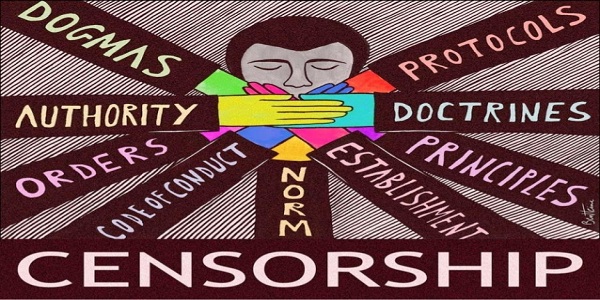
We have a bigger problem in South Africa than censorship. We have self-censorship.
Censorship is when the state tells you that you cannot publish. Self-censorship is when you tell yourself that you cannot publish. It is worse, because there is no law to fight, no minister to sue. There is only your own fear, dressed up as professionalism. Or objective truth.
We must problematize the tendency of editors, especially black ones, to be gatekeepers who protect those in power by suppressing and limiting freedom of expression.
In every platform, in every newsroom, in every publishing house, in every university journal, there is now an editor who has appointed himself as a bouncer for the President, for the CEO, for the ANC, for the funder, for the donor. Before he reads your sentence for truth, he reads it for feeling. His first question is not, “Is this true?” His first question is, “How will the President feel about this? How will the CEO feel? How will the sponsor feel? Will we lose the advert? Will we be called counter-revolutionary?”
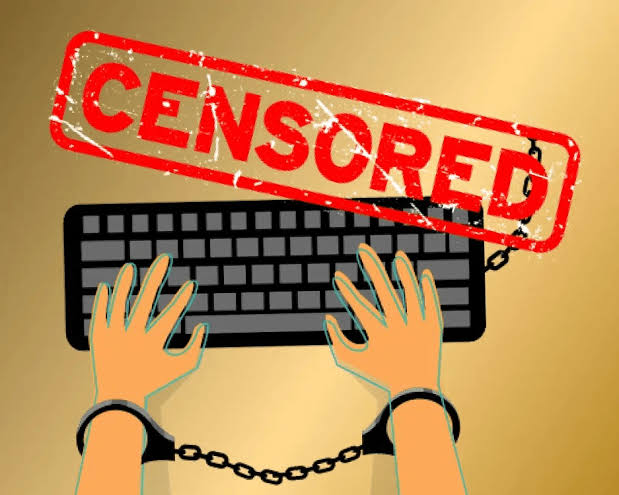
No journalist or writer should be preoccupied with how the President or CEO will feel about this.
That is not our job. Our duty is not to nurse people’s feelings or massage their egos. The President has a wife to massage his ego. The CEO has a PR team and a R5 million salary to massage his feelings. The writer has only one duty: to tell the truth as he sees it.
When a journalist sits down and thinks, “If I write this, the Minister will be angry,” he is no longer a journalist. He is a court poet. He is a praise singer who is paid in access.
I think everybody must acquaint themselves with the right to freedom of expression. The Constitution did not give us freedom of expression so that we can say nice things, especially about corrupt millionaires and politocians. It gave it to us so that we can say difficult things. Say what you have to say as long as you respect privacy and treat people with dignity. And get your facts right. That is the only limit.
Dignity does not mean you cannot offend. It means you cannot lie about a man’s bedroom, you cannot publish his child’s picture, you cannot call him a thief without proof. But you can say, “I think the President is wrong.” You can say, “This CEO is running the company into the ground.” You can say, “This policy is foolish.” You can say, “The ANC has betrayed the people and the struggle.” That is not undignified. That is democratic.
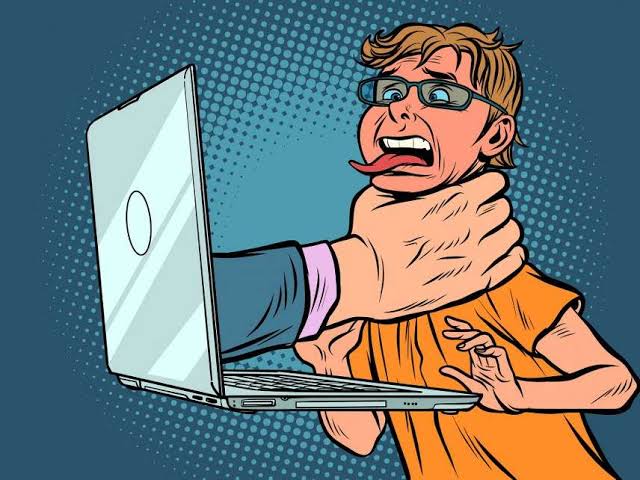
We should encourage the unfiltered to speak freely according to conscience. Without any fear or favour. The young writer from Limpopo with broken English but a burning truth must be given the same page as the PhD from Wits. In fact, he must be given more space, because his truth has not been edited to death.
Sometimes there will be small mistakes or factual errors. A date wrong by a year. A spelling of a surname. A statistic that is 58% instead of 56%. These must be overlooked for the sake of truthfulness, accuracy and correctness.
This is important. We have created a culture where editors use small errors to kill a big truth. “Ah, you said the meeting was on Tuesday, but it was on Wednesday, therefore your entire piece is unreliable.” No. That is dishonesty.
If a man comes and says, “My house is burning, come help,” you don’t ask him, “Is it your house or your shack? Is it burning at 100 degrees or 200 degrees? Come back when you have the correct temperature.”
Truthfulness is bigger than factual perfection. A piece can have a small error and still be fundamentally true. It can have perfect grammar and be fundamentally false. We must learn to forgive the former and punish the latter. Today we do the opposite.
Some editors tend to conduct themselves like academics or PhDs who know too much about too little. They have read Foucault, they have read Derrida, they have a vocabulary of 750 words to say nothing. And they use that vocabulary to intimidate writers. “Your argument lacks theoretical grounding. Your methodology is flawed. Your piece is essentialist.”
Yes, editors should feel free to enhance a piece, for example, to correct grammar, to tighten logic, to make it more readable. But this must not be an opportunity to hold back or suppress opinions or viewpoints.
Enhance, don’t censor. Edit, don’t gatekeep. The moment you start saying, “I don’t think we should run this because it might upset Thabo Mbeki,” you have stopped being an editor. You have become a bodyguard.
As for me, I walk away from people who do not give freedom of expression to opinion. I have done it my whole career. You do not have to agree with me. Fine. That is the point. Put your own viewpoint next to mine and let’s stimulate critical discourse. Let the reader decide. Let the public think.
What we are doing now is not discourse. It is monologue. One view is allowed, because one editor thinks it will not upset power. All other views are called “problematic,” “harmful,” “uncontrollable,” “not in line with our editorial values.” Those values are often just fear wearing a suit.
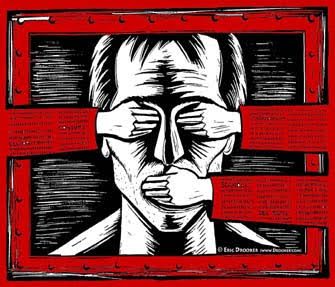
And this fear makes us forget how to be ordinary.
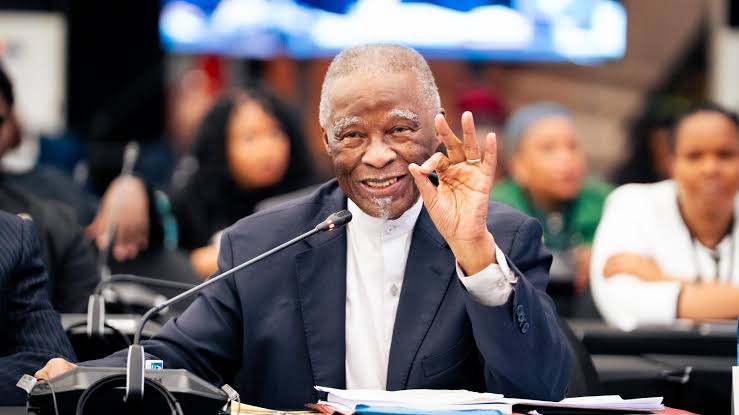
I was impressed to see Thabo Mbeki in the public gallery at the TRC hearing. He was there to listen or give support to his former Minister of Justice, Bridgette Mabandla and former colleaugued being questioned about protecting apartheid crimes. There was no fuss about a reserved seat or a holding room. No advance team shouting, “Clear the gallery, former President coming!” No blue lights.
After all, he too is just a simple ordinary man. He looked ordinary in the gallery. An old man in a jacket, listening. No entourage. No power.
And we South Africans need to find the courage to be ordinary. To be ordinary enough to sit in a gallery without power. To be ordinary enough to listen to criticism without calling the security. To be ordinary enough to be wrong and not die.
Above all, to have the courage to give those we do not agree with the right to freedom of expression. By so doing we protect and preserve our own right to freedom of expression.
Because today you are the editor who suppresses the young radical who criticizes the President. Or writes too much about a dead Steve Biko. Tomorrow you are the old man in the gallery and someone suppresses you. Today you think you are protecting the CEO’s feelings. Tomorrow that CEO fires you and you need a newspaper to tell your story, but the new editor is also protecting someone’s feelings – his.
Freedom of expression is not a gift from power to the people. It is a gift the people give to each other, against power.
If we do not give it to each other, we will lose it together. And then we will all be sitting in a gallery, not as ordinary men, but as silent men.