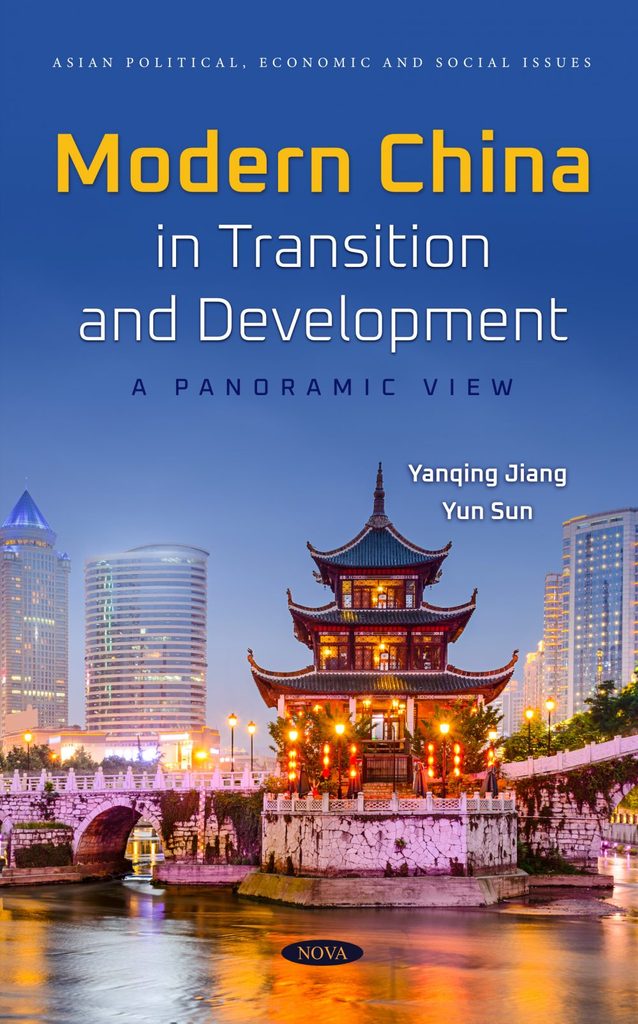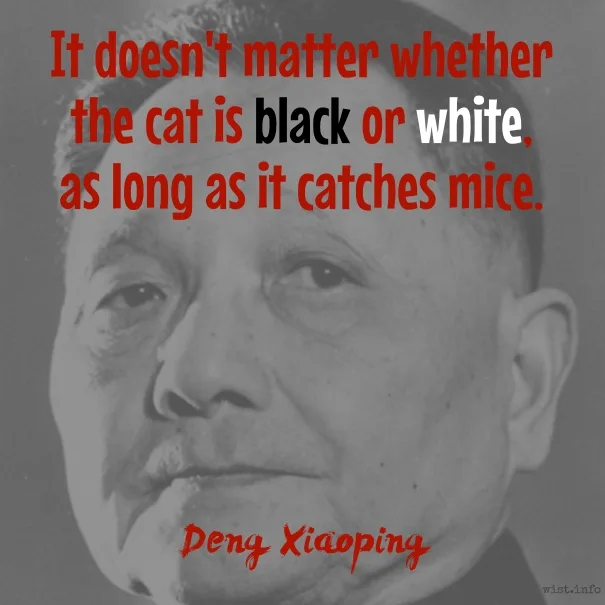
China’s rise from the ashes of the cultural revolution to the second biggest economy in the world in just under five decades is nothing short of a miracle in the history of transformation of political economies. It had to take the courage of one Deng Xiaoping, to convince the Chinese Communist Party to abandon its hardcore commitment to the Ideology of communism in favour of the pragmatism of a free-market approach or continue on the untenable path of more economic and social collapse.
It was Deng Xiaoping’s bold resolve in redirecting the trajectory of China’s political economy that saved the day. China’s phenomenal transformation is not a blueprint to be transplanted in other developing nations; however, it holds great lessons on pragmatism over ideology.
By the end of the cultural revolution, China was one of the poorest countries in the world. In a paper on “China’s economic transformation: From Mass Poverty to Global economic power”, Mwansa Kimpinde cites a World Bank report indicating that around 1978, 90 % of the population survived on under 2 dollars a day.
The report indicates that by 2025 the number had been reduced to less than 1% of the population. In under five decades per capita GDP has increased to $13 862 or $37,97 daily. That is a phenomenal transformation alleviating a staggering 800 million people from the doldrums of poverty and starvation.
The irony of the Chinese free-market driven economic miracle is that it happened under the firm hand of the conservative Communist Party of China. China has managed to walk the tricky tight rope of strict political discipline and people centred political management on the one hand of the balancing pole and the free spirit of a free-market economy on the other hand.
Whilst the Communist Party cannot be absolved from the economic devastation and the atrocities under Mao’s cultural revolution, it was Deng Xiaoping’s vision and the discipline of the firm hand of the Party that made the economic miracle possible. With its poor human rights record and lack of tolerance for political dissent, China is also known for zero tolerance for corruption.
On the front of smaller developing nations, it is no surprise that post national liberation, the post-colonial polities were suspicious of Capitalism and opted to experiment with various forms of socialism with a centrist economic planning at their core.
In contrast to China’s economic miracle achieved just under three to four decades after the disastrous cultural revolution, post their struggles for independence against colonial occupation, most developing countries on the African continent have struggled to transform their economies and their societies more than six decades later, in some cases.
Aside from the challenges of the reality of the phenomenon of neo-colonialism, their failures are attributable to a blind loyalty to socialist oriented ideologies, strongman led governments, and a ubiquitous propensity to turn a blind eye to corruption.
Continued dependency on development aid
It is well documented that post national liberation, most of the newly independent countries have not been able to sever the umbilical cord of dependency on the former colonising powers.
The nature of dependency has now changed form but has all the trappings of continued neo-colonialism all the same. Owing largely to high inflation and their inability to finance much needed economic development projects, most developing economies had to enter into debt financing through the World Bank and the IMF ‘s Structural Adjustment Programs (SAPs). Thus, the direction of their economies was no longer dictated by the former colonising empire but indirectly administered under the Structural Adjustment Programs of the World Bank and the International Monetary Fund (IMF).
Structural Adjustment Programmes are notorious for steering the economic and political direction of beneficiary countries by stealth. They are in fact subtle forms of neo-colonialism through economic control. They do not necessarily align financial aid with the beneficiary country’s areas of higher need. Their loan conditions generally discourage huge government expenditure projects and tend to lock beneficiary countries in perpetual debt.
The Structural Adjustment Programs indirectly push their typical neoliberal agenda through a subtle linking of the rollover of debt funding with the encouragement of the selling of State-Owned Entities and their discouragement of minimum wage agreements.
These conditions do not cater to the needs of beneficiary countries first but first align squarely with the agenda of globalisation for easy access of resources from recipient countries and liberation of exchange control to ease movement of capital inflows and outflows when necessary.
With time, Structural Adjustment Programs have increasingly faced political resistance. However, as borrowings by developing countries from the IMF and the World Bank has not stopped, they have not totally disappeared but have been morphed under various lending instruments with lessor obvious imposition of economic programs on beneficiary countries.
China’s path to development
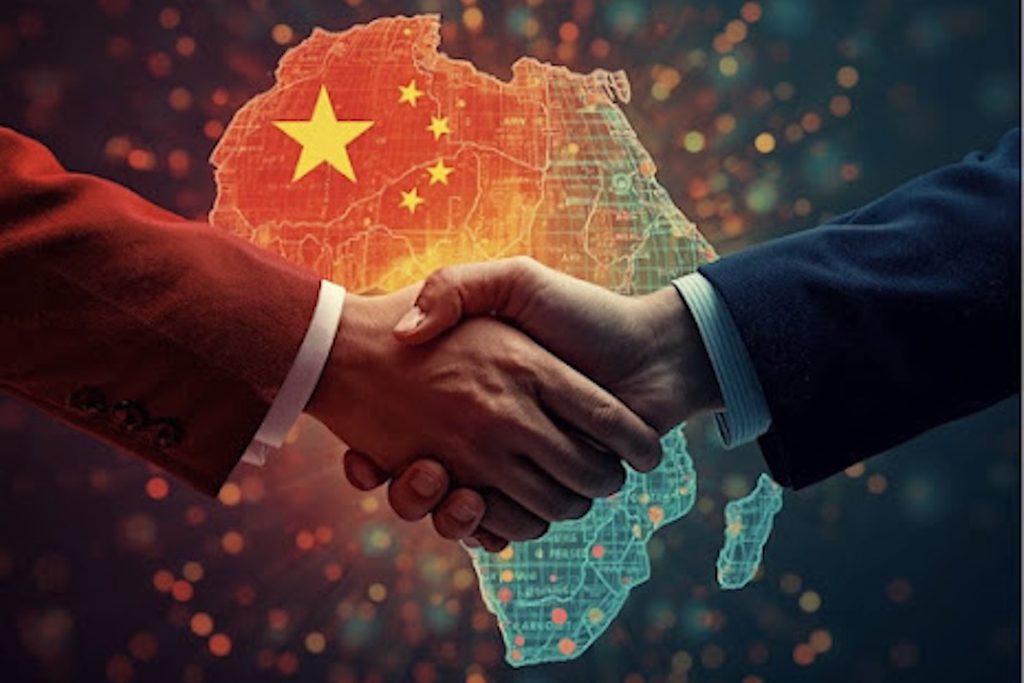
In a departure from the one size fits all template of the Structural Adjustment Programmes approach of the World Bank and the IMF on developing economies, China chose to carve its own path. The sheer enormity of their population size dictated that they come up with innovative strategies to tackle the mammoth challenge of bolstering economic growth. Through his exploration visits to capitalist economies such as the US, France in the West, and economies of the Asian tigers such as Malaysia, Japan and Singapore, Deng Xiaoping pulled himself and, by extension, his Communist Party out of the cocoon of Ideological self-preservation.
Whilst seeking foreign direct investment, rather than implementing cut and paste economic policies from the west, China opted for emergent strategies. They opened special economic zones (SEZs) where there would be unfettered experimentation with the free-market system for evaluation before full roll out on a national scale. The approach unlocked the much-needed foreign direct investment despite China’s poor human rights track record. If anything, one could argue it was this very ingredient that had foreign companies flocking to areas such as Shenzhen, Zhuhai, and Shantou in the province of Guangdong.
China initially chose to focus on an export-led strategy over local consumption. The creation of special economic zones approach was intended to alleviate the huge levels of rural poverty through the creation of jobs. Special economic zones also helped China to earn and realise the much-needed capital needed for financing infrastructure growth for their rapid urbanisation program. This, however, was achieved at the expense of domestic consumption goods in the immediate period.
Admittedly, a lot about China has changed since 1978. Whilst China is now a huge economy with an upwardly mobile and affluent society, there were lots of sacrifices made on the yellow brick road to economic success. The special economic zones also focused on the creation of tech industries with foreign companies exploiting China’s cheap and abundant labour and a bridled labour environment.
Importantly, Deng insisted on the transfer of skills to its local people. Most of the students that went to study abroad came back to plough their skills back home. Technical skills development was an important feature of China’s economic revolution. It is no surprise that China has made phenomenal strides in the development of tech companies which are now exporting Chinese products to the rest of the world and handsomely benefiting from a large and increasingly affluent local market.
Lessons from China
Notwithstanding that China’s economic transformation cannot serve as a template for the developing world, a comparison of developing economies such as South Africa to the Chinese approach leaves one with a sense that South Africa’s sequencing on the path to economic transformation may be flawed.
Out of a pressing need to give the country and the world an impression of a working constitutional democracy, South Africa may have put the cart before the horse. In a stark contrast to China, which opted for creation of industries first before consumer goods, South Africa has seen a proliferation of retail malls. This has inevitably created a consumer culture, which gives a deceiving façade of a prosperous democracy when the country is in fact drowning in a pool of unemployment – now at 33,6 % – due to failure to prioritise technical skills development and industrialisation. South Africa is abundant with graduates whose qualifications do not match the immediate needs of the economy.
Constraints of Ideology on development
Whilst most developing economies have embraced the principle of a mixed economy, their full grasp of entrepreneurship has been stifled by Ideologies adopted during the struggle era. In the case of South Africa, the ANC led government needs to make a clean break with COSATU and the SACP to free itself of its Ideological fetters. In any case, the ideological cracks are already there for everyone to see. Without an ability to exercise moral persuasion by COSATU and the SACP over the ANC, the alliance has taken real strain since the 1996 class project. Now, with the SACP having chosen to contest local government elections, to all intents and purposes, the tripartite alliance is facing a natural death.
For way too long developing nations have suffered under experimentation by new leadership. Anyone who has experienced government works will be familiar with the deployment of cut and paste templates from consultants by the new leadership after every election just to stamp their brand on the political landscape for no reason but ideological and political egotism. Nothing they do clearly links to a chosen vision for the future. In contrast, whilst China deployed emergent strategies for its rapid development, its multi-decade strategies are rolled out in line with the two-stage Road to 2050 vision and the belt and road initiative under Xi Jinping.
Even the ANC of South Africa has not been able to implement their five-year conference resolutions as the incumbent leadership have repeatedly proven to leverage patronage networks to impose their will on government, albeit not for the benefit of the development of the country. Almost, all developing nations, to the exception of the Alliance of Sahel States (AES) – under military takeover – lack the bold courage of Deng Xiaoping and the firm hand of the Communist Party of China to direct their countries and economies to a single vision.
Whilst the bold courage of leaders like Traore is admirable, the developing nations’ transformation and development cannot rely on a strongman approach. What is needed is an entrepreneurial spirit based on meritocracy and a unifying vision of the future to rally the country in the direction of transformation and development. For this to happen, and whilst admittedly counterintuitive, leaders need to dispense with the debilitating notion of political and Ideological self-preservation.
Through the pain of the mass deaths under Chairman Mao’s experimentation with the cultural revolution, China had learned its lesson and even the Communist Party had to come to terms with that reality. They could not afford the luxury of clinging to outdated ideologies and had to choose the path of pragmatism.
Like China, Ideologues in developing nations need to free themselves from the cocoon of Ideological self-preservation and smell the coffee of pragmatism. It took China over a million deaths under experimentation with the cultural revolution for Deng to knock sense into the Communist Party of China. The big question is what will it take to force a real mental shift in developing nations to embrace pragmatism over Ideology?