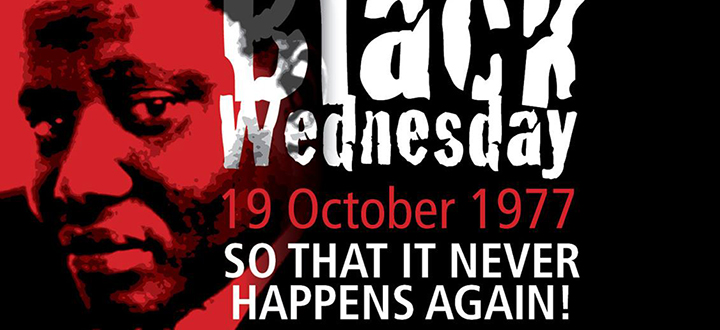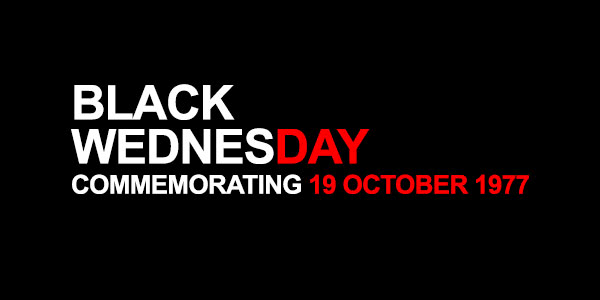
FORTY-NINE years ago today, on 19 October 1977, the apartheid regime decided the ban some 18 organizations aligned with the Black Consciousness Movement (BCM) and two major newspapers. On the spur of the moment, that day was dubbed “Black Wednesday”. Though it wasn’t easy to stop the momentum, the BCM never really accepted the negative use of the term “black” because the term was liberated by Steve Biko and the BCM as early as 1971 with a positive definition and usage.
With that conscious decision, the term “black” would no longer be associated with racism-induced negativity to generate terms like “blacklisted”, the “black sheep of the family” or “black Xmas” to suggest that such a Xmas would be gloomy and dry. Accordingly, AZAPO opted to give the day a positive and fighting commemorative description which was the “Black Solidarity Day”.
While official history has tended to be shy to acknowledge the epoch-changing role of Biko and the BCM in reigniting the flames of the liberation struggle in Azania, the apartheid regime was under no illusion about the revolutionary momentum of the BCM which moved with speed to undermine the intended effects of the ANC’s and the PAC’s banning by the white minority regime in 1960. That banning was soon followed by the mass imprisonment of the political activists and the hanging of a number of them to death. Even more numbers decided to skip the country and found their way to exile where they sought to regroup and wage the liberation Struggle with more vigour.
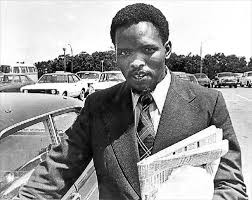
A REVOLUTIONARY FORCE TO RECKON WITH: Steve Biko’s killing in police custody on 12 September 1977 sparked heightened resistance to apartheid rule in SA and internationally. In response, the apartheid regime banned Black Consciousness organizations and newspapers in an attempt to suppress the outcry, and outrage.
The apartheid regime was armed with an assortment of draconian racist laws like the General Laws Amendment Act 37 of 1963. This law sharpened the state security powers by imposing the notorious 90-day detention without trial. Political activists would be detained without a warrant of arrest nor access to a lawyer. Upon expiry, the 90-day period interrogation and torture could be expanded and repeated indefinitely.
The lethal twin of this apartheid law was the Terrorism Act 83 of 1967. This law was retrospectively applicable to 27 June 1962. The definition of terrorism was so vague and sweeping that breathing for a black person could easily have amounted to the violation of this Act. Any act that was deemed to “endanger law and order”, incitement or conspiration in that direction, or possession of arms and receiving military training fell within the scope of this vague Act. Participating in protests or strikes was also considered to be an act of terrorism. Violation of the Act of Terrorism was punishable by the death penalty!
Biko and his Comrades were teenagers, and some in their early 20s when they used the university campuses as battle grounds to conscientize, organize and mobilize black students to initiate a movement to undo the decade-long political lull that was induced by the fear of engaging in Struggle. From campuses, the Struggle soon spread to the townships and villages. The formation of SASO in 1968 was quickly followed by a myriad of political organizations that covered almost every sector of society – from students, workers, youth, priests, artists, journalists, etc.
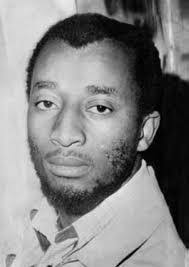
KILLED BY APARTHEID POLICE WHILST IN THEIR CUSTODY: Black Consciousness activist Mapetla Mohapi
Armed with the philosophy of Black Consciousness, Black people held a firm grip on the basic tenets of self-definition, self-determination, self-reliance, and self-initiative. If this was not easy to grasp, the slogan “Black man you are on your own” was crafted to simplify the basic values of Black Consciousness. Arising from the way of life of Black people surviving under colonialism, apartheid and institutionalized white racism, a defiant attitude of mind had arisen to dictate to Black people that they had become their own liberators. There was no more room for tutelage by white liberals. No more drafting by do-gooders of political blueprints which were to be made available to Black people for credulous embracing and mechanical adoption.
It is in the context of the value and principle of self-reliance that Biko and the BCM formed the Black Community Projects that was to develop and coordinate self-help community development projects to ensure that black people would not depend on the enemy or white liberals for their livelihood. The Anglican Church in Zinyoka Village was approached to make a piece of its land available for the building and running of the Zanempilo Clinic. A wide web of community projects like Zimele Trust Fund, leather works, irrigation dam in Njwaxa village were established to ensure that black people would be substantively independent and free from reliance on crumbs that fall from the tables of white people.
This political mobilization and ideological clarity soon occasioned milestones like the 1972 General Strike of the Black workers; the 1974 Viva FRELIMO Rallies; and the 1976 June 16 Uprisings. The galvanizing potency of the BCM had reached such devastating heights that the white minority regime cowardly viewed the BCM as “swaartgevaar” (Black danger), which had to be viciously dealt with. Its foremost leaders were assassinated in quick succession. Mthuli ka Shezi in 1972; Onkgopotse Tiro in 1974; Mapetla Mohapi in 1975; and Biko in 1977.
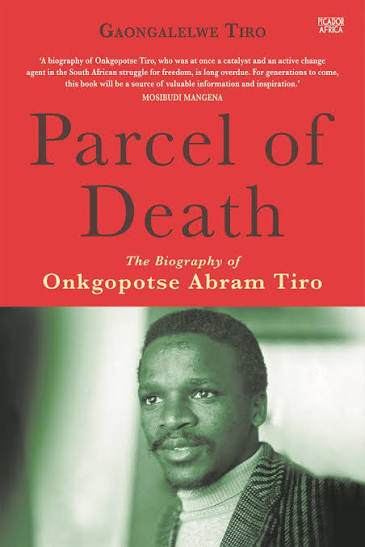
MERCILESSLY MURDERED: Fierce Black Consciousness leader Onkgopotse Tiro was eliminated by apartheid through a parcel bomb whilst in exile in Botswana.
It is against this background that 19 October 1977 ought to be commemorated – not restrictively as the Media Freedom Day – but expansively as the Black Solidarity Day whereupon the liberation movement bounced back and continued the Struggle for Land, Liberation and Dignity.
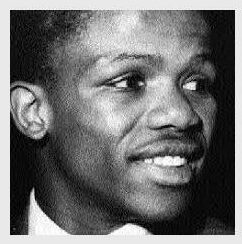
GRUESOME DEATH: Outspoken Black Consciousness activist Mthuli ka Shezi was thrown in front of a train by apartheid operatives.