Agreed in form, rejected in content.
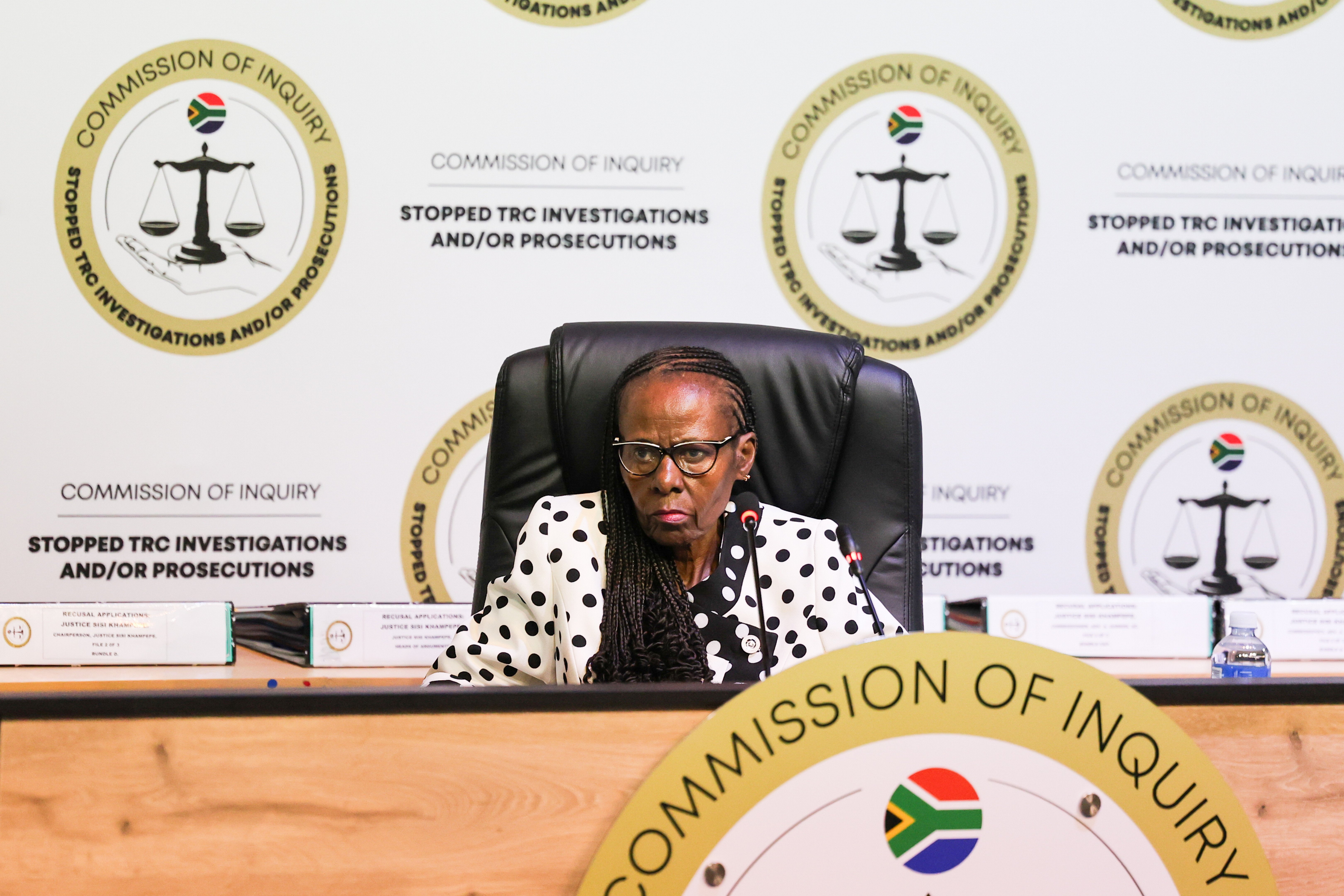
We welcome the Khampepe Commission in form. In content, we reject its confinement.
The Commission, as proclaimed in May 2025 and extended to December 2026, asks
one narrow question: Who blocked the investigation and prosecution of TRC cases?
It is shaking the tree. But it refuses to look at the root.
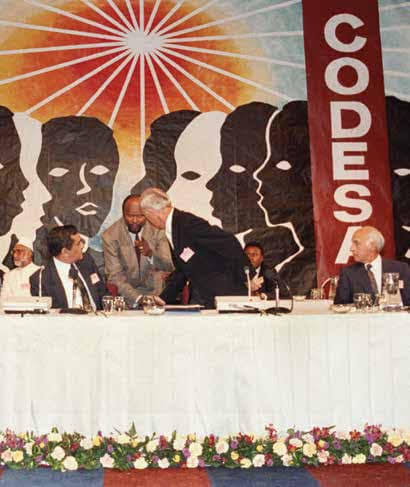
You cannot shake the tree of the TRC without finding the rot of CODESA. And the rot of
CODESA has a name: The Sunset Clause.
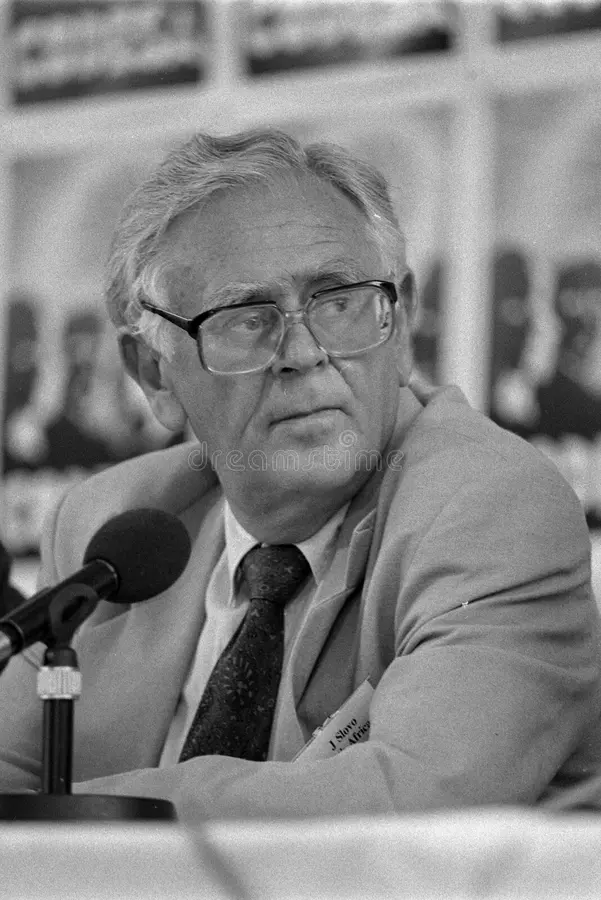
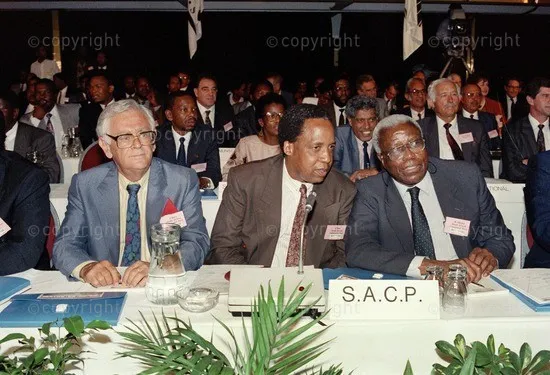
Above: Joe Slovo, historically credited with “sunset clause” notion
What the sunset clause really was
Joe Slovo, General Secretary of the SACP, proposed it in 1992 as a tactical
breakthrough. On paper it was elegant:
A Government of National Unity for five years. Job security and pension guarantees for
white civil servants, soldiers, police and intelligence operatives. No purge of the
bureaucracy to prevent a right-wing coup.
In reality, it was the Trojan Horse of the economic settlement.
Attached to that clause in the Multi-Party Negotiating Forum and the Interim
Constitution came three non-negotiables that were never put to the people:
a) The Property Clause: Existing property rights were entrenched as a constitutional
right, precluding restitution without compensation.
b) The Debt Clause: The democratic state agreed to assume the entire apartheid debt —
including defence loans used to kill our people.
c) The Continuity Clause: The Reserve Bank was made independent, the civil service
protected, and GEAR later replaced the RDP — a self-imposed structural adjustment.
One person, one vote was won. One person, one hectare, one person, one share of the
economy, was deliberately not won.
The two justices are mutually exclusive, why?
We are not saying this to agree with how they separated them. We are saying this to
expose the fraud of the separation.
CODESA and the TRC architects made them mutually exclusive by design — as if you
could choose criminal justice OR economic justice, as if one was a hangman’s noose
and the other was not.
Both were nooses. Both killed. Both still kill.
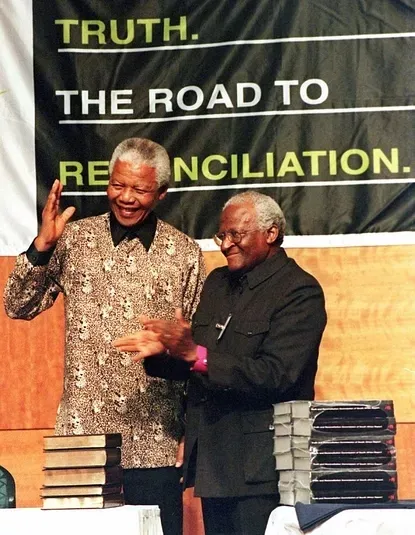
The TRC was mandated to deal with the bullet — the wanton killings by Security Police,
Military Intelligence, SANDF, Vlakplaas and the Askari.
The Sunset Clause was mandated to deal with the bread — the wanton theft of land,
minerals, wages, and economic sovereignty by the same system that ordered the bullet.
You cannot say: Let us prosecute the man who pulled the trigger, but protect the system
that paid him, pensioned him, promoted him, and then enshrined his property rights in
the new Constitution.
That is why they are mutually exclusive in the current legal architecture. The TRC offered
amnesty for truth about criminality. The Sunset Clause offered amnesty for silence
about economy.
One said: Tell us who you killed and you will go free.
The other said: Tell us nothing about what you stole and you will keep it forever.
What is needed now is to unearth the fault-line of the Sunset Clause principle. The fault
line is this: there should have been a mechanism of checks and balances to ensure that
not only the rights of the erstwhile oppressors were protected, but the rights of groups,
including blacks, and Africans in particular, were protected and entrenched first.
We concede — and assert — that none of the two brought to bear lesser pain than the
other to our people. The child shot in Boipatong and the child starving on barren land
without title deeds suffered the same system. The hangman’s noose was simply tied
differently.
If the Khampepe Commission only pulls the rope of criminal accountability, while
leaving the rope of economic apartheid intact, it will have shaken the tree but left the rot
of the root to grow again.
The failure of checks and balances
A wholesome transition would have demanded a mechanism that protected more than
the rights of the beneficiaries of apartheid.
CODESA needed to ask:
If white civil servants are guaranteed their jobs for five years, where is the guarantee for
the dispossessed black majority for five hundred years of dispossession?
If pensions of apartheid generals are protected, where is the protected pension for the
widows of Langa, Boipatong, Bisho, and the exiles?
If property rights are sacrosanct, where are the group rights of Africans in particular to
land, to mineral wealth, to freehold title that was criminalized by the 1913 Land Act?
No such balance was ever designed. The Sunset Clause protected the individual rights
of those who had benefited from apartheid, but never codified the collective economic
rights of blacks, and Africans in particular, who had been the victims of it.
Will khampepe have a catalytic effect?
The Khampepe Commission, as presently constituted, is confined to the TRC Report. It
has no mandate to subpoena the minutes of the economic working group at Kempton
Park.
Yet it can — and must — lend itself where it would have a catalytic effect, albeit
inadvertently, to bring the Sunset Clause on the table.
Every time a witness testifies that a docket was blocked by the NPA, the question must
follow: Blocked on whose economic interest?
Every time a former Hawks head says he never received orders to stall TRC cases, the
question must follow: Who gave the order to stall economic restitution?
When Justice Khampepe hears how political interference protected killers, she will
inevitably hear how constitutional interference protected the spoils.
The tree of the TRC and the root of CODESA share the same soil. You cannot pull one
without exposing the other.
Conclusion: the sun must rise
A sunset, by definition, is temporary. Slovo himself called it a sunset clause — meaning
the sun would set on that compromise and rise on something new.
Thirty-two years later, it has never risen. We have lived in a permanent sunset.
We froze a five-year compromise into a thirty-year economic order.
If the Khampepe Commission is to be wholesome, it must state in its final report that
criminal justice without economic justice is not justice. That reconciliation without
redistribution is a farce.
The sun must rise. It can never be a sunset forever.