At a time of great economic strife across the global community – triggered largely by the huffing and puffing of President Donald Trump’s approach to foreign policy – too many nations are reeling from the weaponization of tariffs as a diplomatic tool.
Presiding over the world’s largest economy and unparalleled military might that borders on omnipotence, President Trump’s imposition of virtually indiscriminate tariffs has caused untold misery and enormous uncertainty among the developed as well as developing economies.
Whilst the West remains understandably embarrassed by Washington’s punitive measures after decades of sustained diplomatic molly-coddling, the much struggling nations of the Global South are the hardest hit by Trump’s sharpest sword that is tariffs.
During his election campaign in the period leading up to his resounding victory during last November’s US elections, Trump had told one Republican rally after the other: “Tariffs is my most favourite word in the dictionary.”

Love him or loathe him, Trump does walk the talk, and he does it with unmistakable consistency. With him, what you see is what you get.
In the midst of what can only be described as Trump’s brutal contribution to the punitive impoverishment of struggling economies of the poorer nations, there has thankfully been the emergence of a silver lining from the East.
It has come in the form of: who else but Beijing? China, responding to the collective cries of Africa’s perennially struggling economies, has announced a zero-tariff treatment to all 53 African countries that have a diplomatic relationship with the Asian powerhouse. China’s economy is officially the world’s second largest after that of the US, although there is a strong school of thought that China’s economy is either neck-and-neck with Washington’s or slightly ahead. The announcement by President Xi Jinping’s administration bears the sound of music to the ears of Africa as a whole.
The zero-tariff development is the consequence of the Chinese government’s new “All-Weather China-Africa Community with a Shared Future for the New Era”.

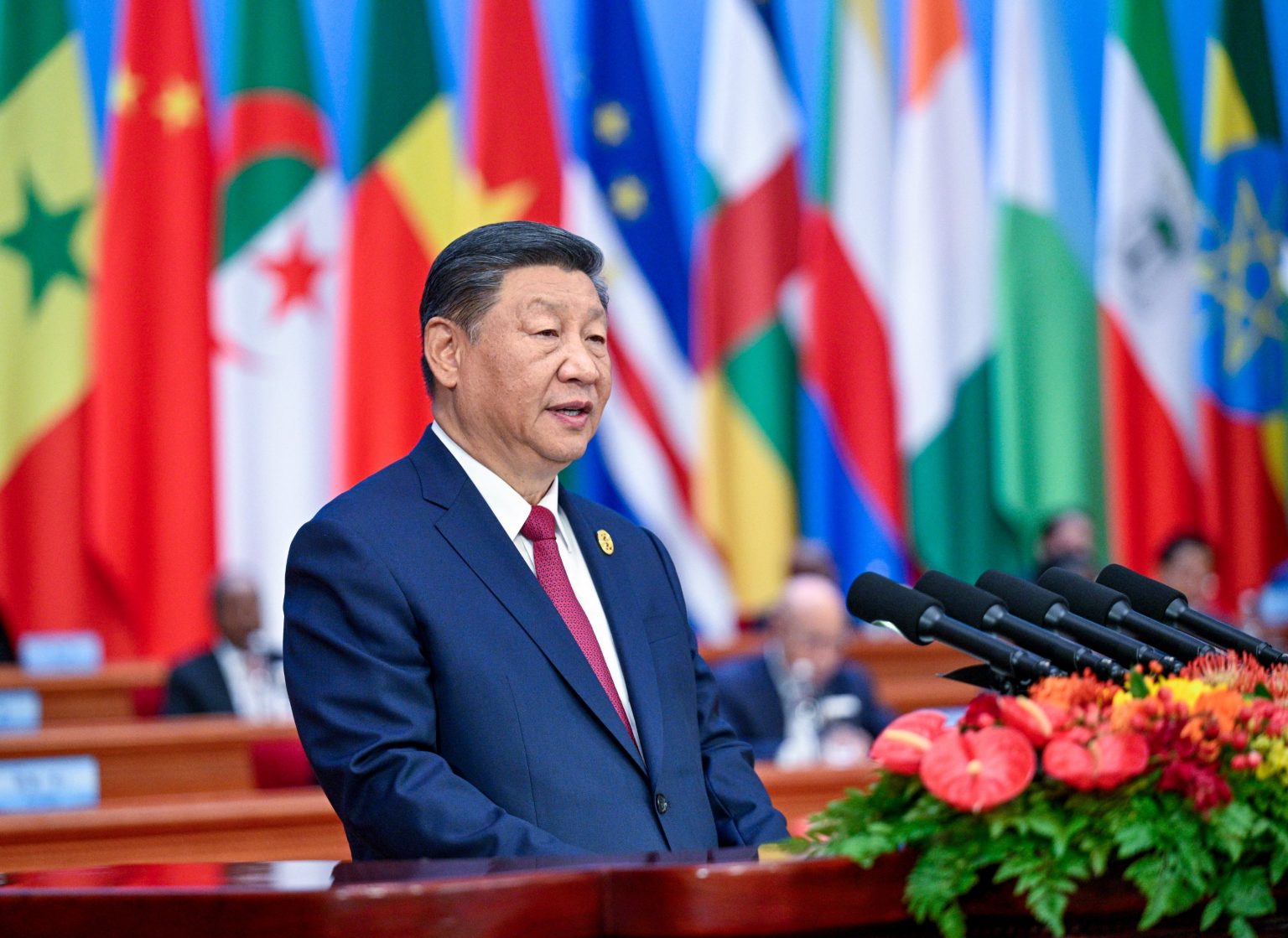
It follows the 2024 Beijing Summit’s resolution contained in the declaration by all leaders who had attended the Forum on China-Africa Cooperation (FOCAC).
Again earlier this month, the China-Africa Changsha Declaration on Upholding Solidarity and Cooperation of the Global South underscored Beijing determination to take along the continent on China’s rapid rise toward the status of the world’s leading economy.
Solidarity with Africa goes back many decades when Chairman Mao trained the liberation forces of Africa during the liberation struggle. China prides itself of the fact that it has no history of ever colonizing any nation. Instead, China, like almost the rest of Africa, was once colonized by France. This factor alone serves as one of the many fundamental similarities between China and Africa. Hence, the sense of solidarity has developed from political to include economical, and diplomacy. The bond that binds China and Africa together is therefore too strong to break.
China’s Road and Belt Initiative (RBI), an economic development programme that aims to take the African continent out of hardships through mutually-beneficial economic cooperation, continue to serve as a catalyst in diplomatic relations.

The Changsha Declaration, for example, spells it all out unambiguously. It reads, in part: “We, the representatives of the People’s Republic of China, 53 African countries and the African Union Commission, guided by the consensus reached by our leaders during the 2024 Beijing Summit of the Forum on China-Africa Cooperation (FOCAC), gathered in Changsha to advance the full implementation of the Beijing Declaration on Jointly Building an All-Weather China-Africa Community with a Shared Future for the New Era.”
It continues: “We agree that the rise and growth of the Global South represents the trend of the times and the future of development. China and Africa are both important members of the staunch forces in the Global South.”

That, in a nutshell, sums up China’s intentional programme to alleviate the plight of a continent rich in natural mineral wealth, but continues to be destabilized by external forces aligned with the former Western colonial rulers.
As the Trump administration remains blind to history and wield an uncompromising stick against Africa, history will surely look kindly on President Xi’s modern China as an example of shared development based on mutual respect among allies.
Over the past decade or so, China has successfully taken out of poverty more than 850 million people in the nation of some 1.45 billion population. The United Nations (UN) has gone on record to praise China for achieving one of the Millennium Goals ahead of the time in terms of poverty eradication. The zero-tariff approach places China at the heart of humane concern for mankind.
Africa need not deteriorate into abject poverty when it produces minerals that illegally find their way to European capitals with no consequences.

President Trump is acutely aware of the ruthless nature of his imposition of tariffs on poor countries. Paraphrased, tariffs translate into astronomical import and export duties on goods and services. This means that economically struggling countries of the Global South will struggle to access the US markets due to the high tariffs. Conversely, the US can comfortably afford goods and services from lesser economies due to the upper strength of the dollar.
China, to the credit of President Xi and the Communist Party of China, have taken a resolution not to leave behind allies who are struggling, and are vulnerable, especially towards Washington’s unscrupulous economic policies.

The solidarity China is leading in forming across the Majority World is a welcome development indeed. It shows that China has recognized the responsibility on Beijing’s shoulders as a caring major power to share growth with the hardest hit economies in a world characterized by sectarian interests, growing unilateralism and collapse of global governance system.
With evidence mounting about the rapidly declining regard for international law, China is taking a lead in the reconfiguration of international relations in a conflict-riddled world.
As someone once said: “Poison in the hands of the wise can turn to medicine, just like medicine in the hands of a fool can turn to POISON.”