The question is not whether South Africa can stabilise its public finances, but whether that stability can transform the productive structure of the economy.

South Africa’s Finance Minister: Enoch Godongwana
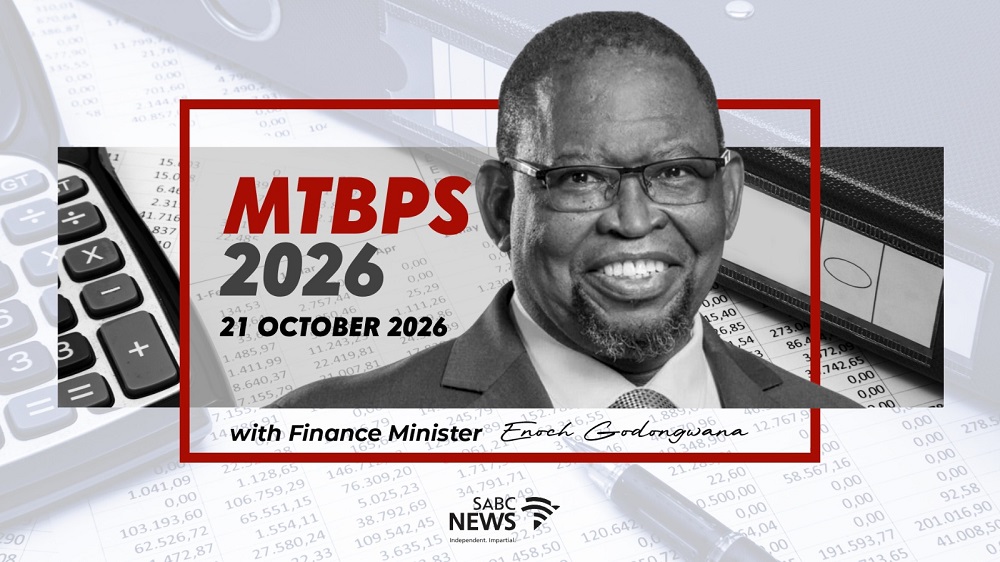
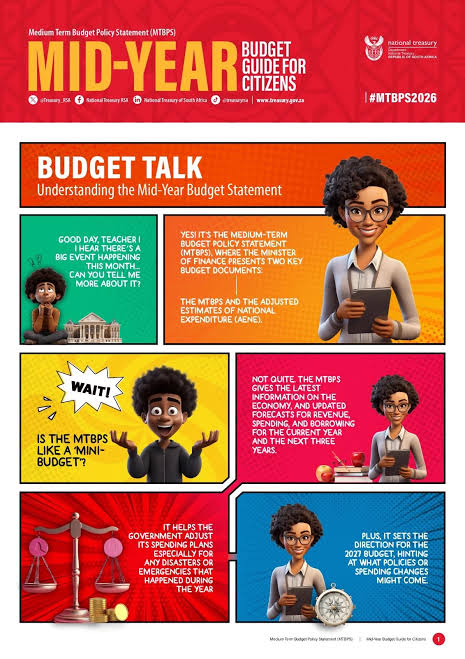
South Africa’s 2026 Medium-Term Budget Policy Statement, presented by Finance Minister Enoch Godongwana on 21 October, offers an opportunity to revisit a fundamental question about economic policy: what exactly do we mean when we say that an economy is improving?
The Minister’s statement presents an important fiscal achievement. Gross loan debt stabilised at 78.4 per cent of GDP in 2025/26, and government expects the debt ratio to decline over the medium term. The primary budget surplus is projected to increase, while the main budget deficit is expected to narrow. These developments matter. They influence borrowing costs, investor confidence and the state’s capacity to finance public services and infrastructure.
Yet the same budget projects economic growth of only 1.2 per cent in 2026, increasing to 2 per cent by 2029. It also reports that unemployment rose from 31.4 per cent in the fourth quarter of 2025 to 33.6 per cent in the second quarter of 2026. Here lies the central contradiction.
The state’s fiscal position can improve while the economy continues to struggle to generate sufficient employment. Debt can stabilise while productive capacity remains constrained. Investor confidence can strengthen without an equivalent improvement in the circumstances of households experiencing unemployment, inadequate services and persistent deprivation.
This contradiction is not unique to South Africa. It speaks to a wider challenge confronting developing economies: the tendency to treat macroeconomic stability as if it were synonymous with economic development.
In my earlier reflection, The Degeneration of the Epistemologies of Economic Thought: Decoding the Budget Speech, I argued that the problem with contemporary economic thinking is not necessarily a lack of mathematical sophistication. It is the narrowing of the questions we ask, the variables we privilege and the outcomes we accept as evidence of success. The 2026 MTBPS provides an opportunity to test that argument against the actual fiscal framework.
The achievement and the limitation of fiscal stabilisation
Treasury’s fiscal position has improved in important respects. The government reports that gross loan debt stabilised at 78.4 per cent of GDP in 2025/26 and projects a decline to 76.6 per cent by 2029/30. The main budget primary surplus is expected to increase from 1.7 per cent of GDP in 2026/27 to 2.9 per cent in 2029/30. However, debt-service costs are projected to rise from R441.5 billion in 2026/27 to R509.3 billion in 2029/30. Treasury notes that debt service consumes approximately 21 cents of every rand of main budget revenue. These figures reveal both progress and constraint.
A primary surplus means that government revenue exceeds expenditure excluding interest payments. It is an important indicator of fiscal discipline, but it does not independently tell us whether public expenditure is building the productive capacity required for sustained development. Nor does a declining debt-to-GDP ratio necessarily mean that the economy’s underlying structural problems are being resolved.
Debt dynamics depend on the relationship between economic growth, interest costs and the primary balance. If growth remains weak, the tax base may expand too slowly to support rising developmental demands. If borrowing costs remain high, interest payments can continue to absorb substantial resources. The fiscal framework and the real economy are therefore inseparable.
The question is not whether South Africa should maintain sustainable public finances. It should. The question is what those finances enable the state to accomplish. Fiscal stability is a means of creating economic possibilities. It is not a comprehensive measure of whether those possibilities are being realised.
Growth without sufficient employment
Treasury’s growth projections underline the scale of the challenge.
Real GDP growth is forecast at 1.2 per cent in 2026, rising gradually towards 2 per cent by 2029. These projections remain modest relative to the scale of unemployment and the need to expand productive economic activity.
The unemployment figures make the problem particularly stark. Treasury reports that unemployment increased to 33.6 per cent in the second quarter of 2026. The distinction between economic growth and employment creation is fundamental.
Growth measures an increase in output. It does not tell us how many jobs are generated, who obtains them or whether the benefits reach communities that remain disconnected from productive activity.
An economy can grow through capital-intensive production while absorbing relatively few additional workers. Growth can also be concentrated in particular sectors or geographical areas, leaving other communities with limited access to employment and investment.
For this reason, South Africa’s economic performance must be evaluated not only by the rate of growth but also by its composition. Which sectors are expanding? How much employment do they generate? Are new jobs accessible to young people? Does investment strengthen domestic production, or does it create economic activity with limited linkages to the wider economy? These are not secondary questions. They determine whether growth can reduce unemployment and broaden economic participation.
The same distinction applies across the Global South. Where unemployment, informality and structural inequality remain substantial, aggregate output growth is an incomplete measure of economic progress.
What does the budget priorities?
The MTBPS projects consolidated government expenditure to increase from R2.717 trillion in 2026/27 to R3.021 trillion in 2029/30, representing average annual nominal growth of 3.6 per cent. Payments for capital assets are projected to grow by 5.3 per cent annually, making capital expenditure the fastest-growing major economic classification.
This shift towards investment is potentially significant. Infrastructure can reduce production costs, improve access to markets and services, and create the conditions for additional private investment. But the developmental value of infrastructure depends on what is built, where it is built and whether it functions as intended.
Treasury acknowledges that infrastructure projects have been delayed by weak planning, insufficient project readiness, procurement difficulties and inadequate contract management. Its own review found that the transfer and spending of funds did not consistently translate into timely infrastructure delivery. This admission reinforces an important point: expenditure is not development.
An allocation is an input. A completed road, water system or electricity connection is an output. Improved productivity, lower costs and greater access to economic opportunities are potential outcomes. A budget analysis that stops at allocations risks confusing the intention to develop with development itself.
The next stage of scrutiny must therefore examine actual project completion, maintenance, expenditure execution and the benefits generated for households and firms.
The same logic applies to social spending. Treasury estimates that the social wage accounts for approximately 60 per cent of consolidated non-interest expenditure. This demonstrates the scale of government’s social commitments, but the proportion alone does not establish whether services are adequate, accessible or improving.
The relevant questions concern the quality of education, access to healthcare, the reliability of municipal services, the adequacy of social protection and the relationship between public spending and improvements in living conditions. A developmental budget must be evaluated by what it delivers, not merely by what it allocates.
The R38.1 billion question
The MTBPS identifies R38.1 billion in savings to be redirected towards social and economic priorities. Treasury attributes these savings to improved verification in the social grants system, the reprioritisation of the human settlements development grant, administrative efficiencies across national departments and the recovery of accumulated cash surpluses held by public entities. The categories deserve separate scrutiny. Reducing fraud and eliminating duplication can improve the use of public resources. Recovering idle cash may allow government to direct resources towards more urgent needs.
The human settlements allocation, however, raises a different question. Treasury identifies R7.8 billion for reprioritisation while the grant’s delivery model is redesigned. The stated objective is to improve housing delivery. Whether this is achieved will depend on the effectiveness of the replacement arrangements and their ability to address the needs of households awaiting adequate housing.
The proper test is neither to celebrate every saving nor to condemn every reduction. It is to establish whether the measures improve the relationship between expenditure and developmental outcomes.
Are eligible social grant beneficiaries protected? Does the revised housing approach accelerate delivery? Do administrative savings preserve or improve frontline services? Can the resources redirected through these measures be traced to measurable results?
These questions turn a headline fiscal claim into an empirical investigation.
The geography of economic exclusion
South Africa’s development challenge is also spatial. Access to employment, reliable infrastructure and essential services varies significantly between and within municipalities. National averages can conceal the persistence of deprivation in particular settlements and communities.
The MTBPS recognises that many municipalities face serious financial and operational weaknesses. It proposes stronger interventions, improved financial management and measures intended to strengthen service delivery. These reforms are necessary, but municipal allocations alone cannot establish whether the geography of deprivation is changing. A municipality may improve its overall performance while particular wards remain without reliable water, sanitation or adequate infrastructure. A national improvement in public finances may coexist with persistent local economic exclusion. That requires a different scale of analysis. Ward-level and municipal data can help identify where deprivation is concentrated, whether it is diminishing and how public expenditure relates to service delivery.
Spatial analysis can reveal patterns that disappear when results are aggregated at national level. Multidimensional poverty measures can examine deprivation across education, health, living standards and access to essential services. The objective is to establish whether fiscal policy is contributing to a more geographically integrated economy.
This matters beyond South Africa. Across much of the Global South, the relationship between national economic performance and local deprivation remains poorly captured by headline indicators. Development must be evaluated where people actually experience it.
Reconsidering the meaning of economic success
The deeper issue is epistemological: it concerns what we accept as knowledge about the economy. Debt-to-GDP ratios, fiscal deficits, primary balances and borrowing costs are important measures. They provide information about the state’s financing position and the risks associated with public debt. But they do not provide a complete account of economic development.
Employment absorption, productive investment, the quality of public services and the distribution of economic opportunity measure different dimensions of economic performance. The task is not to abandon conventional fiscal indicators. It is to place them within a broader analytical framework. If debt-service costs decline, we should examine whether the resulting fiscal space supports productive investment and essential services. If capital expenditure increases, we should determine whether infrastructure is completed and whether it improves economic activity. If growth accelerates, we should establish whether employment expands and whether historically excluded communities gain access to productive opportunities. If public spending is reduced, we should investigate whether the change eliminates waste or diminishes essential services.
These questions require empirical discipline. Correlation does not prove causation, and expenditure does not automatically produce the intended outcome. Appropriate data, transparent assumptions and robust statistical methods are necessary to establish the strength of the relationships.
Econometrics is valuable precisely because it can test claims that political rhetoric alone cannot resolve. But quantitative analysis must not become an exercise in validating predetermined policy assumptions. The choice of indicators, geographical units and outcomes determines which economic realities become visible. When the easiest variables to measure become the only variables that matter, economic analysis risks confusing precision with understanding.
From fiscal credibility to developmental accountability
The 2026 MTBPS presents a government seeking to consolidate fiscal improvements while accelerating growth through infrastructure investment, structural reform and stronger public institutions. Its fiscal objectives matter. Sustainable public finances are essential to the state’s ability to meet its obligations and support development over time.
But the document also acknowledges the limits of the current economic trajectory: growth remains weak, unemployment is high and infrastructure delivery continues to face implementation constraints.
The next stage of analysis must establish whether the proposed fiscal strategy is creating measurable pathways from stabilisation to structural transformation. That means examining the relationship between the fiscal balance and real developmental expenditure; between capital investment and completed infrastructure; between economic growth and employment absorption; and between municipal spending and spatial deprivation. It also means holding government accountable for the outcomes of its own stated priorities.
The central proposition is straightforward. Fiscal discipline should not be treated as an end detached from the economic and social purposes of the state.
South Africa needs sustainable public finances. It also needs an economy capable of generating employment, expanding productive capacity and reducing persistent deprivation. The relationship between these objectives must be demonstrated through evidence.
For the Global South, the lesson is broader still: an economy cannot be understood exclusively through the variables that describe its financial stability. It must also be understood through the opportunities it creates. The productive capabilities it develops and the conditions under which people participate in economic life.
Fiscal credibility is an important condition of economic development. It is not, by itself, proof that development has occurred.
The responsibility of economic analysis is to establish what fiscal stability makes possible, how those possibilities are distributed and whether they translate into measurable improvements in people’s lives.
That is the difference between accounting for the economy and understanding its structural consequences.
Econometrics should function as conscience, not camouflage.