The trajectory of South Africa’s macro-economy is tied to its primary extractive industries, as highlighted by the 2026 Medium-Term Budget Policy Statement. As economic growth forecasts remain constrained at 1.2% for 2026, the imperative to dismantle structural bottlenecks and catalyse productive capacity has transitioned from a policy preference to a prerequisite.
The Minerals Council South Africa has articulated an optimistic vision for the mining sector. This outlook reflects the convergence of prudent fiscal consolidation, favourable global commodity dynamics, and the acceleration of structural reforms across electricity, logistics, and water infrastructure.
Examining the fiscal framework suggests that a modernized, reform-driven South African mining sector is poised to transcend growth ceilings and anchor long-term macroeconomic stability.
Understanding this opportunity requires assessing the macroeconomic stabilization underscored by the 2026 Medium-Term Budget Policy Statement. Fiscal sustainability has improved, with the debt-to-GDP ratio stabilizing at 78.4% in the 2025/26 fiscal period.
The primary budget surplus is projected to rise from 1.7% of GDP to nearly 3% by 2030, while the budget deficit is expected to contract toward 2.5% over the same horizon. This fiscal discipline curtails sovereign borrowing requirements and dampens debt-service costs, thereby creating fiscal space for public infrastructure investment.
This fiscal strengthening is intimately tied to the resilience and revenue-generating capacity of the mining industry. Gross tax revenue for the 2026/27 fiscal cycle has been revised upward by R17.1 billion relative to earlier February projections, an upward trajectory driven predominantly by robust commodity prices, particularly for gold and platinum group metals.
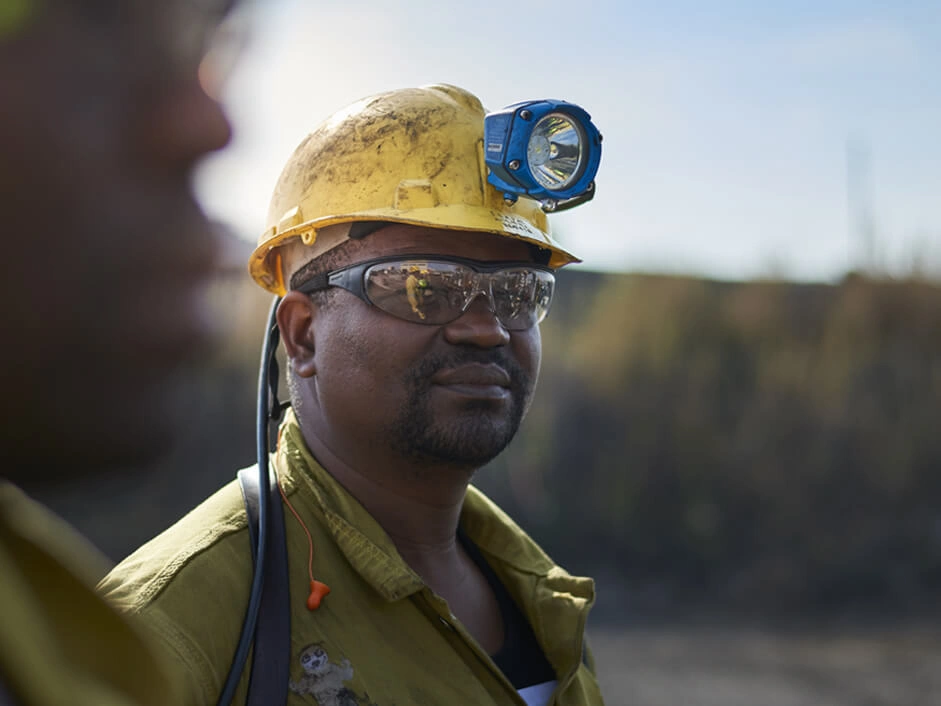
With minerals and mineral-related commodities constituting over half of South Africa’s merchandise export earnings, the sector functions as the engine room of the national balance of payments, proving that fiscal health and a thriving mining economy are inextricably linked.
This revenue windfall, however, serves a dual analytical purpose: it highlights both the structural contribution of mining and the latent potential that remains suppressed by network-industry bottlenecks. The Minerals Council’s Investment and Growth Strategy models an annual sector growth rate of 3%, a target attainable provided that the state and private sector maintain momentum on structural transformation.
The pillar of this growth paradigm lies in the restructuring of the energy sector. The unbundling of Eskom and the establishment of an independent transmission operator represent institutional shifts toward a competitive electricity market. For an energy-intensive industry where grid capacity and reliable power are prerequisites for deep-level underground operations and beneficiation processes, these reforms guarantee the predictability necessary to unlock multi-billion-rand capital expenditures.
When secure electricity generation matches the nation’s mineral endowment, existing operations are stabilized, and capital formation for new generation projects accelerates exponentially.
Parallel to the energy transition, the renaissance of South Africa’s logistics corridor, specifically rail and port, remains a catalyst for export-led growth. Analytical models developed by the Minerals Council have identified logistical friction as a primary binding constraint preventing the economy from monetizing favourable global commodity demand.
Export-intensive mining economies rely on fluid, cost-competitive supply chains to convert high production volumes into realized foreign exchange. The acceleration of rail liberalization, paired with customer collaboration policies between mining houses and logistics operators, establishes a cooperative framework designed to sweep away decades of inefficiency.
Resolving these logistical bottlenecks ensures that the sector can bypass artificial volume ceilings, translating international market demand into augmented export revenues, heightened enterprise profitability, and sustainable employment creation across the value chain.
In regions where mining activities and community wellbeing intersect, secure, reliable water infrastructure is non-negotiable. By institutionalizing structural efficiencies in water governance, the state removes operational vulnerabilities that threaten regional productivity, thereby reinforcing the socio-environmental license to operate that underpins sustainable mining practices.
Beyond network industries, the policy landscape must stimulate upstream activities, particularly greenfield and brownfield exploration. As global monetary policy environments maintain elevated interest rates, international capital faces intense competition from risk-free, interest-bearing assets, discouraging capital allocation toward high-risk extractive exploration.
Consequently, the introduction of targeted mineral exploration incentives, alongside the modernization of regulatory frameworks, is paramount. Historical data demonstrates that exploration expenditure plummeted from peaks, making fiscal and regulatory interventions necessary to reverse this decline.
By de-risking exploration, South Africa can reinvigorate the discovery pipeline, ensuring that the next generation of mineral wealth is mapped, developed, and brought into production to sustain the multi-decade lifespan of the mining economy.
The urgency of these reforms is further accentuated by exogenous cost pressures, most notably regarding liquid fuels. Liquid fuels constitute an operational expenditure for the mining sector, with annual outlays historically hovering around R37 billion and projected to exceed R50 billion in 2026 due to geopolitical disruptions and post-conflict pricing anomalies that have driven diesel and petrol costs more than 40% above pre-crisis baselines.
In response to these cost pressures on diesel-intensive extraction and logistics chains, the government’s implementation of temporary fuel levy relief, totalling R10 billion through targeted reductions on diesel and petrol, provides short-term mitigation.
However, as economic theory dictates, temporary palliative measures must be complemented by structural solutions. Revitalizing domestic refining capacity and re-engineering the underlying fuel pricing formula, alongside addressing administrative delays in implementing the diesel fuel refund mechanism for primary sectors like mining and agriculture, are vital strategic adjustments required to permanently safeguard industrial competitiveness.
Ultimately, the overarching narrative of the 2026 Medium-Term Budget Policy Statement is one of macroeconomic synergy where fiscal consolidation and structural reform are mutually constitutive.
South Africa cannot achieve durable fiscal health without robust economic expansion, and expansion is impossible without the rapid execution of reforms across electricity, rail, ports, and water systems.
For the mining sector, these structural transformations bridge the gap between theoretical potential and realized economic hegemony. By capitalizing on favourable commodity price cycles, correcting structural logistics and energy failures, implementing forward-thinking exploration incentives, and safeguarding operational margins against fuel volatility, South Africa’s mining industry is uniquely positioned to enter a Golden Era of sustainable growth.
This renaissance will not merely enrich corporate balance sheets; it will generate resilient tax revenues, fortify the national currency, secure hundreds of thousands of high-quality livelihoods, and anchor South Africa’s long-term prosperity on the global stage.